
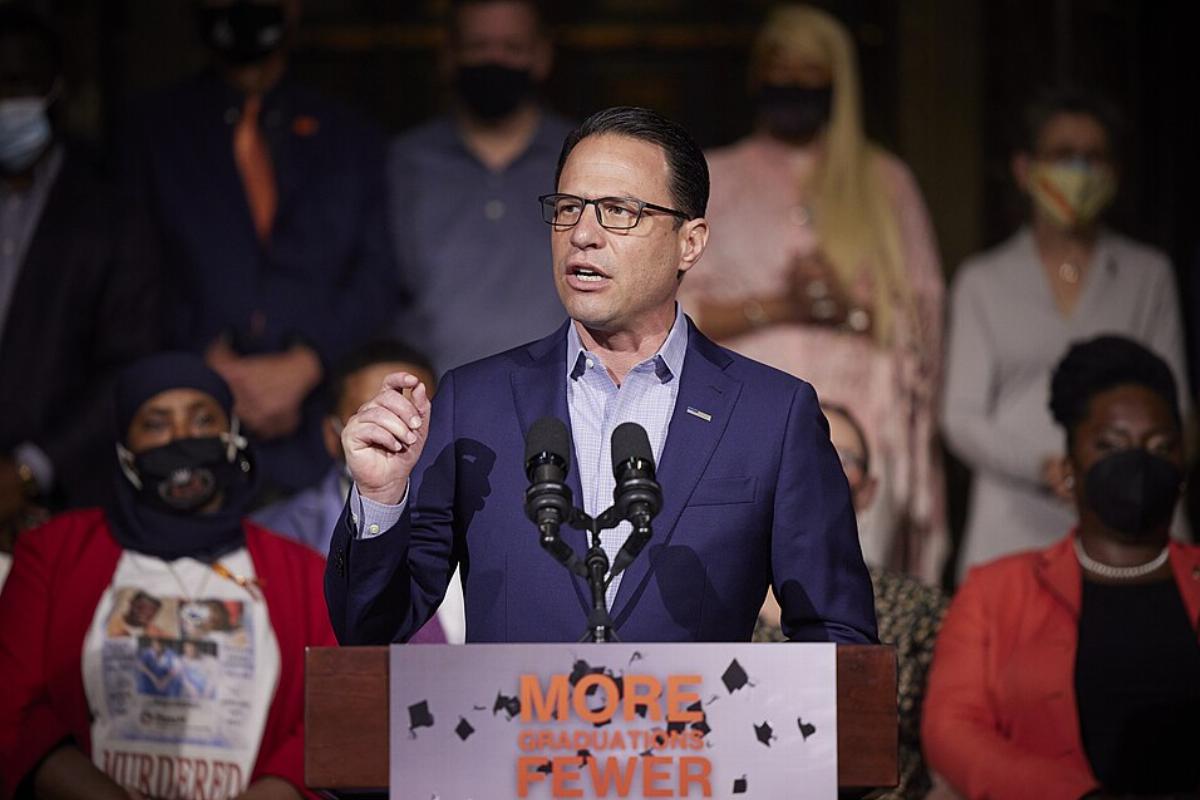
Pennsylvania Governor Josh Shapiro is facing sharp criticism from a conservative outlet over his handling of the state’s measles outbreak and the deaths of two infants, with accusations that he is exploiting tragedy to burnish his national political profile.
In a column published by American Thinker on September 7, 2026, writer Tanya Berlaga argues that Shapiro’s August 25th press conference — where he announced the state’s first measles-associated deaths in 35 years — was less about public health than about political positioning, and that key claims he made were misleading or flatly inaccurate.
The two victims were infants born in the Amish community of Lancaster County, Pennsylvania, according to details that emerged after weeks of confusion and back-and-forth between state authorities and the Department of Health and Human Services. Both were unvaccinated — but, critically, as infants, neither would have been age-eligible for the MMR vaccine regardless.
A preventable death claim under scrutiny
At his press conference, Shapiro told reporters, “I want to be clear, this illness and death from measles is completely preventable.” Berlaga calls that statement fundamentally misleading, arguing that the two infants could not have been vaccinated at their age and would likely have died from measles even if an outbreak had not occurred in their community.
“The tragic loss of these two infants was not preventable,” Berlaga writes, framing the deaths as rare, edge-case tragedies being used to advance a broader vaccination narrative.
A national problem or a localized one?
Shapiro also described measles as “a serious and a growing problem across the country and right here in our commonwealth,” telling the public that “this disease does not respect county lines or religious lines.”
Berlaga pushes back forcefully on that characterization. The national MMR vaccination rate stands at 92 percent, she notes — slightly lower than five years ago but still high enough to maintain herd immunity nationwide. By contrast, the vaccination rate within the Amish community is reported to be around 25 percent.
That disparity, Berlaga argues, means the current measles outbreak is not a national issue but one localized to the Amish community in Lancaster County. “Using a national platform to claim the entire country is equally affected is a clear politicization of public health,” she writes.
Blaming federal leadership questioned
The governor’s press conference also sought to lay blame for declining vaccination rates at the feet of current leadership at HHS, saying that sharing conspiracy theories and misinformation “does not help the cause of public health” and leaves parents in a position where it is harder for officials to protect children.
While Berlaga concedes Shapiro is right to flag questionable claims made by RFK Jr., she argues his timing misses the mark. The Amish community’s low vaccination rates predate RFK Jr.’s involvement by a long shot, she writes, describing vaccine hesitancy there as a “longstanding, community-specific norm that calls for a local response.”
“Pinning the blame for vaccine hesitancy among the Amish on the HHS guidance is about as misplaced as a Florida governor blaming the National Weather Service for frequent hurricanes hitting Fort Lauderdale,” Berlaga writes.
Parallels to COVID-era policy
The column draws a direct parallel between Shapiro’s approach and what Berlaga describes as the flawed COVID-19 response. She argues that when the pandemic hit, risk profiles varied dramatically by age and underlying conditions — with older adults far more vulnerable — which called for targeted protections.
Instead, governments adopted sweeping lockdowns, school closures, broad mandates, and mass vaccination campaigns that did not stop transmission. Berlaga writes that this approach was “widely viewed as a blatant government power grab,” eroded confidence in medical professionals, fostered distrust toward health authorities, and contributed to declining vaccination rates. Her warning: continuing the same pattern of politicization, coercion, and panic-mongering will likely make the problem worse.
An appeal to focus locally
The column concludes with a pointed recommendation: Shapiro should stop “leveraging two dead babies for national attention to his future political ambitions” and instead focus on his duty to support the affected community in his state.
According to American Thinker, Berlaga is a business owner and freelance writer who publishes at The Berlaga Perspective on Substack.
The column represents a conservative critique of a Democratic governor often mentioned as a potential presidential contender, and it highlights the ongoing political sensitivity around vaccine policy, federal health leadership, and how public officials communicate about outbreaks.
Shapiro’s office has not publicly responded to the column’s specific allegations at the time of this writing, and the governor’s framing of the outbreak as a national concern aligns with positions taken by public health officials who worry that declining immunization rates across the country create conditions for future outbreaks.
The measles outbreak in Lancaster County remains an active public health situation, and state officials continue to urge vaccination as the primary protective measure — even as critics argue that the messaging around it has become inseparable from national politics.
Source: www.americanthinker.com — https://www.americanthinker.com/blog/2026/09/is-shapiro-exploiting-measles-outbreak-for-political-gain/