
The email landed like a thunderclap inside Philadelphia’s pro-Palestine organizing scene. In a statement quoted by American Thinker, the group Philly Educators for Palestine told its own membership it was “stunned, saddened and angered by this betrayal” — not by an outside attack, but by news it had uncovered about one of its own most visible members.
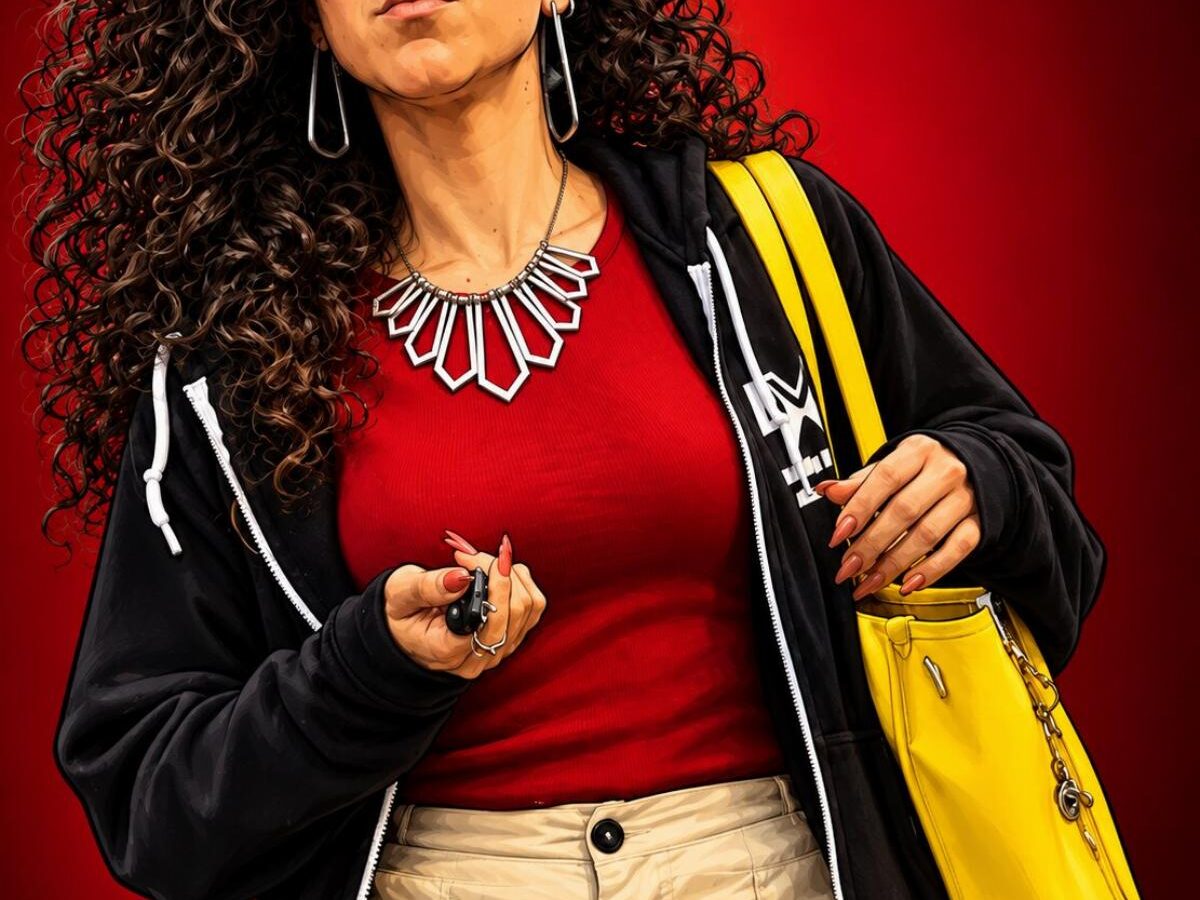
That member was Hannah Gann, a tenth-grade teacher in the Philadelphia school system who, according to an account by James Zumwalt published in American Thinker, had spent years presenting herself as a Black Palestinian educator. The reality the group says it eventually extracted from her was considerably different: “she is a white woman of Jewish heritage and an Israeli settler family.”
A founding ideal, and a teacher who cut against it
Philadelphia’s self-image runs deep. William Penn, the Quaker who founded the city in 1682, gave it the name “City of Brotherly Love” as an expression of his ambitions for peace, tolerance, and religious freedom. Zumwalt notes the irony of Gann’s rise to local prominence inside a city that still invokes that tradition.
Once settled in Philadelphia, Gann built a public persona as a minority educator. She told people she was financially strained because she was sending money back to family in Palestine, and she accepted donations from those who offered them, according to the American Thinker account. As a teacher, she organized teach-ins about Gaza, mentored Black students, and advocated for teachers’ right to bring political causes into their professional work.
Her activism drew attention beyond the school gates. The media watchdog group Accuracy in Media parked a truck outside the school where she taught, displaying her photograph in a Palestinian headscarf and branding her “Philadelphia’s leading antisemite.” A 2024 article referenced by Zumwalt described her as “one of several leading antiracist teachers in Philadelphia targeted for their opposition to Israel’s genocide in Gaza,” and included a photograph of Gann in a T-shirt carrying a message about teaching Palestine and Black history — ending, in a detail Zumwalt lingers on, with the words “Teach Truth.”

Cracks in the story
Suspicions apparently built over time as Gann’s self-description kept shifting. She claimed at different points to be Palestinian, Tunisian, and Black, according to the account — a set of identities that could not all be true at once.
Eventually, the group she had organized alongside concluded that none of them were. Philly Educators for Palestine went public with the finding and, in the process, praised itself for the effort involved. Its statement acknowledged “the significant and emotional labor used to bring this information forward, particularly the heavy lifting of Palestinian and Black women,” language that framed the disclosure as itself a form of work performed by the communities Gann was seen to have invoked.
The group said it had severed all ties with Gann and suggested she issue a public accounting of what she had done.
The confession, and the questions it leaves
That accounting came. Gann admitted she was “a white woman of significant privilege and wealth,” that she had lied “about my identity and…lying for years,” and that she felt “shame and sorrow and regret.” She acknowledged, too, that her deceptions had helped fuel anger and suspicion directed at fellow activists — people who had been attacked, in part, on the strength of claims she now conceded were false. She added that she did not “seek forgiveness I do not deserve.”
Whether that statement reflected a genuine change of heart is a question Zumwalt treats skeptically. His argument is that the apology was not the product of a guilty conscience emerging on its own, but of pressure from a group that had already let what he calls the fraudulent cat out of the bag. Remorse, in that reading, is difficult to separate from damage control.

Gann has reportedly not responded to media questions. That silence leaves her motive a matter of speculation, and Zumwalt offers a few possible readings. If her commitment to the Palestinian cause were sincere, he argues, she would likely have had more influence as an openly Jewish pro-Palestine activist than as a supposedly Palestinian one — a Jewish voice in that movement would draw more media attention than another Palestinian one. He also notes that she did not appear to need the donations she accepted.
The question of what she was actually trying to accomplish, and to whom she now believes she owes an apology, remains open. Is it to her former comrades in the activist group, to Palestinians, to the press, or — a possibility Zumwalt regards as least likely — to her fellow Jews?
A credibility problem in the classroom
For all the political theater surrounding the case, there is a narrower, more practical issue at its center: Gann is a public school teacher whose authority in a classroom rests on students believing what she tells them. Zumwalt argues that her admitted deception undermines that authority directly, and that the school system should resolve the matter by making her stated financial hardship real — by firing her.
That demand will be contested. School systems operate under contracts and due-process rules that rarely allow an immediate dismissal, and the underlying conduct — while a striking case of serial misrepresentation — does not map neatly onto the categories that typically trigger termination. How the district responds will say as much about institutional caution as about the facts of the case.
Whether Gann’s former allies will be satisfied with an apology delivered under pressure is another open question. Groups that build political credibility on lived identity have an obvious stake in policing who may claim it, and Philly Educators for Palestine has already staked out its position: the ties are cut, the statement is made, and the door is closed.
Zumwalt’s own image for the moment is seasonal. With Halloween approaching, he suggests the costume for Gann is obvious — any mask with two faces. It is a jab, but it captures the dilemma at the heart of the story. A woman who built a public life on a false identity has now been stripped of it, and the people she organized alongside must decide what, if anything, they learned from the years they spent believing her.
Source: www.americanthinker.com — https://www.americanthinker.com/blog/2026/09/in-time-for-halloween-a-two-faced-palestinian-mask/