
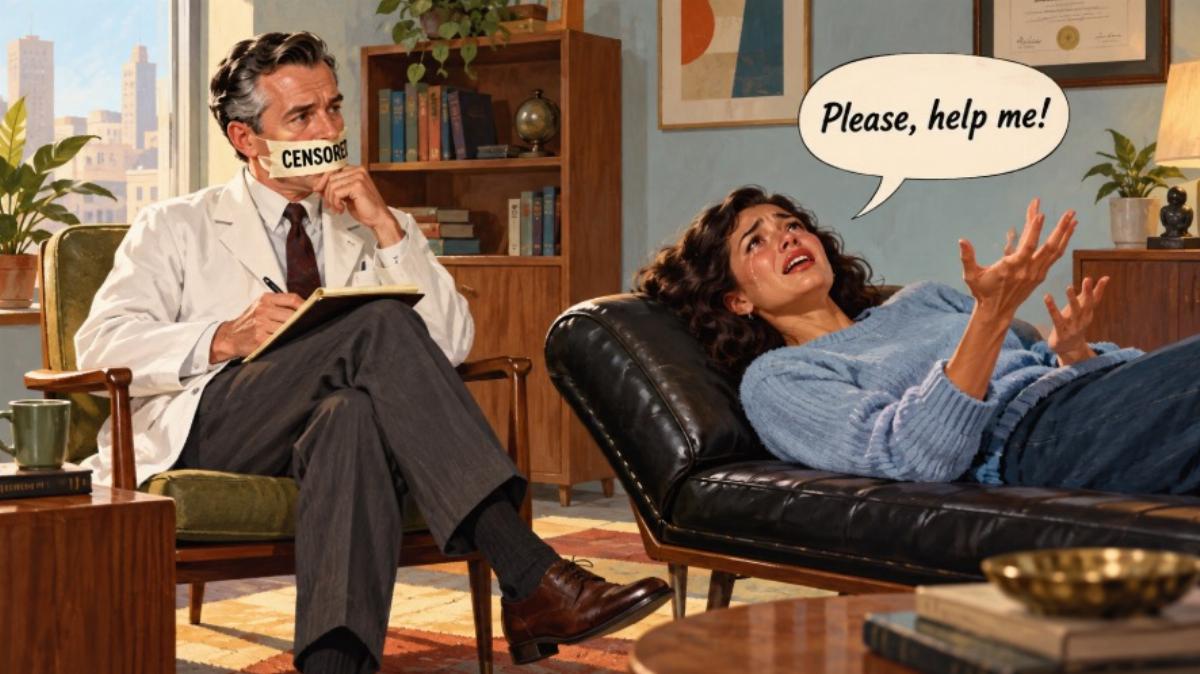
More than half of U.S. states have banned or restricted conversion therapy, and seventeen countries have followed with full bans of their own. But in a commentary published by American Thinker, Yehezkel (Gary) Schiff argues that these laws are built on a misreading of the evidence — and that the practice, which he prefers to call “traditional life path therapy,” ought to be encouraged rather than prohibited.
Schiff is president of Jewish Family Forever. His essay, dated October 2, 2026, is as much a critique of the professional bodies that have condemned the practice as it is a defense of the therapy itself.
The Argument Against the Bans
Schiff’s central complaint is that the American Psychological Association and the American Psychiatric Association have spent decades warning that Sexual Orientation Change Efforts (SOCE) and Gender Identity Change Efforts (GICE) are ineffective, scientifically discredited, and linked to depression, substance abuse, and suicidal thoughts — claims he says a careful look at the data does not support.
He points to a meta-study by Dr. Paul Sullins of the Ruth Institute, which Schiff says found that among clients questioning their sexuality, most experienced significant reductions in depression, substance abuse, and suicidal contemplation. Schiff also highlights what he calls major flaws in the research that persuaded lawmakers to act: in his telling, those studies excluded people who later successfully pursued a traditional life path after treatment — a sample problem he compares to judging the harms of marital therapy using only participants recruited through divorce support groups.
A second methodological objection comes from Christopher Rosik, a clinical psychologist and director of research at the Link Care Center in Fresno, California. Schiff cites Rosik’s 2023 piece in the Archives of Sexual Behavior, “A Wake-Up Call for the Field of Sexual Orientation Change Efforts Research,” in which Rosik criticized the field for failing to screen for pre-existing distress, such as suicidal inclinations, before therapy. Schiff quotes Rosik’s warning that the research community is “currently functioning in an academic sociopolitical monoculture that brings into question the replicability of its findings and likely limits the validity of its conclusions.”

Schiff also makes a demographic argument about who is doing the regulating. He notes that both professional associations have a much larger share of LGBTQ members than the general population — citing a recent APA graduate-student survey in which 42 percent identified as LGBTQ — and that state legislators were heavily influenced by those organizations through their state-level affiliates. He traces a lineage of leadership he sees as personally invested in the issue: Dr. Hartmann, who helped orchestrate the 1973 vote removing homosexuality from the DSM and later came out publicly before serving as association president from 1991 to 1992; Dr. Saul Levin, who in 2013 became the first openly gay CEO and medical director of the American Psychiatric Association; and Dr. Levounis, elected in 2022 as its first openly gay president, who Schiff says prioritized using the organization’s platform to fight “homophobia.”
What the Numbers Say, Per the Essay
Schiff’s case rests heavily on one claim: that the pool of people who leave homosexuality behind is large. He cites an SSRN paper, “How Many Homosexual Desistors Are There in the US?”, for the assertion that there are five times as many former lesbians as current lesbians, and more than one-third as many former gay men as current.
Many of those people, he argues, never enter a therapist’s office at all. A “Leaving Pride Behind” survey conducted by Sullins, Schiff writes, found that among people who left an LGB identity without therapy, 55 percent of men and 60 percent of women did so successfully — a “silver lining” in his view, since it means the bans may not prevent most people from reaching the outcome they want.
For those who did seek therapy, Schiff reports that the data suggest women benefited more than men, and that much of the helpful counseling focused less on sexual orientation itself than on anxiety and other challenges. He cites a 2026 Sullins survey of 183 people — 129 men and 54 women — who had received therapy, in which 47 percent of men and 98 percent of women reported a shift in same-sex attraction. In that survey, Schiff writes, the largest ratings for positive change outweighed the largest ratings for negative change by more than tenfold across both sexes and all psychological domains. He quotes Sullins: “For all [psychological problem] domains, both individually and combined, for both men and women, net change was invariably positive and of relatively large magnitude. Clearly, in the minds of these participants, leaving pride behind was far more psychologically beneficial than harmful.”
Religion, Schiff adds, is a major driver. In another Sullins survey, among people who cited a conflict between their faith and their sexuality as a reason for returning to a traditional path, 68 percent called that conflict “extremely important” and another 16 percent called it “very important.”
He also invokes an unlikely ally: Lisa Diamond, a self-identified lesbian psychologist at the University of Utah, whose 2002 paper “Scrutinizing Immutability” argued that the claim people cannot change orientation is unscientific and contrary to the evidence — and that advocates for gay rights should stop making it.
A Term Under Dispute
Schiff concedes that conversion therapy is generally defined broadly — any talk therapy or religious counseling, especially for minors who are uneasy about their sexual orientation and have expressed a desire to pursue a traditional life path. He calls the term itself “a loaded, false description of the conversations that take place between counselor and willing client,” and argues the stigma attached to it inverts what the data show.
He points to counseling coalitions that have organized around the practice, including the International Foundation for Therapy and Counseling Choice and the Alliance for Therapeutic Choice and Scientific Integrity, which bring together “traditional life path” therapists from around the world. And he praises the Supreme Court’s 8-1 ruling in Chiles v. Salazar as a rebuke to what he describes as efforts to silence the speech of counselors and their clients.
Where Schiff’s essay collides with mainstream consensus is unavoidable. The two APAs and most major medical bodies maintain that orientation change efforts are not supported by evidence and carry real risk of harm, particularly for minors — the population most state bans target. Some jurisdictions have extended the prohibitions to adults as well, which Schiff flags as a particular overreach.
His conclusion is unambiguous: given the millions of what he calls “formers,” sexual and gender identity are “clearly not immutable,” and for those who want a traditional path, the therapy “has proven effective and should not be banned, but encouraged.”
Whether that argument finds traction in legislatures that have spent a decade moving in the opposite direction is another matter — but the essay is a clear statement of the counterargument that the bans’ opponents intend to keep making.
Source: www.americanthinker.com — https://www.americanthinker.com/articles/2026/10/conversion-therapy-needs-to-be-encouraged-not-banned/