
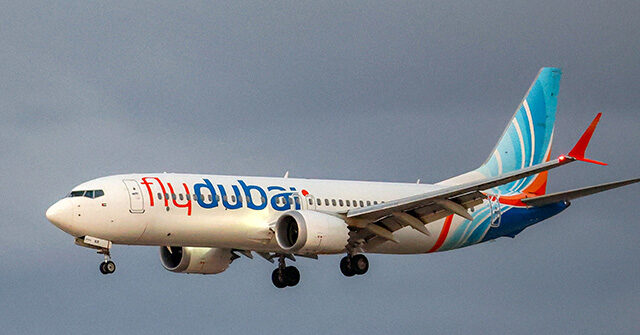
The alleged attempt by a Flydubai co-pilot to hijack Flight FZ1073 has put a harsh spotlight on how quickly some airlines are growing — and whether their hiring and vetting practices are keeping pace. According to a report from Germany’s Die Welt cited by Breitbart News, fast-growing Asian airlines are failing to maintain adequate “social controls” as they rapidly add staff.
The flight, a Boeing 737 Max carrying 16 million passengers a year for the Dubai-based low-cost carrier, was diverted to Tabuk in northwestern Saudi Arabia on Wednesday, September 30, 2026, after the co-pilot — identified as an Omani national — reportedly attempted to seize control. The aircraft made an emergency landing safely, and no passengers were killed.
A Symbol of Breakneck Growth
Die Welt noted that Flydubai “only started operations 17 years ago and has grown in a short time to almost one hundred aircraft and 16 million passengers a year.” The German outlet said the airline “exemplifies the rapid growth of aviation in Asia, which has produced new airlines and routes at a dizzying pace in recent years — and with that, possibly new dangers as well.”
That growth shows no sign of slowing. The Asia-Pacific region will need roughly 268,000 additional pilots and 298,000 more maintenance technicians over the next 15 years, according to industry projections. Those workers will be drawn from a sprawling region whose countries have widely divergent standards for airline safety and employee screening.
The International Air Transport Association (IATA) warned this year that an “unprecedented talent challenge” is coming, as rapid airline growth and evolving technology make it harder to find enough qualified pilots and staff. IATA advised airline human resources departments to “move beyond their traditional framework” to accelerate hiring — a push that critics say could lead to corners being cut on vetting. The group also suggested increasing “workplace flexibility,” which could result in more pilots from dramatically different cultures, linguistic backgrounds, and security environments sharing the same cockpit.
The Loss of the ‘Fraternity’
Die Welt highlighted a subtler problem: the close-knit nature of the pilot profession has eroded. With airlines expanding so quickly, pilots and co-pilots are increasingly likely to take off without ever having met each other, and they may even struggle to communicate because of language barriers. That lack of familiarity undercuts the informal peer oversight that once served as a security backstop.

The attempted hijacking has also triggered a political controversy in Israel, which is supposed to require that inbound flights be piloted by crewmembers from countries that maintain diplomatic relations with the Jewish state. Oman does not have such relations. It remains unclear how an Omani national ended up at the controls of a flight bound for Israel.
Israel is widely regarded as having the world’s tightest aviation security standards. The United Arab Emirates, home to Flydubai and Dubai International Airport — where Flight FZ1073 originated — takes pride in its own reputation for safety and professionalism. Yet an Omani national with a blade in his hand was behind the controls on Wednesday.
Aviation security experts told NBC News on Friday that Israel has long trusted friendly airlines such as Flydubai to vet their own crews and to respect Israel’s requirements for pilots on inbound flights. Those practices are now expected to tighten rapidly in the wake of the narrowly averted catastrophe.
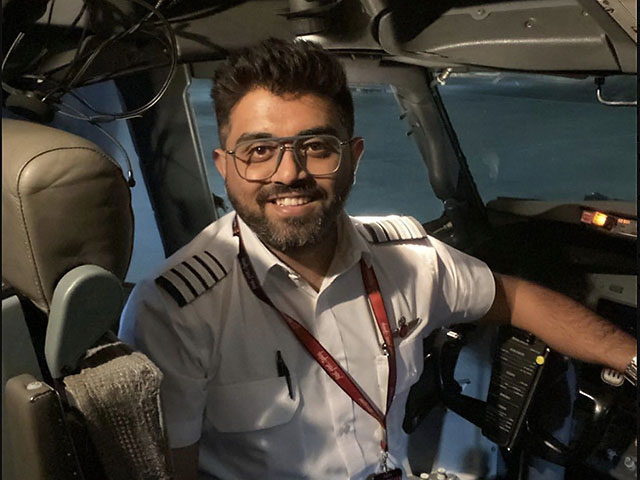
Passengers who lived through the ordeal were visibly shaken. Israeli passenger Yaniv Hayoun, his shirt stained with blood, was welcomed at the arrivals gate at Ben Gurion International Airport near Tel Aviv on Wednesday. An undated photo released by Israel’s Foreign Ministry shows Indian Capt. Smit Machchhar in the cockpit of a plane; Machchhar was at the controls of the Flydubai flight when it was diverted.
The incident has renewed focus on a basic question: as Asia’s skies fill with new airlines, new routes, and new crews, who is making sure the people in the cockpit are who they claim to be? For now, the answer appears to be a patchwork of national regulators, airline HR departments, and informal peer networks — a system that just came within moments of failing.
Source: www.breitbart.com — https://www.breitbart.com/national-security/2026/10/02/report-fast-growing-asian-airlines-are-not-vetting-pilots-enough/