
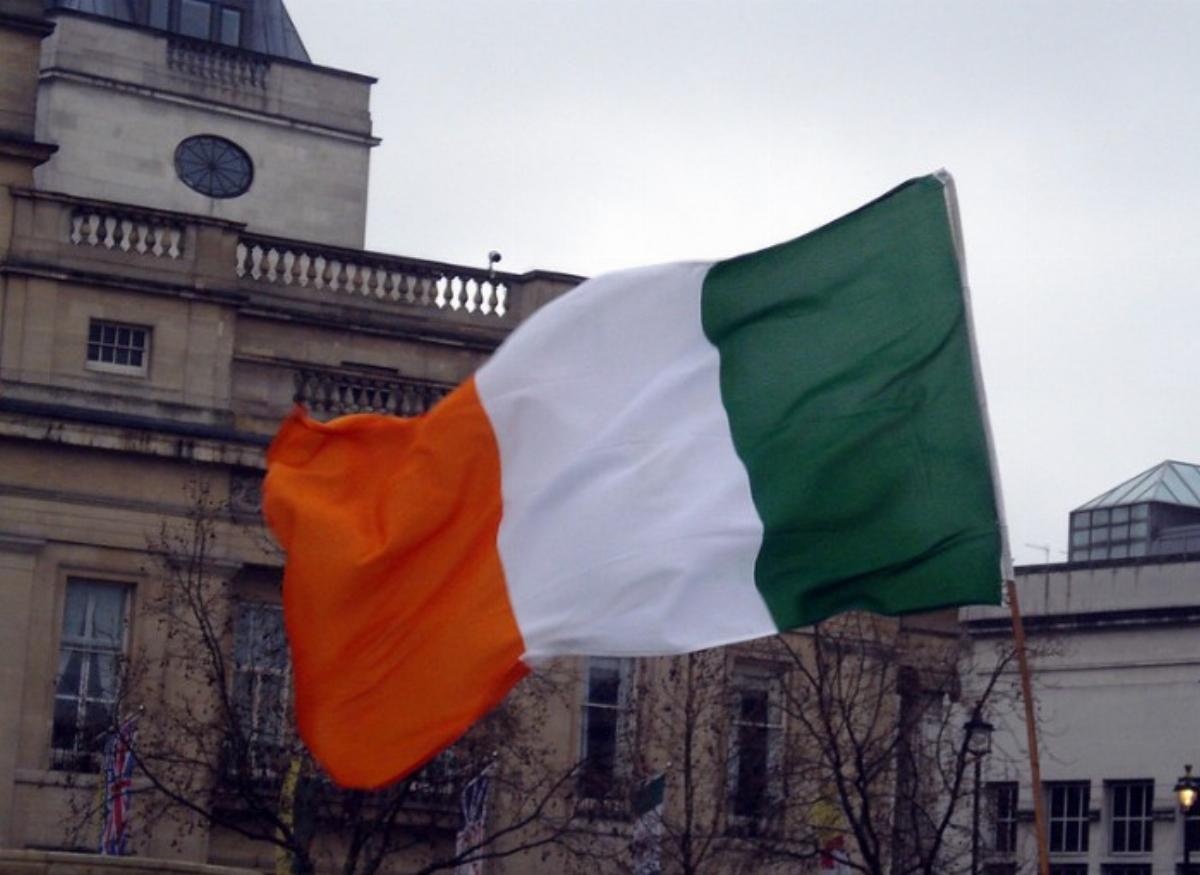
In an op-ed published by American Thinker, commentator Joseph Puder argues that the Republic of Ireland’s hostility toward Israel has crossed a line from political criticism into what he calls “raw and ugly antisemitism.” The piece, dated October 4, 2026, builds its case around a recent UEFA Nations League episode, Ireland’s legal interventions against Israel, and a newly passed Irish law restricting imports from Israeli settlements.
Puder’s central claim is that Ireland applies one standard to Israel and another to everyone else — a pattern he identifies as one of the working definitions of antisemitism. Woven through the argument is his contention that Irish sympathy for the Palestinian cause, once rooted in a shared history of anti-British insurgency, was reshaped by Irish Republican Army ties to the PLO and by a Soviet framing of Zionism as Western colonialism.
The Football Flashpoint
The piece opens with the Irish national football team’s demand, backed by the Irish government and much of the public, that Israel be boycotted in the UEFA Nations League. When the team ultimately voted to play, Puder cites the Daily Mail quoting Ireland football boss Heimer Hallgrimsson saying, “We are not playing with genocide, we are playing against genocide.”
Puder describes two moments he treats as unprecedented in international football: Irish players, managers, and coaches lowering their heads during the Israeli national anthem, and the Irish captain refusing to shake the Israeli captain’s hand or exchange the traditional team pennants that captains and referees normally swap before kickoff.
The double-standard argument turns on a historical comparison. Puder notes that Ireland played the Islamic Republic of Iran in 2002 without controversy or boycott calls, despite describing that regime as one that has killed thousands of its own citizens, sponsors international terror, and maintains one of the world’s worst human rights records. The contrast, in his telling, is the point.
The Genocide Charge and Its History
Puder traces the word “genocide” to Raphael Lemkin, the Polish-Jewish lawyer who coined it in his 1944 book Axis Rule in Occupied Europe. He argues that the term’s accepted international definition hinges on intent — a state’s deliberate plan to murder an entire people or tribe — and that Nazi Germany is the paradigm case, having intentionally set out to wipe out Europe’s Jews and murdering six million, including one and a half million children.
Against that standard, Puder rejects Ireland’s use of the word to describe Israel’s conduct in Gaza. He writes that Israel’s war was a defensive response to the unprovoked Hamas and Palestinian Islamic Jihad massacre of 1,200 people, mostly Israeli civilians, including babies, children, women, Holocaust survivors, and the elderly — an attack in which, he says, fighters raped girls and women of all ages and proudly videotaped their deeds.
Puder further argues that Israel’s operations targeted uniformed Hamas and PIJ fighters, and that the IDF dropped leaflets and placed phone calls telling civilians to move to safe zones. On casualty figures, he writes that the numbers from Hamas’ Ministry of Health are disputed, and that it is indisputable Hamas forced civilians to serve as human shields and that many fighters dressed as civilians — both of which, he says, inflated the death toll. The high count, in his view, was a deliberate ploy to trigger Europeans, “such as the Irish,” into crying genocide.
From Shared Insurgency to Soviet Framing
The op-ed offers a historical explanation for how Ireland arrived here. Immediately after World War II, Puder writes, the Irish identified with the Jewish underground in pre-statehood Israel, seeing a parallel struggle against British rule. In later decades, he says, the IRA joined the chorus of PLO supporters and trained alongside them in Lebanon’s Bekaa Valley and in Libya. More recently, he contends, declining religiosity and progressive politics erased whatever sympathy remained for the Zionist independence struggle.
Puder casts Ireland as an exception on the continent. Across Europe, he writes, right-of-center parties tend to lean more favorably toward Israel on the Israeli-Palestinian question — even in Spain, which he calls hostile to Israel, a strong right-of-center opposition is friendlier. Ireland, he says, is not.
The intellectual lineage he assigns to Irish opinion runs through Moscow. Influenced by Soviet propaganda aimed at weakening the West through de-colonization movements, Puder writes, the radical IRA adopted a “manifestly false” Soviet reading of history that defines Zionism as Western colonialism. Jews, not Arabs — whom he identifies as the original colonial-imperial force in the seventh century CE — are the indigenous population of the Land of Israel, he argues, while the Irish adopted the Soviet version casting Palestinian Arabs as the land’s natives.
Embassy Closure, Legal Interventions, and a 2026 Import Ban
The piece cites several concrete Irish and Israeli actions. In July 2024, Puder notes, Israel announced it was closing its embassy in Ireland. Israel’s ambassador to Dublin, Dana Erlich, explained the move by saying Ireland had “taken a more extreme stance than any other country against Israel” and pointed to Ireland’s recognition of a Palestinian state and its backing of South Africa’s action at the International Court of Justice, where Ireland asked the court to broaden its interpretation of what constitutes the commission of genocide by a state — a request Puder characterizes as Ireland seeking a wider definition in its eagerness to condemn Israel.
In December 2024, Puder quotes Israel’s Foreign Minister Gideon Sa’ar declaring that “the antisemitic actions and rhetoric that Ireland is taking against Israel are based on delegitimization and demonization of the Jewish state and on double standards,” and adding that “Ireland has crossed all red lines in its relationship with Israel.”
He also reaches back further: about fifteen years ago, he writes, Irish bed and breakfast proprietors banned Israeli passport holders. Today, he says, a 2026 bill passed by the Irish parliament prohibits importing goods originating in postal codes corresponding to Israeli settlements, as proscribed by order of the Minister for Foreign Affairs and Trade.
Puder’s conclusion returns to where he began — that Irish hostility toward Israel has, in his words, metastasized into antisemitism. The op-ed closes with a fundraising appeal for American Thinker itself, framing the outlet’s work as part of the broader fight to speak freely.
What the Argument Rests On
It’s worth being precise about what this piece is and isn’t. It is an opinion essay making a contested claim — that Irish policy and public behavior toward Israel constitute antisemitism, not merely sharp criticism of Israeli conduct. The evidence it marshals is a mix of documented events, quotes from Israeli officials, and interpretive history. The genocide characterization of Israel’s Gaza campaign, which Puder flatly rejects as unfounded, is a live and disputed question in international law and politics; Ireland’s own government has advanced the opposite view in international forums.
The football incidents, the embassy closure, the ICJ intervention, and the settlement-import bill are the factual spine on which the argument hangs. Whether those facts add up to antisemitism, or to a particularly intense form of political opposition, is the question readers are left to weigh. Puder has made his case in the strongest terms available to him, and his closing line — that Irish hatred for Israel has metastasized — leaves no ambiguity about where he lands.
Source: www.americanthinker.com — https://www.americanthinker.com/blog/2026/10/the-republic-of-ireland-s-antisemitism/