
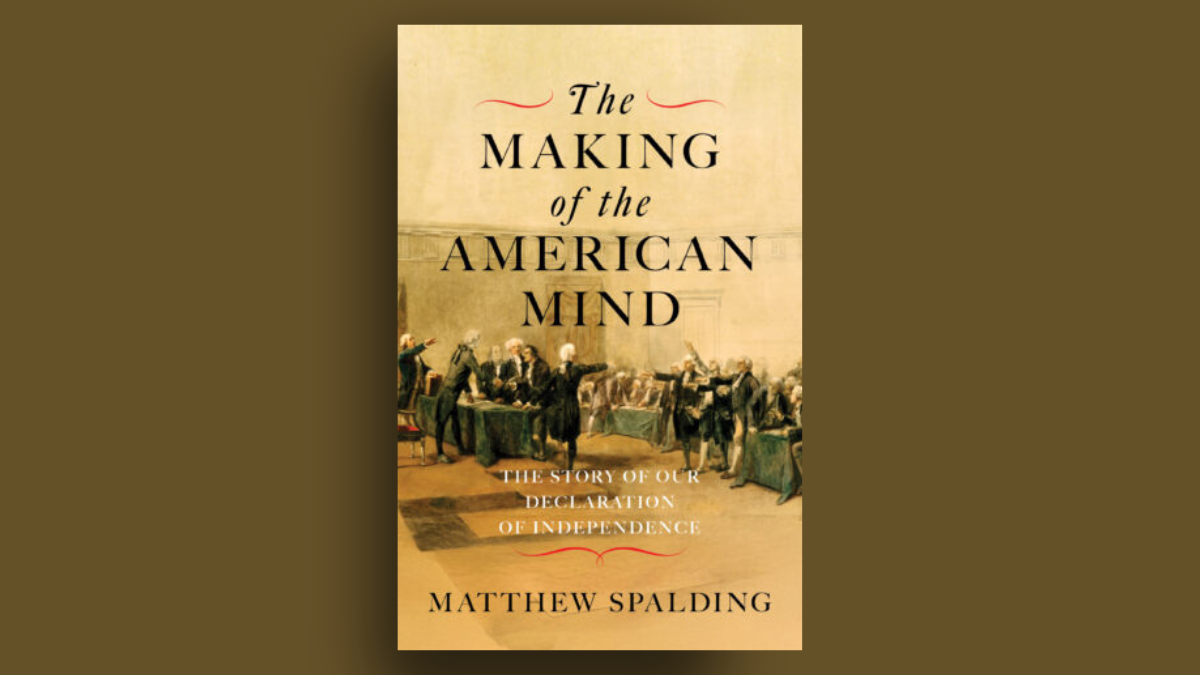
As America approaches its 250th anniversary in 2026, historian Matthew Spalding’s newly released The Making of the American Mind: The Story and Meaning of the Declaration of Independence arrives as both a scholarly examination and a stirring call to revisit the nation’s founding principles. The book, already drawing acclaim from conservative circles, dissects the 1776 document phrase by phrase while chronicling the brutal personal sacrifices of its signers—a timely reminder, Spalding argues, of what truly upholding those ideals demands.

The Declaration As ‘Symphony’
Spalding, a constitutional scholar who led the Trump administration’s 1776 Commission, frames the Declaration not as a dry legal preamble but as a carefully structured argument that crescendos toward revolution. Comparing it to a musical composition, he analyzes how its famous passages about equality and liberty build upon Enlightenment philosophy, Christian theology, and classical republican thought—all aimed at convincing skeptical colonists that separation from Britain had become morally necessary.
Life, Liberty, And The Pursuit Of What?
Particular focus falls on correcting modern misreadings of key phrases. The ‘pursuit of happiness,’ Spalding clarifies, wasn’t a license for hedonism but a Aristotelian concept of flourishing through virtue. Similarly, ‘created equal’ established human dignity as the basis for rejecting tyranny—a principle that implicitly condemned slavery despite many signers’ personal compromises with the institution. These sections double as subtle critiques of contemporary political rhetoric that invokes the Declaration while distorting its original meanings.
The Iron Price Of Independence
The book’s most harrowing chapters detail the fates of Declaration signers who paid dearly for their treason against the Crown. Through unpublished letters and overlooked records, Spalding recounts how British forces tortured Richard Stockton, hunted others ‘like foxes,’ and subjected prisoners like Abraham Clark’s sons to starvation—all retaliation for their fathers’ defiance. Even wealthier signers like Robert Morris faced financial ruin after bankrolling the Revolution. These stories, Spalding contends, expose the shallow patriotism of modern politicians who treat constitutional oaths as ‘just words.’
A Field Guide For The Next 250 Years
Positioned as a cornerstone text for America’s semiquincentennial, Spalding’s work ultimately asks whether 21st-century citizens can match the Founders’ clarity of purpose. His closing analysis of the signers’ post-war careers—from governorships to Supreme Court seats—frames the Declaration not just as a break with Britain but as a lifelong compact. With historical revisionism roiling schools and Congress alike, this unapologetically traditionalist reading may spark fresh debates over who gets to define ‘American values’ as the nation eyes its next quarter-millennium.
Source: thefederalist.com — https://thefederalist.com/2026/11/06/rediscovering-the-declaration-and-americas-founding-principles/