
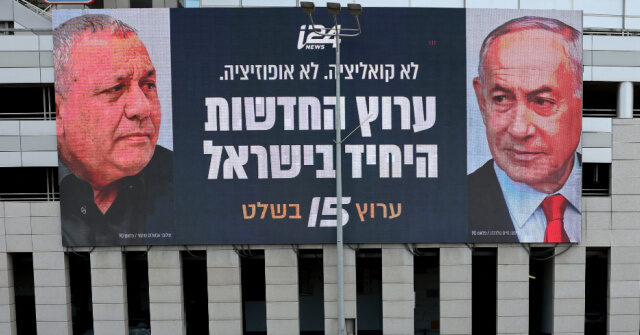
Israeli politics plunged deeper into uncertainty as President Isaac Herzog handed opposition leader Gadi Eisenkot the first opportunity to form a government, marking a significant setback for Prime Minister Benjamin Netanyahu. The decision comes nearly two weeks after Israel’s latest inconclusive election, with neither Netanyahu’s bloc nor Eisenkot’s opposition alliance securing a clear path to a parliamentary majority.
A Narrow Path to Power
Eisenkot, leader of the Yashar party, received endorsements from 67 of the Knesset’s 120 incoming lawmakers during presidential consultations, though his four-party coalition holds only 48 seats—well short of the 61 needed to govern. Netanyahu’s outgoing coalition controls 53 seats, leaving both sides struggling to assemble a viable government.
The former military chief will formally receive the mandate Sunday afternoon, launching a 28-day negotiation period that Herzog could extend by two weeks. Should Eisenkot fail, the president could turn to Netanyahu or another lawmaker, potentially prolonging Israel’s political gridlock.
Netanyahu’s Warnings and Counteroffers
In a fiery video statement, Netanyahu warned that a government reliant on Arab-party support would endanger Israel’s security. “A government dependent on terror supporters will not fight terror,” he declared, taking aim at Ra’am and the Joint List—two Arab-majority parties that backed Eisenkot but haven’t committed to joining his coalition.
The prime minister instead proposed a national unity government incorporating his Likud party and other Zionist factions, arguing Israel’s security threats demand broader cooperation. “There is only one choice: not national suicide, but national unity,” Netanyahu insisted, framing the political maneuvering as existential for Israel.
Eisenkot’s Uphill Battle
Eisenkot quickly dismissed Netanyahu’s unity proposal, inviting Likud to instead join a government under his leadership—provided it abandons its current alliances and accepts four principles including Hamas’s designation as a terrorist organization and mandatory national service for all citizens.
But the opposition leader faces challenges within his own bloc, where some parties campaigned against governing with either Arab or ultra-Orthodox factions—precisely the groups whose support may now be essential. Avigdor Liberman of Yisrael Beytenu has vowed not to back a minority government dependent on Arab parties, while left-wing Democrats leader Yair Golan insists on military conscription reforms that could alienate ultra-Orthodox factions.
The Stakes of a Post-October 7 Election
The political jockeying takes place against the backdrop of Hamas’s 2023 massacre, with Herzog pressing Ra’am leader Mansour Abbas during consultations to explicitly label Hamas a terrorist organization—a request Abbas sidestepped. While Arab parties have backed Eisenkot’s bid, their positions on security issues remain a potential dealbreaker for other coalition partners.
For now, Netanyahu remains caretaker prime minister, with at least one more shot at forming a government if Eisenkot fails. But with neither bloc holding a clear majority and deep divisions persisting across the political spectrum, Israel’s chronic political instability shows no signs of ending soon.
Source: www.breitbart.com — https://www.breitbart.com/politics/2026/11/07/israeli-president-herzog-tasks-eisenkot-with-forming-government-in-setback-for-netanyahu/?utm_source=breaking_news&utm_medium=banner