
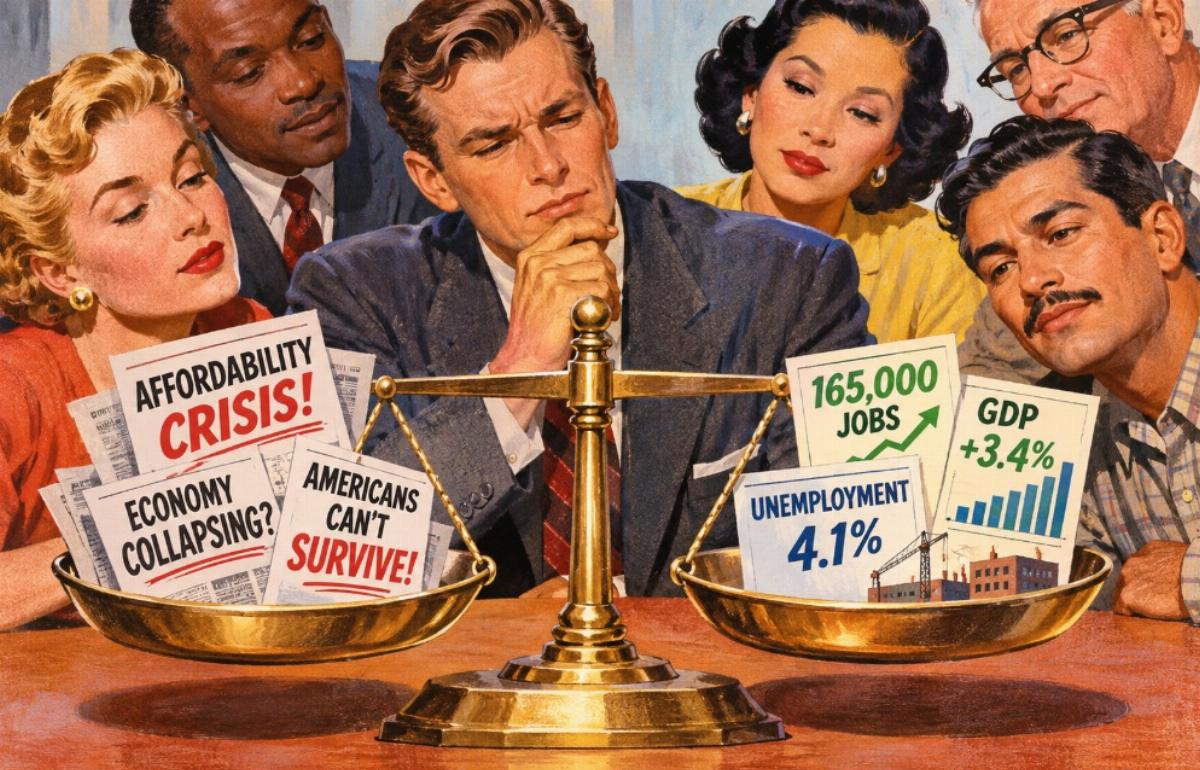
On paper, the U.S. economy looks strong. The latest jobs report showed 165,000 new positions added in October, unemployment remains low at 4.1%, and GDP growth accelerated to 3.4% in the third quarter. Yet Republicans just suffered a midterm drubbing—with voters citing an “affordability crisis” as a key reason. So why the disconnect?
The Numbers vs. The Mood
By traditional metrics, the economy isn’t collapsing. Consumer spending remains robust, businesses are investing heavily in AI and infrastructure, and wage growth has outpaced inflation for over a year. But as the American Thinker notes, families facing steep housing costs, grocery bills, and energy prices aren’t comforted by macroeconomic trends. Gasoline, insurance, and electricity alone have become daily financial stressors.
The Housing Puzzle
One unexpected bright spot: rents are finally easing in some markets. Tighter immigration enforcement has reduced demand, while a surge in apartment construction boosts supply. Yet homeownership remains out of reach for many, with mortgage rates still hovering near 7%. The result? A generation stuck between unaffordable purchases and fleeting rental relief.
The Perception Problem
Republicans may have failed to message their economic wins, but there’s a deeper issue. Social media amplifies doomscrolling over data—where viral claims of “economic disaster” drown out nuanced realities. Many Americans complaining about the economy are still dining out, traveling, and investing. That cognitive dissonance suggests emotion, not just finances, drove the midterm backlash.
A Test for Democracy
When headlines replace analysis, governing gets harder. The 2026 results reveal a nation split between measurable progress and palpable frustration. Whether the gap closes may depend less on interest rates—and more on whether voters (and politicians) can separate signal from noise.
Source: www.americanthinker.com — https://www.americanthinker.com/blog/2026/11/america-s-affordability-crisis-reality-perception-or-both/