
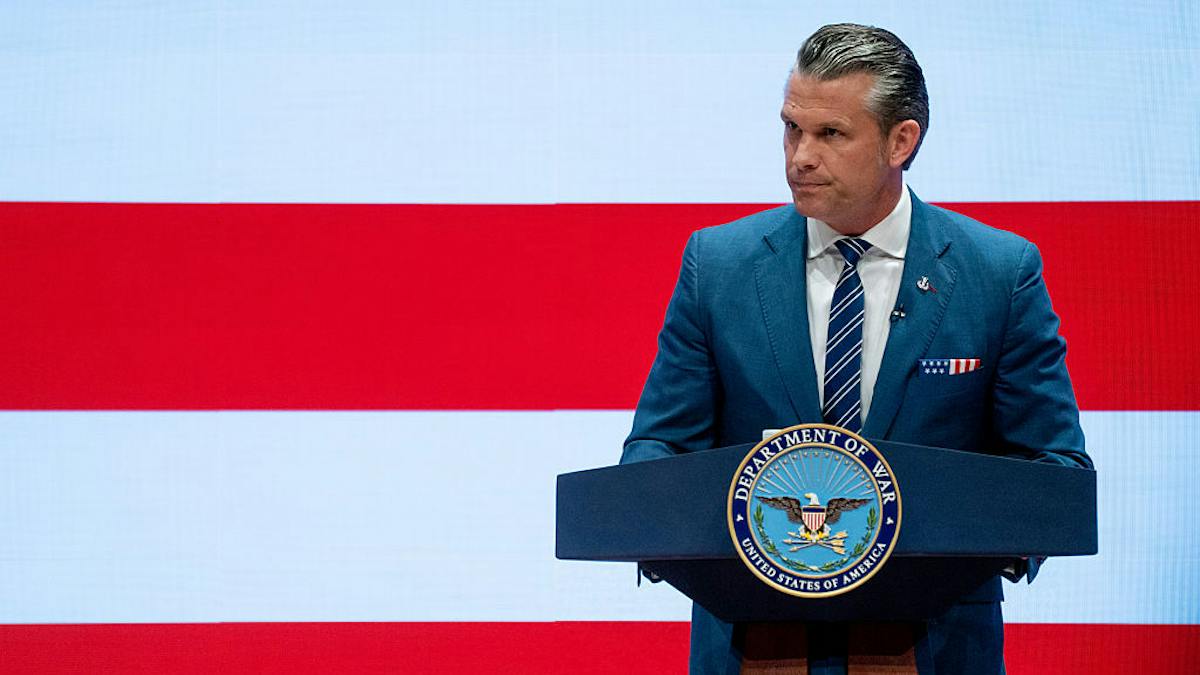
House Republicans are barreling toward a high-stakes impeachment vote this week on Defense Secretary Pete Hegseth, but legal experts warn the case rests on a fundamental misunderstanding of the War Powers Resolution – legislation that never mentions the Secretary of Defense.
Rep. Thomas Massie (R-KY), who lost his primary in May shortly after Hegseth campaigned against him, filed eight articles of impeachment Monday under a privileged resolution that forces a House vote within two legislative days. The move comes as Congress faces a December 11 government funding deadline and an impending Senate flip in January.

The Statutory Mismatch
The first three articles accuse Hegseth of violating the 1973 War Powers Resolution, but legal scholars note the statute exclusively addresses presidential powers. “Every duty the War Powers Resolution imposes outside Congress runs to the President,” notes constitutional lawyer Dr. Mark Goldfeder. “The word ‘Secretary’ appears nowhere in it.”
Massie’s own articles acknowledge President Trump issued the disputed orders, yet attempt to hold Hegseth accountable for executing them. Legal analysts call this approach unprecedented, noting subordinates typically can’t be impeached for following presidential directives unless the orders are facially unlawful.

Senate Precedent Looms Large
The push faces another hurdle: April’s Senate dismissal of Homeland Security Secretary Alejandro Mayorkas’ impeachment. Then-Majority Leader Chuck Schumer declared unequivocally that “impeachment should never be used to settle policy disagreements” – a standard that could doom Massie’s effort.
Article II presents additional constitutional problems, asking the House to impeach over Hegseth’s alleged disregard for a concurrent resolution – a legislative tool the Supreme Court invalidated in 1983’s INS v. Chadha decision.

Procedural Problems Mount
While later articles address Hegseth’s independent decisions, Massie bundled all eight charges into a single privileged resolution. This forces an all-or-nothing vote and would require the Senate to consider bundled allegations together – a flaw that hampered both Clinton and Trump impeachment trials.
As the Wednesday vote approaches, House leaders are whipping members while constitutional scholars suggest Congress has better tools to constrain military action, including the power of the purse set to expire December 11.
Source: www.dailywire.com — https://www.dailywire.com/news/the-glaring-legal-flaw-in-the-case-against-pete-hegseth