
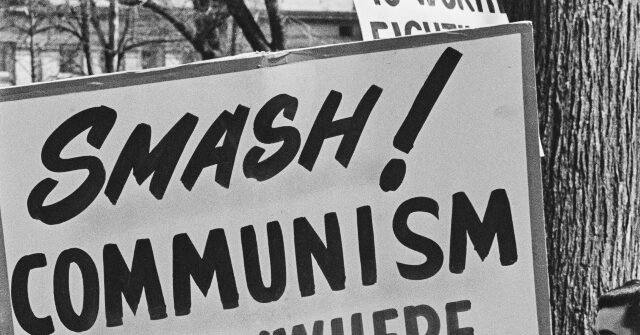
Washington — A prominent conservative commentator is stirring controversy with a bold proposal: bring back the House Un-American Activities Committee, better known as HUAC, to confront what he describes as growing internal threats to the United States.
In an op-ed published Saturday on Breitbart, columnist James Pinkerton argues that the current political climate—marked by deep partisan divides and perceived security gaps—demands a revival of the notorious congressional panel that defined much of mid-20th-century American politics.
“The House Un-American Activities Committee is needed again,” Pinkerton writes, according to the Breitbart piece. The original HUAC, established in 1938, investigated alleged disloyalty and subversive activities, most famously targeting suspected communists during the Cold War era. Critics then and now have called it a vehicle for political persecution, citing its aggressive questioning of witnesses and its role in blacklisting individuals in entertainment, government, and labor unions.
Pinkerton, however, sees a modern parallel. He contends that the United States faces a new kind of internal subversion—one that, in his view, requires a congressional body with investigative powers to expose and neutralize those who would undermine American institutions.
The Breitbart op-ed does not specify exactly who or what groups Pinkerton would target, but it frames the need in broad terms, pointing to what he characterizes as a failure of current oversight mechanisms to address ideological extremism within the country.
Reactions and Historical Echoes
The proposal has immediately reignited debate over the balance between national security and civil liberties. Historians and civil rights advocates have long pointed to the original HUAC’s excesses—including the blacklisting of Hollywood screenwriters, actors, and directors, as well as the imprisonment of the “Hollywood Ten” for contempt of Congress. Many view the committee as a cautionary tale of how patriotic zeal can curtail constitutional freedoms.
Supporters of Pinkerton’s idea, however, argue that the current era—with its own version of espionage, disinformation, and radical factionalism—warrants a fresh look at mechanisms that can hold subversive actors accountable. They note that the original committee was credited with exposing Soviet espionage activities that had infiltrated the federal government.
Pinkerton’s call is not entirely new. Over the years, various conservative commentators have occasionally floated the idea of reviving a body with similar powers, usually in response to perceived threats from the left. But this instance carries added weight because it comes at a time of heightened political tension and debates over how to handle domestic extremism, foreign interference, and intelligence failures.
Political and Legal Hurdles
Any actual revival of a HUAC-like committee would face significant obstacles. First, the House of Representatives would need to pass a resolution establishing it, a tall order given the current slim majorities and the contentiousness of the issue. Second, legal challenges would almost certainly arise, as the original committee’s methods were repeatedly litigated—though its authority to investigate was generally upheld, its tactics often pushed the boundaries of due process.
Third, political blowback could be severe. Many lawmakers, particularly Democrats but also some libertarian-leaning Republicans, would likely resist any return to what they see as a dark chapter of congressional overreach. The term “un-American” itself is loaded, evoking accusations of McCarthyism—a reference to Senator Joseph McCarthy, who, while not directly part of HUAC, is often associated with the era’s anti-communist fervor.
Pinkerton’s Breitbart essay does not delve into these practicalities, instead framing the issue in stark terms: the nation is facing an existential threat that demands decisive action. He writes, according to Breitbart, that “the time has come to stop pretending that the danger is not real and that those who serve it are not enemies of the republic.”
Historical Context
The original HUAC was a temporary committee from 1938 to 1945, then became a standing committee of the House from 1945 until 1975, when it was abolished and its functions were absorbed by the House Judiciary Committee. Its legacy remains deeply contested. For some, it is a symbol of necessary vigilance against foreign subversion; for others, it is a stain on American democracy.
Pinkerton, a former Reagan administration official and longtime political analyst, has a history of provocative takes, but this one may be among his most polarizing. The Breitbart piece has already drawn sharp reactions on social media, with some praising Pinkerton for addressing a taboo subject and others denouncing the proposal as a recipe for a new era of witch hunts.
As the debate unfolds, the question remains whether Pinkerton’s call will gain traction in Washington or remain a fringe idea. So far, no sitting member of Congress has publicly endorsed the proposal, and House leaders have not commented.
The op-ed’s publication on Breitbart, a prominent outlet in the conservative media landscape, ensures that it will reach a wide audience and potentially influence discourse on the right. But whether it translates into legislative action is another matter entirely.
For now, the suggestion serves as a flashpoint in the ongoing argument over how the United States should confront its adversaries—both foreign and domestic—without sacrificing the principles that define it.
Source: www.breitbart.com — https://www.breitbart.com/politics/2026/08/29/pinkerton-bring-back-huac-the-house-un-american-activities-committee-is-needed-again/