

The trial of Lindsay Clancy, the Massachusetts mother accused of strangling her three young children, has become a flashpoint in the culture wars over motherhood, biology, and feminism. As the case unfolds, a curious narrative has emerged online—one that some observers argue inadvertently undermines a core tenet of modern feminism: that men and women are functionally interchangeable.
The Federalist, in a recent analysis, highlights how defenders of Clancy—who does not dispute the killings—have rallied around her, citing postpartum hormones, sleep deprivation, and the overwhelming demands of motherhood as mitigating factors. The trial, the outlet notes, has become a proxy for women to vent grievances about parenting, with some even posting videos suggesting they empathize with Clancy’s alleged state of mind.

Yet, beneath the sympathy lies a striking contradiction. Clancy’s supporters frame her actions as a product of distinctly female biology—particularly postpartum psychosis—which necessarily relies on the idea that women’s bodies differ fundamentally from men’s. This, The Federalist argues, is a direct departure from the feminist insistence that gender differences are mostly social constructs designed to oppress women.
“The argument that Clancy was victimized by the expectations and hardships of motherhood is a feminist one,” the outlet states. “Many of her supporters blame the very nature of her role as a wife and mother for her undoing, or at least tacitly do so by complaining loudly on the internet that their own duties to their children make them feel homicidal too.”
The Federalist points to feminist thinkers like Kate Millett, who in the 1970s characterized the family as a tool of male oppression. Such ideology, the outlet argues, has long posited that women’s biology is a burden to be overcome, not a natural design. But the Clancy defense—grounded in the reality of postpartum hormonal fluctuations—belies that worldview.
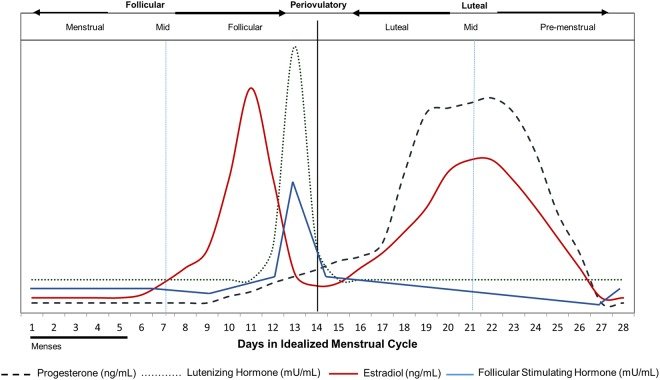
To illustrate, The Federalist lays out the dramatic hormonal shifts unique to women: human chorionic gonadotropin, which can surge from under 5 mIU/mL to hundreds of thousands during pregnancy; progesterone, which fluctuates wildly and crashes after birth; and estrogen, which can rise 100- to 1,000-fold in the third trimester. These are not merely minor wobbles—they are profound, body-wide changes that influence mood, energy, digestion, and more.

None of this means women are slaves to their hormones, The Federalist concedes. The same hormones enable pregnancy and childbirth, and they also play a role in sleep, relaxation, and maternal bonding. Rather, the outlet argues, the Clancy case has inadvertently revealed a biological reality that modern culture too often ignores: women and men are “created in beautifully distinct but complementary ways.”
The knock-on effect, The Federalist contends, is a healthcare system that refuses to treat women’s biology holistically. Instead of embracing the differences, the medical establishment—influenced by feminist ideology—often treats female biology as an obstacle, offering birth control and abortions rather than integrative care, and even language like “people who bleed” to describe women.
“One of the less crazy conclusions many women on the internet have drawn from the Clancy case is that health care for women in general and postpartum mothers in particular is lacking,” the outlet says. But the solution, it argues, is not to erase differences but to acknowledge them—to recognize womanhood and motherhood as gifts rather than burdens imposed by the patriarchy.
The trial itself continues to generate public fascination, with many on social media dissecting every detail. But for The Federalist, the deeper significance lies in what the Clancy defense reveals about the shifting sands of feminist rhetoric: when it becomes necessary to explain away a mother’s violence, even the most ideological feminists are quick to lean on biology. The question is whether they’ll extend that same acknowledgment to the rest of women’s lives.
“As long as our culture refuses to recognize that [biological difference],” The Federalist concludes, “women will suffer for it.”
Source: thefederalist.com — https://thefederalist.com/2026/08/28/weirdly-lindsay-clancy-feminists-stop-pretending-theyre-just-like-men/