
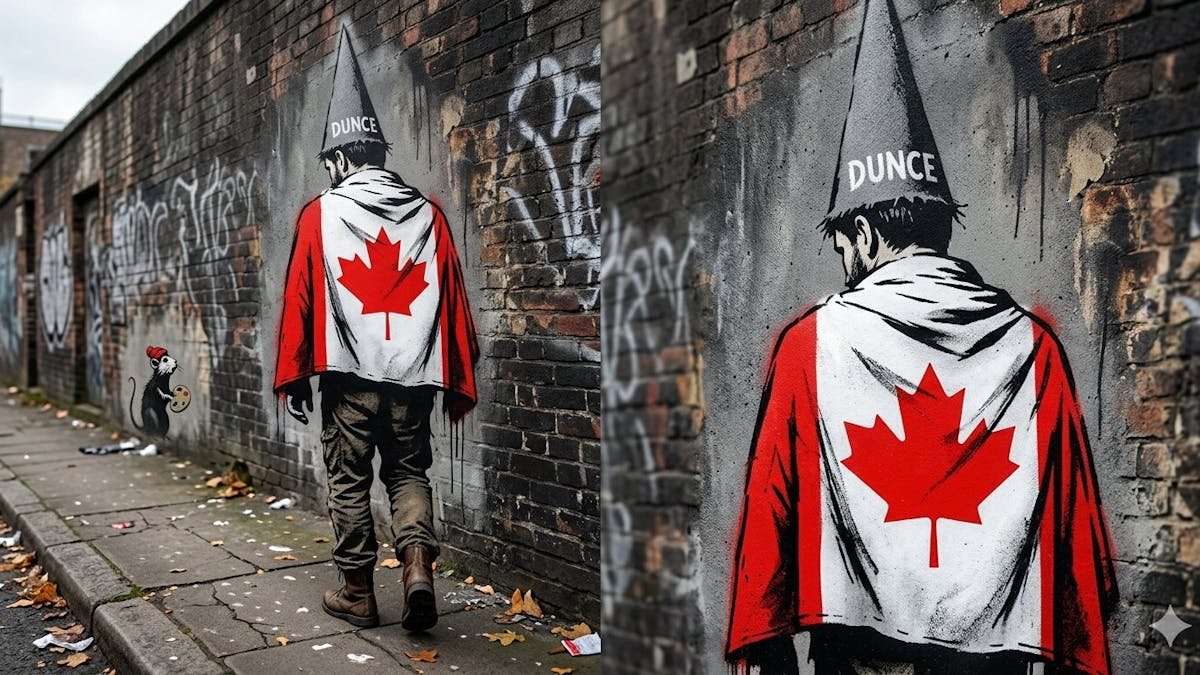
As the 25th anniversary of 9/11 approaches, a new controversy has erupted at Canada’s public broadcaster over how the attacks should be described—a dispute that critics say reveals a deeper and more troubling trend of anti-American sentiment eroding the foundations of Western unity.
Basem Boshra, Senior Director of Journalistic Standards and Public Trust at CBC News, instructed staff to avoid calling 9/11 a “terrorist attack,” instead referring to “the hijackings [that] led to passenger jet crashes in Washington, DC, Pennsylvania and Manhattan,” according to a memo that surfaced over the weekend. The CBC subsequently walked back the directive, but the episode has reopened questions about the broadcaster’s editorial stance and the broader Canadian political climate that produced it.
A ‘Pedagogical’ Rewriting of History
The memo, first publicized by Toronto Sun columnist Brian Lilley on social media, drew immediate backlash for what many described as an attempt at historical revisionism. The directive’s true intent, according to critics, was not linguistic precision but ideological conditioning—a subtle shift that transforms what is universally recognized as an attack on Western civilization into something ambiguous, or even justifiable.
Boshra, who is described as “another beneficiary of unfettered Islamic immigration in Canada” in a column for Daily Wire by Dimpee Brar, has become the focal point of a broader argument. While many commentators emphasize the security risks of open borders and naïve multiculturalism, Brar argues that the deeper issue lies in the climate of opinion that received him—one shaped by decades of Canadian political self-definition against the United States.

“To be ‘not American’ is, for many Canadians, a moral predicate,” writes Brar, Director of Engagement for Allies for a Strong Canada. She argues that anti-Americanism has become a cornerstone of Canadian public orthodoxy, particularly among the Left, for whom it serves as a marker of progressivism and enlightenment. The career of Prime Minister Mark Carney, she asserts, is inseparable from this posture.
Anti-Americanism as Hatred of the West
The column, published on The Daily Wire, contends that the United States is not merely one nation among many but “the profoundest political expression of the principles of the West: equality, natural rights, and liberty.” To despise America, it argues, is to despise Western Civilization itself—and anti-Americanism is how hatred of the West expresses itself within the West.
This sentiment, Brar writes, rarely confines itself to policy criticism. Instead, it questions the legitimacy of the American project, implying that it is a standing injustice. Once that opinion gains traction, attacks on American targets are easily reinterpreted—not as crimes against a common civilization but as responses to provocation.
That moral climate, she warns, becomes a national security threat. “The distance between ideas and actions is not as great as one may think,” she writes, citing two separate shooting attacks on the American consulate in Toronto this year and a bomb threat against the U.S. consulate in Halifax, for which a man was charged this month.

Fuel for Terrorist Justifications
The connection to Islamic terrorism, Brar argues, is direct. Terrorists define themselves by rejecting what they call “Western decadence”—a term that encompasses the entire architecture of the West, not just its perceived moral laxities. The United States, as the most visible and powerful representative of that architecture, becomes their primary target.
But when terrorists encounter a West habituated to describing America as racist, imperialistic, and unjust—when they see nations like Canada teaching their youth that moral virtue lies in distancing themselves from the U.S.—they reasonably conclude they face a disarmed civilization unwilling to defend itself. “The line between ‘America is wrong’ and ‘America has no right to exist’ may be clear to the philosopher,” she writes, “but it is not clear to the fanatic.”
Internal Anti-Americanism Compounds the Problem
The situation is worsened by the fact that the same anti-Americanism cultivated abroad also flourishes within the United States. Universities, media, and halls of power increasingly treat the U.S. as uniquely malevolent, teaching that its founding is criminal, its prosperity is the result of plunder, and its foreign policy is conquest. Rarely are students introduced to the founders’ justifications or the intellectual foundations of the regime.
This internal anti-Americanism, Brar contends, gives external critics a powerful rhetorical tool: “We only repeat what your own best minds say about you.” It complicates American statesmen’s efforts to defend the nation’s legitimacy and blurs the line between reasonable criticism rooted in founding principles and wholesale repudiation.

Anti-American terrorism, whether against the World Trade Center or American consulates in friendly nations, is thus the armed manifestation of a broader intellectual disposition. The terrorist and the professor may draw different conclusions from the same premise—that the United States is an obstacle to a more just world—but the shared premise itself is the essential problem from a national-security standpoint.
Allies as Auxiliaries
Brar warns that a supposed friend and ally whose political class rises to power through anti-Americanism becomes, willingly or not, an auxiliary to those who seek to harm Western Civilization. In respectable language, it supplies the delegitimization on which enemies rely.
If this fashion of contempt for America continues to spread among allies and dominate higher education at home, she predicts that attacks like 9/11 will multiply. At that point, she argues, the decision will already have been made that the American regime does not deserve to endure.
The warning is stark: Canada, the United States, and the West are on the precipice of returning to the delusions of September 10—the liberal fantasy that commerce cures fanaticism, peace is perpetual, and that enemies simply require more diplomacy. Those delusions, she writes, survived the terrorist attacks because they flatter the vanity of people who believe their refusal to judge has elevated them above both nature and history.
As the CBC’s memo controversy demonstrates, the battle over how to describe 9/11 is not merely semantic. It is a battle over the moral framework that will guide Western responses to future threats—and one that critics say is being lost.
Source: www.dailywire.com — https://www.dailywire.com/news/canadas-complicity-in-western-decline