
What would Americans actually get from eliminating every ton of carbon dioxide emitted from fossil fuels in the United States? According to a new report by economist Kevin Dayaratna for the conservative group Advancing American Freedom, the answer—even using assumptions designed to make the benefit look as large as possible—is essentially nothing measurable.
The report, titled “Fifty States, Virtually No Impact,” runs the question through computer models that emulate the United Nations’ Intergovernmental Panel on Climate Change (IPCC) simulations. In a concession to the IPCC’s own alarmist framework, the analysis assumes that U.S. emissions cuts began in 2020 and continued permanently. Even under those generous conditions, the projected warming avoided by eliminating all U.S. CO2 emissions would be about 0.11 degrees Celsius by 2050 and 0.24 degrees Celsius by 2100.
To put that in context, the report ranks all 50 states and the District of Columbia by their theoretical warming potential—and finds the differences between states amount to tiny fractions of a degree. As the report’s authors note, it is “ludicrous” to think such small differentials could be predicted decades in advance when even weekend weather forecasts are often wrong.
Trillions in Costs, a Fraction of a Degree in Return
The report lands at a moment when the United States has committed enormous resources to decarbonization. The Biden administration’s 2022 Inflation Reduction Act contained climate provisions that Congress priced at $391 billion, according to the report. Add to that the Obama-era Clean Power Plan, the Paris Agreement pledge to cut emissions more than 25% below 2005 levels, tailpipe and power plant regulations, appliance standards, and fuel mandates—and Americans are financing what the report calls “the largest reordering of an energy system in history.”
Yet, the report argues, the promised benefit has never been audited. “You were told this would help the planet,” it says. “Nobody said by how much.”
The report’s overarching message is pointed: a state legislator voting for U.N.-style climate policies would impose catastrophic economic costs on constituents in exchange for a temperature reduction that cannot be observed or felt.
Real Physics vs. IPCC Assumptions
Dayaratna’s analysis goes further, noting that every figure assumes the IPCC’s warming projections are sound. Strip away those assumptions, and the case for climate programs collapses even more dramatically.
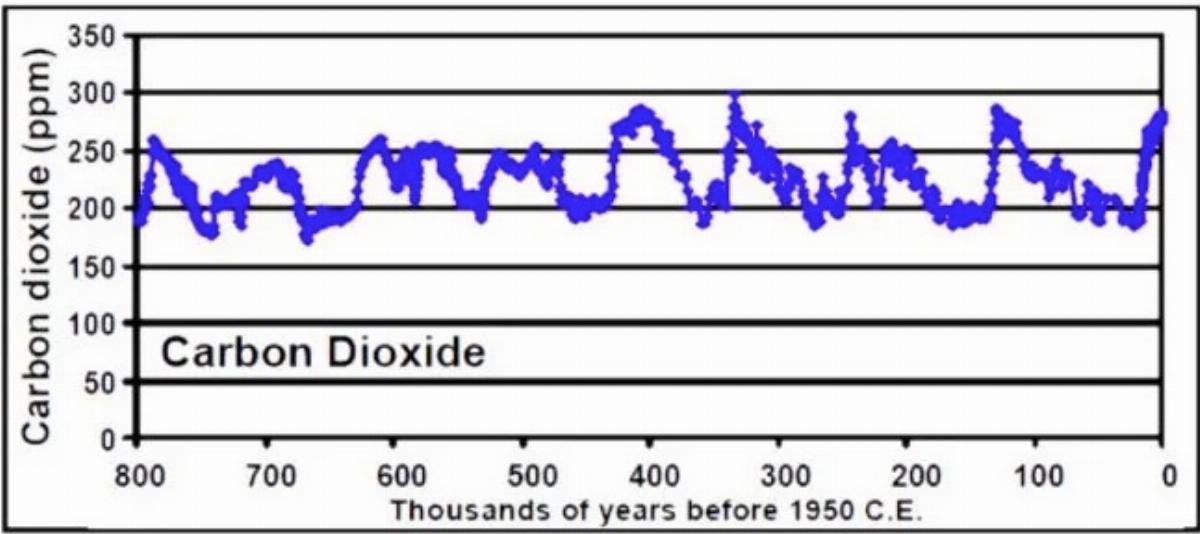
The underlying physics, the report argues, shows that greenhouse gases like CO2 exhibit diminishing returns in their warming effect as atmospheric concentrations rise. At current levels—around 420 parts per million—the infrared absorption bands for CO2 are already largely saturated, meaning additional molecules contribute progressively less to warming. Doubling CO2 from today’s concentration would translate to a temperature increase of less than 1 degree Celsius, according to the report.
Using more realistic assumptions, the report projects that eliminating U.S. emissions would avoid only 0.0084 degrees Celsius of warming by 2050—compared to the 0.11 degrees under IPCC assumptions. Even cutting out all global emissions would avoid only 0.070 degrees Celsius, again assuming such predictions are possible at all.
Happer: IPCC Science Is ‘Badly Flawed’
The report leans heavily on comments made by Dr. William Happer, professor of physics emeritus at Princeton University, in 2025 filings to the Environmental Protection Agency. Happer called the IPCC’s assertions “badly flawed science.” He argued that greenhouse gases from the Industrial Revolution to the present have not caused catastrophic warming, extreme weather, or harm—and that saturation ensures their future impact will be even smaller.
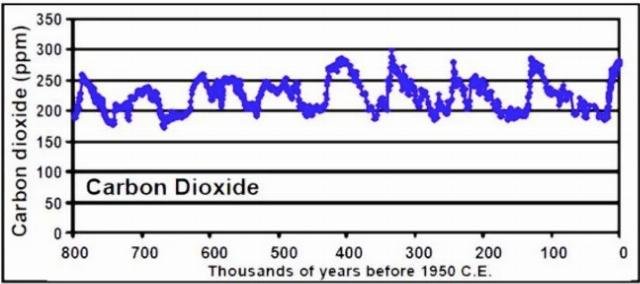
Happer also contended that most observed warming since 1750 reflects natural recovery from the Little Ice Age, with greenhouse gases contributing only a fraction of the change. He urged the EPA to “inform the public of the real science that increasing carbon dioxide and other greenhouse gas emissions, and increasing the use of fossil fuels, will benefit people worldwide with more food and cheap energy, with only a trivial effect on temperature and extreme weather.”
A Cost-Benefit Reckoning
The report’s authors frame the findings as a direct challenge to the economic rationale behind the energy transition. The return on trillions in subsidies, regulatory compliance costs, higher electricity prices, and lost economic growth, they argue, is “hypothetical, minuscule temperature changes that mean nothing.”
They conclude that policymakers should weigh their energy decisions accordingly, prioritizing affordable and reliable energy supplies over what they call the “vacuous gestures of an antihuman ideology.”
The report comes from Advancing American Freedom, a conservative policy group founded by former Vice President Mike Pence. Its author, Kevin Dayaratna, is a senior statistician and research fellow at the Heritage Foundation. The piece was written by Vijay Jayaraj, a science and research associate at the CO2 Coalition, a group that advocates for the benefits of fossil fuels and opposes carbon regulations.
Critics of the analysis are likely to point out that the IPCC’s own models are not designed to isolate U.S. emissions alone, and that the cumulative effect of all nations’ pledges—not just those of the United States—is what matters for global temperature. But the report’s central claim, that the U.S. alone cannot meaningfully change the global thermostat, is unlikely to be disputed by either side of the climate debate.
The more contentious question is what that means for policy. If the U.S. contribution to global warming is small, does that justify inaction—or does it argue for a coordinated international effort? The report’s authors have made their answer clear. The debate over how to interpret that arithmetic is only beginning.
Source: www.americanthinker.com — https://www.americanthinker.com/blog/2026/09/measuring-meaningless-climate-actions/