
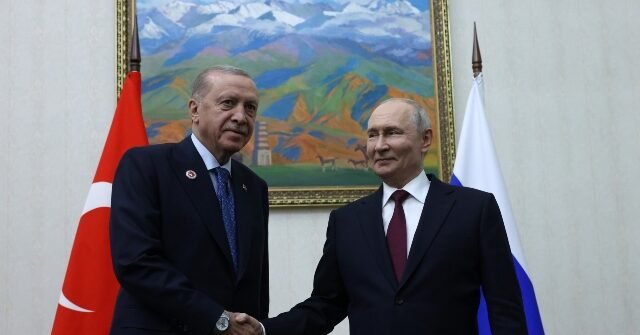
Turkish President Recep Tayyip Erdogan has doubled down on his claim that Ankara can maintain strong friendships with the West while simultaneously forging closer ties with China and Russia, a diplomatic tightrope act that analysts say will be put to the test in the coming months.
Speaking to reporters, Erdogan expressed confidence that Turkey’s relationships with NATO allies and Western institutions need not suffer as the country pursues deeper cooperation with the China-Russia axis. His comments come amid growing friction between Ankara and its traditional Western partners over a range of issues, from regional security to trade disputes.
A Balancing Act
Erdogan’s vision is one of a Turkey that remains a key Western ally while also carving out an independent role on the global stage. The Turkish leader has frequently emphasized his country’s ability to maintain multiple alliances without being forced to choose sides, a position that sets him apart from many of his NATO counterparts.
Yet this stance has increasingly drawn skepticism in Western capitals, where officials question whether Turkey’s recent outreach to Beijing and Moscow is merely pragmatic diplomacy or a fundamental shift in its geopolitical orientation. Turkey’s purchase of Russian S-400 missile defense systems, which triggered US sanctions and its removal from the F-35 fighter jet program, remains a raw point in relations.
Tensions With the West
Relations between Ankara and Washington have been strained for years, with disagreements over Syria policy, the Eastern Mediterranean energy disputes, and Turkey’s human rights record creating persistent friction. More recently, European leaders have expressed alarm over Turkey’s assertive foreign policy moves, seeing them as challenges to NATO unity at a time when the alliance faces new security threats.
Despite these strains, Erdogan argues that Turkey’s geographic position and diplomatic leverage make it an indispensable partner for both the East and West. He has positioned Turkey as a potential bridge between civilizational blocs—an economic powerhouse at the crossroads of Europe, Asia, and the Middle East that can maintain productive ties across the geopolitical spectrum.
The China-Russia Dimension
The Turkish president’s outreach to Beijing and Moscow has accelerated in recent years, with expanded trade agreements, energy cooperation, and high-level diplomatic visits. Turkey has deepened its involvement in China’s Belt and Road Initiative and has worked to maintain open lines of communication with Moscow even as Russia faces international isolation over its actions in Ukraine.
This multitrack approach has yielded concrete benefits for Ankara, which has managed to position itself as a rare interlocutor capable of speaking with all sides in several major international conflicts. Turkey has played a mediating role in regional disputes and has maintained trade relations with Russia that other NATO members have curtailed.
Questions of Feasibility
The central question, however, is whether Erdogan’s balancing act remains sustainable over the long term. Western officials have made clear that full integration into Western security structures carries expectations of alignment, particularly on matters where the interests of NATO and Moscow diverge sharply.
Likewise, both Beijing and Moscow are likely to demand concrete commitments from Ankara that could test its Western commitments. As competition between major powers intensifies, Turkey may find it increasingly difficult to extract maximum benefit from all sides without ultimately being pushed toward a clearer alignment.
Erdogan’s assurances that Turkey can keep friends on all sides are being met with openly skeptical reactions among Western allies, who note that strategic partnerships come with obligations. Turkish diplomats have sought to reassure NATO partners during recent meetings, but the underlying tensions show little sign of abating.
What It Means Going Forward
For now, Turkey appears determined to continue its independent course, leveraging its strategic position to maximize its influence. Whether this approach can withstand the pressures of a changing world order remains one of the most closely watched questions in international affairs.
Erdogan’s latest statements suggest no imminent change in Turkey’s foreign policy direction. Instead, the Turkish leader is seeking to manage perceptions—both at home and abroad—presenting his country’s multipolar outreach as a natural extension of its sovereignty rather than a break with the West.
The coming months will reveal whether Turkey’s Western allies accept Erdogan’s framework or begin pressing Ankara for clearer answers about where its ultimate loyalties lie.
Source: www.breitbart.com — https://www.breitbart.com/middle-east/2026/09/03/erdogan-claims-turkey-can-remain-friends-with-the-west-while-joining-china-russia-axis/