
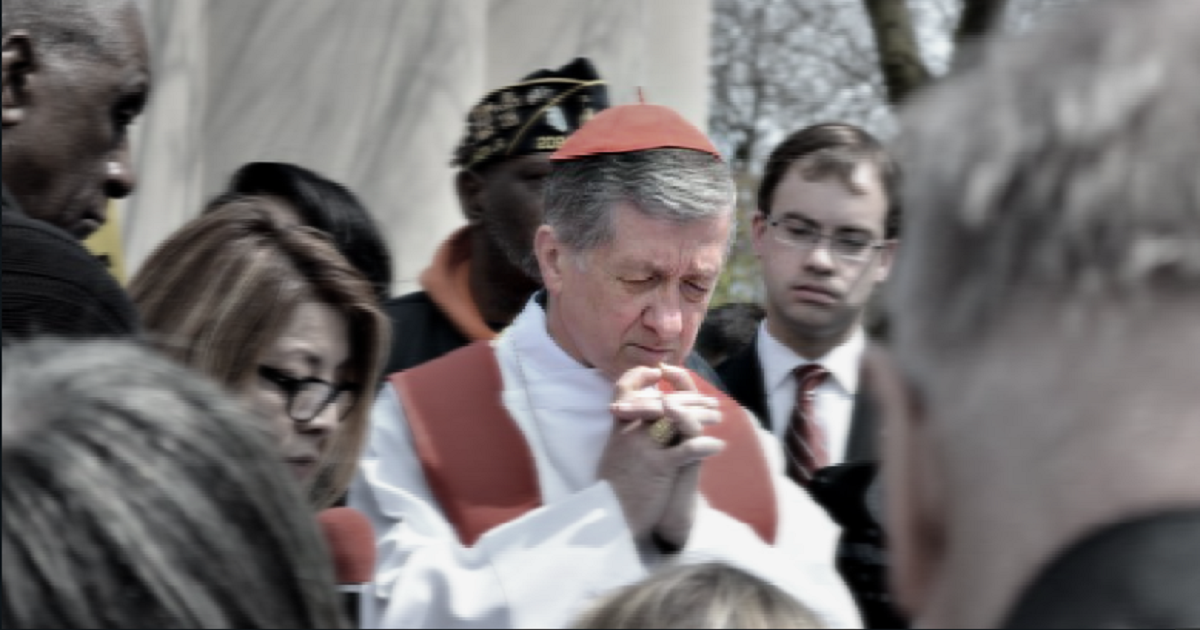
Chicago’s archbishop and two orders of Catholic nuns are taking the state of Illinois to federal court, arguing that a newly enacted assisted suicide law violates their religious freedom by compelling them to participate in ending patients’ lives.
Cardinal Blase Cupich, along with two Catholic religious orders and an Illinois pharmacist, filed a lawsuit Thursday seeking to block enforcement of the End-of-Life Options for Terminally Ill Patients Act (EOLOA), according to a press release from the Becket Fund for Religious Liberty, which is representing the plaintiffs.
The law, signed by Democratic Gov. J.B. Pritzker in December 2025 and scheduled to take effect on Sept. 12, would impose fines on healthcare providers who refuse to dispense lethal drugs or provide information about assisted suicide, the lawsuit alleges. The plaintiffs argue this forces the Church and its affiliated institutions to cooperate with practices that contradict Catholic teaching on the sanctity of life.
The lawsuit names the Illinois Department of Veterans Affairs, the Illinois Department of Public Health, and the Illinois Department of Financial and Professional Regulation as defendants. Filed in U.S. District Court for the Northern District of Illinois, the suit seeks a permanent injunction to stop the state from requiring participation in assisted suicide.
Lead attorney Mark Rienzi of the Becket Fund said in a statement: “The state should stop trying to make Catholic nuns help patients kill themselves. It is awful for Illinois to be forcing every sick and dying person within its borders to hear its message of suicide at their lowest moment — regardless of whether they want it or not. Patients deserve the freedom to seek healing, hope, and accompaniment without the government forcing suicide into the conversation. The Constitution protects that freedom.”
Cupich’s legal action is not new opposition. When the law passed last year, the cardinal publicly criticized Pritzker, accusing him of “legitimizing suicide as a valid solution for life’s challenges.” The lawsuit echoes that stance, quoting the cardinal and Pope Francis’ teaching that Catholics must “respect the sacredness of life from the very beginning to the very end.” The plaintiffs argue the state has no business forcing them to act against that principle.

The EOLOA is part of a broader trend: Illinois became the 12th state to pass so-called “right-to-die” legislation. The laws have drawn opposition not only from religious leaders but also from disability rights activists who worry about pressure on vulnerable populations.
This lawsuit is one of at least three filed before the law’s effective date. A federal judge is expected to rule Friday on a request for a preliminary injunction in one of the other suits, according to the Becket Fund. Cupich’s suit, filed jointly with the nuns and pharmacist, seeks a permanent block.
The plaintiffs are asking the court to prevent the state from providing counsel and information about assisted suicide, and from helping patients qualify for or fill prescriptions for what they describe as “suicide drugs.”
The Becket Fund has been active in similar cases nationwide, defending religious institutions that refuse to participate in assisted suicide or abortion-related procedures. In Illinois, the religious orders joining Cupich have not been named in public reports, but the Becket Fund’s involvement signals a coordinated legal strategy.
Opponents of the law argue that its implementation would force Catholic hospitals, pharmacies, and individual caregivers to facilitate deaths they consider morally unacceptable. Supporters of assisted suicide legislation typically argue that terminally ill adults should have the right to end their lives with medical assistance, and that safeguards prevent abuse.
The coming days will be crucial, as Friday’s preliminary injunction ruling could set the tone for how courts handle these challenges. If the injunction is granted, it would temporarily block enforcement of the law while litigation proceeds. If not, the law would take effect as scheduled on Sept. 12, though other lawsuits could still lead to delays.
For Cupich and the other plaintiffs, the fight is not just legal but existential. As one Becket Fund representative put it, this is “a hill where we will fight until the end.”
Source: www.thegatewaypundit.com — https://www.thegatewaypundit.com/2026/09/chicagos-archbishop-joins-two-orders-catholic-nuns-lawsuit/