
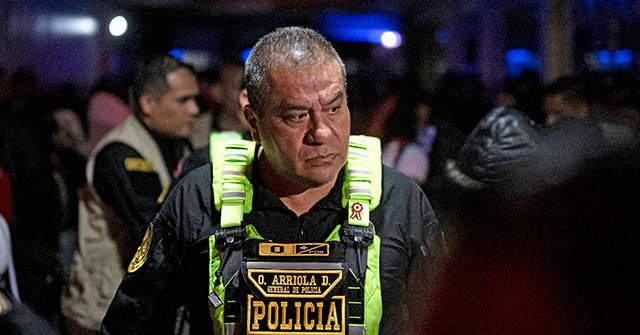
Óscar Arriola, the Commander General of the Peruvian National Police, announced his resignation on Sunday amid mounting criticism over the force’s handling of a violent crime crisis that has gripped the South American nation. The resignation, confirmed during an official broadcast alongside Prime Minister Luis Galarreta and Interior Minister César Astudillo, comes after a period of intense scrutiny and a surge in homicides that has tested public confidence in law enforcement.
Arriola, who took office in late 2025 under then-President Dina Boluarte just days before her impeachment, has led the police force through an exceptionally turbulent political period. During his tenure, Peru saw four different presidents—Boluarte, José Jerí, José María Balcázar, and current conservative President Keiko Fujimori, who assumed office in late July. This revolving door of leadership added to the challenges facing the police as they grappled with a rising tide of crime.
Local media outlets have highlighted that Arriola’s administration has been the target of widespread criticism, particularly as crime statistics painted a grim picture. According to local law enforcement, over 194,000 crimes were recorded during the first trimester of 2026 alone. While authorities later reported a reduction in some categories, including homicides, extortions, kidnappings, and robberies, the improvements have not been enough to silence critics. The Peruvian newspaper La República reported that at least 169 homicides were documented by local forces in August 2026 alone, underscoring the persistent severity of the violence.
During the Sunday night broadcast, Arriola addressed the nation, stating, “I am leaving with a completely clear conscience and my head held high, just as I have done ever since I left my beloved Chiclayo. Many thanks to President Keiko Fujimori for this opportunity, as well as to President Boluarte, President Jerí, and, of course, President Balcázar.” His remarks reflected a tone of dignity, even as he acknowledged the difficult circumstances of his tenure.
Arriola rejected any suggestion that his resignation was demanded by President Fujimori, instead attributing the decision to a “personal evaluation” tied to the nation’s institutional and governance challenges. However, La República, citing unnamed government sources, reported on Sunday that the official’s exit had been “agreed” with the government since at least mid-August. In his address, Arriola expressed “special gratitude” to President Fujimori for the “support received” over the past weeks “despite the challenges that reality has brought to light in our dear and beloved Peru.”
A Government Prioritizing Security
Prime Minister Galarreta announced that Arriola would be succeeded by Lieutenant General Fredy López Mendoza, who has been serving as the chief of the police force’s general staff since January 1. Prior to that role, López Mendoza directed the police force’s national criminal investigation and anti-corruption divisions, bringing a wealth of experience in tackling organized crime and corruption—a critical asset as Peru confronts its security challenges.
Galarreta detailed that, following the officialization of his resignation, Arriola will submit a request for retirement from the police force. The Prime Minister characterized this decision as a “gesture of commitment” to the country, acknowledging the official’s career and accolades.
The government has emphasized that security is a top priority under President Fujimori’s administration, which has faced the daunting task of restoring order in a nation where crime has become a palpable concern. Speaking to Infobae, Galarreta described the situation as “complicated” but assured citizens that the government is “resolute in its fight against crime and that the measures adopted are already yielding results.”
“Crime seeks to challenge us as a society and as a state, and we cannot allow that,” Galarreta said, underscoring the administration’s determination. He affirmed that the Peruvian government aims to support the National Police’s constitutionally mandated mission to preserve security, allocating new resources to protect human life and move toward what he described as a “safe Peru.”
A Climate of Insecurity
The resignation comes at a time when public confidence in the police has been eroded by the relentless wave of violence. The staggering number of crimes recorded in early 2026, combined with the persistence of homicides into August, has fueled frustration among citizens and politicians alike. Critics have argued that Arriola’s leadership lacked the strategic vision and operational effectiveness needed to stem the crisis, though supporters point to the broader institutional turmoil as a complicating factor.
Peru’s political instability has been a backdrop to the security crisis, with four presidents in under a year creating a sense of unpredictability at the highest levels of government. The transition to President Fujimori’s conservative administration in late July brought a renewed focus on law and order, but the challenge remains formidable.
Arriola’s departure marks a significant moment in this ongoing struggle. His tenure, spanning a period of immense political flux and violent crime, will likely be studied as a cautionary tale about the difficulties of policing in a volatile environment. As López Mendoza prepares to take the helm, the new leadership faces immediate pressure to deliver tangible improvements in public safety, a task that will require not only strategic acumen but also the trust of a wary public.
For now, the government has signaled its commitment to addressing the crisis head-on, with Galarreta’s words offering a measure of reassurance. The coming weeks will reveal whether the change at the top of the National Police can translate into a meaningful shift in the country’s security landscape, as Peruvians look for signs that the tide of crime can be turned.
Source: www.breitbart.com — https://www.breitbart.com/latin-america/2026/09/07/peru-police-chief-resigns-after-homicide-surge-in-august/