

Twenty-five years on, the September 11, 2001 attacks remain seared into American memory as a sudden, shocking blow—often compared to Pearl Harbor. But a new analysis in American Thinker argues that the date itself was far from random. According to Larry Moore’s piece, September 11 carried centuries of symbolic weight in the Islamic world, tied to a series of Ottoman Empire reverses that marked the beginning of its long decline.
The article, published to mark the 25th anniversary of 9/11, contends that the choice of September 11 was neither happenstance nor coincidence, but rather a deliberate nod to a date that had spelled bad luck for Muslim empires seeking to conquer Europe. Moore calls September 11 “an onion” with multiple layers of meaning, stretching back through Ottoman history and more than three decades of airline hijackings.
A Pattern of September 11 Setbacks
Moore points to four major Ottoman setbacks that occurred on or around September 11, beginning with the Great Siege of Malta in 1565. A small force of Knights of St. John on Malta faced a vastly larger Ottoman invasion force that seemed poised for a quick victory, which would have opened a gateway to Italy and the rest of Europe. But the island held out through months of siege, and when a relief force arrived from Sicily, the Ottomans withdrew in September. The attempt to use Malta as a stepping stone toward Rome had failed.
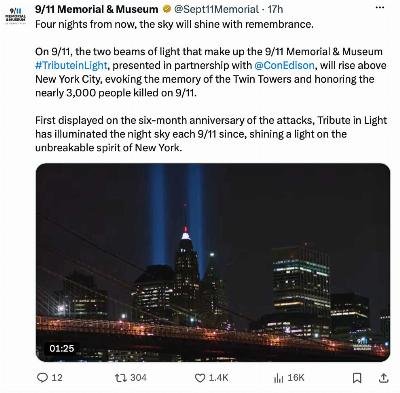
Then came September 11, 1609, when Spain issued an expulsion order against the Moriscos—descendants of Muslims who had converted to Christianity. Muslim rule in Spain had ended with the fall of Granada in 1492, but the Morisco population remained until this decree began their mass removal, effectively closing the final chapter of Islam’s long presence on the Iberian Peninsula.
Perhaps the most famous date is September 11–12, 1683, when the Battle of Vienna marked the high-water point of Ottoman expansion into Central Europe. After a two-month siege, a European relief army that included Polish forces under King John III Sobieski attacked, culminating in the famous cavalry charge that broke the Ottoman army and saved Vienna. From that point, Moore writes, began the long, slow decline that would eventually end with the Ottoman Empire’s collapse after World War I.
Another decisive defeat came on September 11, 1697, at the Battle of Zenta, where Prince Eugene of Savoy’s Imperial army caught Ottoman forces crossing the Tisza River. Tens of thousands of Ottoman troops were killed, wounded, or drowned, while Imperial losses were comparatively small. The defeat was so severe that it helped force the Ottomans into the Treaty of Karlowitz in 1699, under which they surrendered extensive European territories, including most of Hungary and Transylvania.
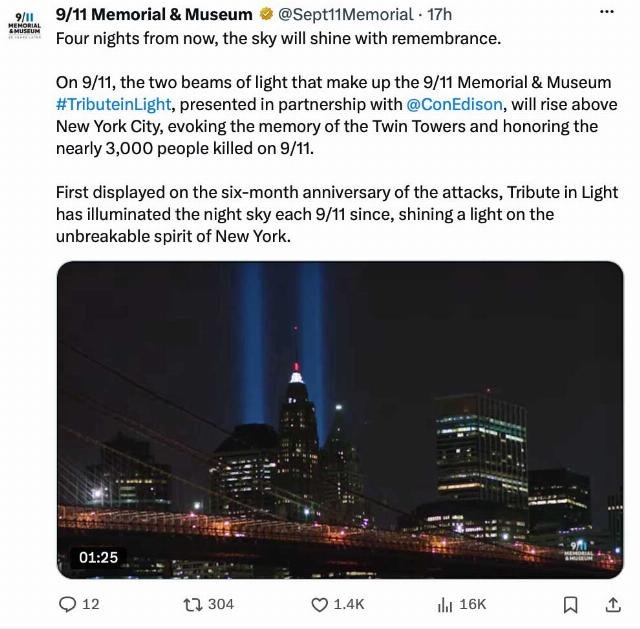
The Hijacking Pattern Preceding 9/11
Moore also emphasizes that the 2001 attacks were not an isolated incident but the culmination of a pattern of airline hijackings dating back more than 30 years, many of them occurring in the September 5–13 window. The article catalogs a series of hijackings in September 1970, including a TWA flight from Amsterdam, an attempted El Al hijacking thwarted by a steep dive, and multiple aircraft flown to desert airfields in Jordan over several days in mid-September.
By September 1986, the violence escalated dramatically. Pan Am Flight 73 was stormed by four armed hijackers at a Karachi stopover. Flight attendants helped the cockpit crew escape, but over the following 16 hours, hijackers shot a passenger, then opened fire and threw grenades among passengers and crew, killing approximately 20 people before the ordeal ended.
Moore argues that the 1970 hijackings produced remarkably few fatalities, but the 1986 attack marked a turn toward violence and homicide as central to these incidents. All of that paled in comparison to September 11, 2001, when nearly 3,000 people were killed.
“For most Americans, September 11, 2001 felt like an isolated attack that came out of nowhere, much like the attack on Pearl Harbor on December 7, 1941—a coordinated, unexpected air attack,” Moore writes. But by tracing the date’s deep roots in Ottoman history and the preceding decades of hijackings, he argues the 2001 attacks were not random but a deliberate selection of a date laden with historical meaning.
Source: www.americanthinker.com — https://www.americanthinker.com/articles/2026/09/the-ottoman-empire-and-9-11-a-bad-luck-number-like-13-in-the-west/