
In a Labor Day reflection that quickly moves from employment statistics to ancient Greece, American Thinker columnist Mike McDaniel makes a sweeping argument: the West’s—and especially America’s—success is no accident of geography or demographics, but the product of a rationalist tradition born in the Hellenic world. And that tradition, he warns, is now endangered by policies that welcome enemies of Western civilization to America’s shores and, in some cases, to its halls of power.
McDaniel opens by citing a Powerline blog post from Scott Johnson, who noted that the hardest-working, most fully employed states are all red states—South Dakota leading the pack, followed by North Dakota, Alaska, Hawaii, and Wyoming. McDaniel, a longtime Wyoming resident, quibbles only with Wyoming’s fifth-place ranking, saying he is amazed it isn’t first. At the other end of the spectrum, he observes, Michigan—a blue state—ranks dead last in employment.
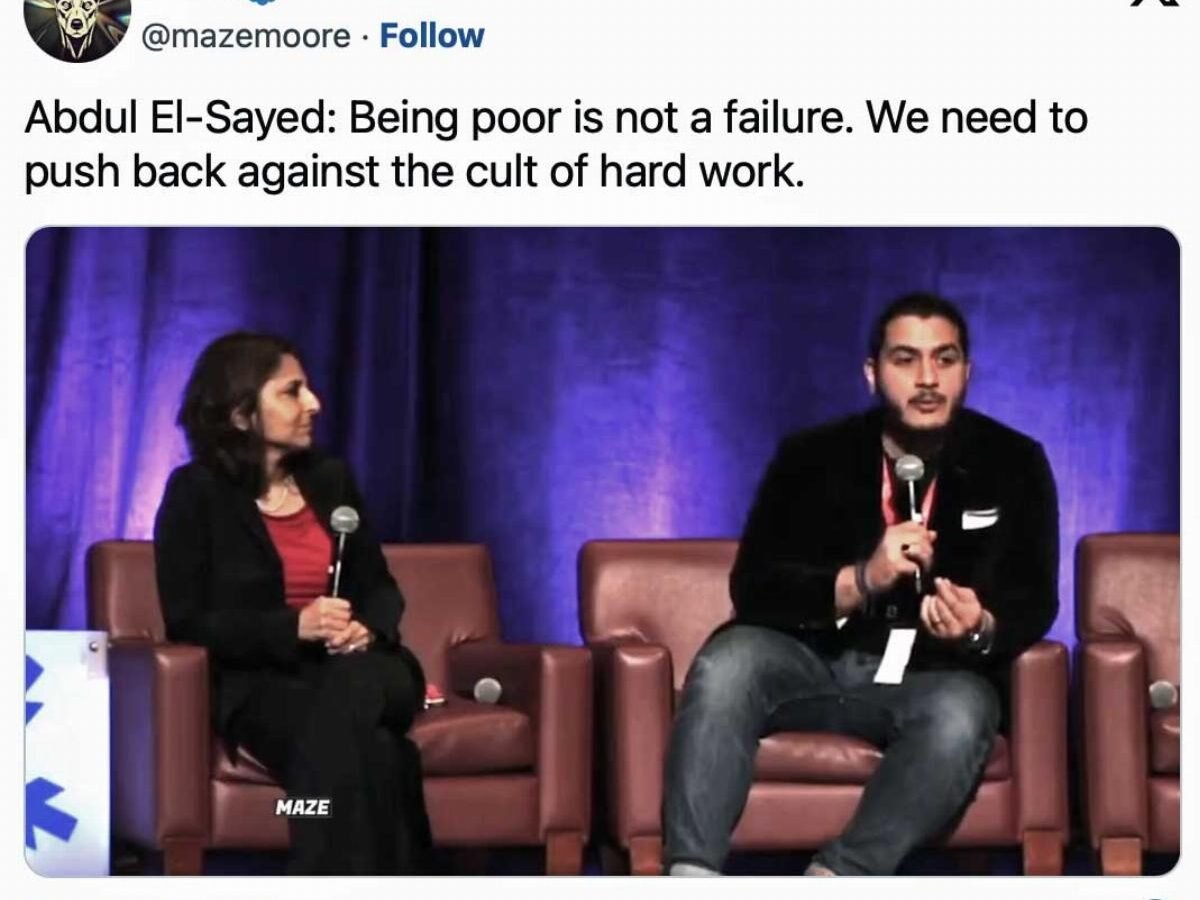
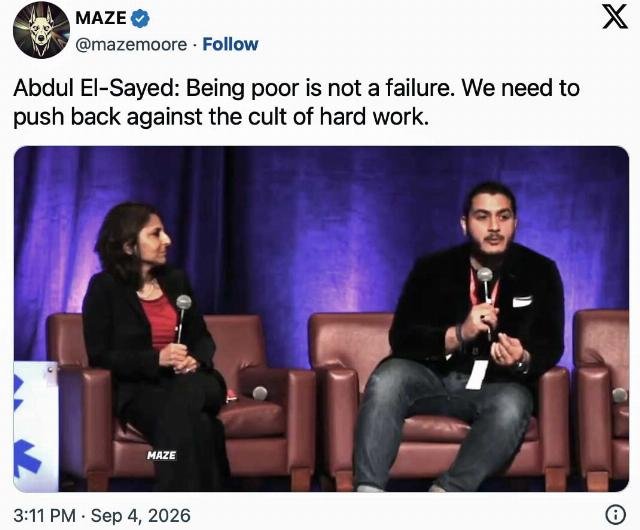
The column then pivots to the state’s political scene, pointing to Abdul El-Sayed, a public health figure and former gubernatorial candidate McDaniel describes as an “anti-American Islamist,” as someone who wants to make Michigan’s employment picture worse.
The Greek Roots of Western Achievement
The heart of McDaniel’s argument rests on a historical claim about the unique origins of systematic reasoning. He invokes classicist Victor Davis Hanson to remind readers that fewer than two million Greek speakers, split among 1,500 quarreling city-states and surrounded by more populous and powerful civilizations, produced philosophical, architectural, artistic, and literary masterpieces that are still recognized as such today. Through their influence on Alexander the Great and later the Roman Republic and Empire, Hellenism and its rational way of thinking spread across the Mediterranean and beyond, reshaping how millions worshipped, thought, wrote, built, farmed, sailed, governed, and fought.

McDaniel also cites Charles Murray’s controversial survey of the world’s major accomplishments in science, math, art, and literature. By Murray’s accounting, roughly 85 percent of civilization’s greatest achievements can be credited to residents of Europe, the United States, and other Western nations—all inheritors of the Greek-founded tradition of rationalism. The world’s golden ages, from Periclean Athens to Republican Rome, the twelfth-century Renaissance, the Italian Renaissance, the Enlightenment, the Industrial Revolution, and the Information Age of Silicon Valley, were all Western phenomena, McDaniel argues.
Evidence in Enrollment and Rankings
McDaniel marshals contemporary evidence to support the claim of Western intellectual dominance. More than five hundred thousand Chinese students are currently enrolled in North American and European universities, he notes, while relatively few Westerners study in China. In a recent Times Higher Education survey of the world’s top hundred universities, eighty were located in Europe, the United States, the United Kingdom, Australia, or New Zealand. Even the few top-ranked non-Western universities in China, Japan, Singapore, and Korea, he points out, were established in emulation of the Western tradition of higher education.
Without this tradition of open-ended reasoning, born and sustained in a climate of political freedom, McDaniel argues, it is impossible to envision a Silicon Valley emerging in the contemporary Islamic Middle East. By the same token, he says, it is unimaginable to picture an Oxford, Stanford, or MIT in North Korea, an Elon Musk or Jeff Bezos operating out of Pakistan, or an unfettered, uncensored, and unregulated scientific conference held in Beijing or Tehran.
The Explanations That Fail
McDaniel is careful to reject alternative explanations for Western dominance. He dismisses arguments based on geographical advantages, foreign appropriation, or racial differences as insufficient. Instead, he locates the answer in the unique Western classical cultural heritage of free, empirical, and rational thinking—invented in Greece and Rome, transmitted with enhancements through the Middle Ages, the Italian Renaissance, the European and British Enlightenments, and the Industrial Revolution, down to the modern Western world.
Reason, he writes, remains the fountainhead of the classical legacy. The degree to which it still flourishes explains how and why much of the twenty-first-century world works—and why much still does not.
Immigration as the Threat
The column closes with a warning. Americans across the hard-working states, McDaniel writes, are nodding in agreement, thankful—as Lee Greenwood put it in “God Bless the USA”—to be living here today. They also thank the long line of thinkers, philosophers, scientists, mathematicians, engineers, mothers, and hard-working, rationally reasoning people whose brilliance began in Greece and eventually ended up in America, where it was carried forward.
America’s greatness, McDaniel argues, comes in part from having taken in the best, brightest, and hardest-working from countries that share its rational heritage. Those immigrants, he says, gladly assimilated and became Americans. But unrestrained immigration—including, in his words, letting enemies of Western Civilization into the country and electing them to positions of political power—threatens to undo millennia of real progress, not the “Democrat” progress he dismisses.
The column is a provocative blend of labor-market observation, classical history, and contemporary political commentary. Its claims about the uniqueness and superiority of Western rationalism, and its characterization of immigration as a threat to that inheritance, are certain to spark debate—which, in the tradition of open-ended reasoning McDaniel celebrates, may be precisely the point.
Source: www.americanthinker.com — https://www.americanthinker.com/blog/2026/09/where-s-the-reason-in-that/