
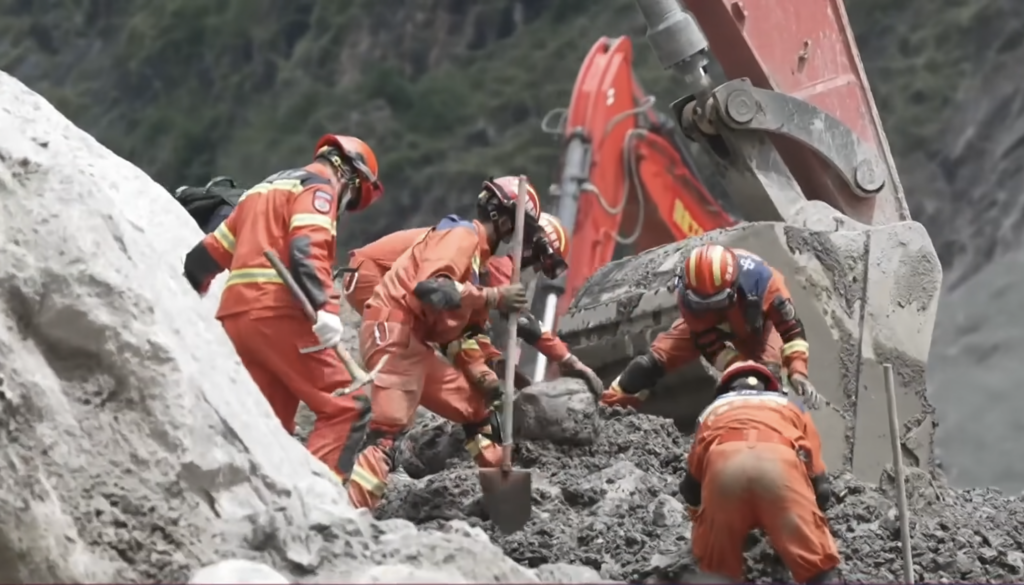
More than a week after a devastating flash flood of ice, rock, and mud tore through a Himalayan valley on the Tibet-Nepal border, a stark contrast has emerged in how the two neighbors are handling the disaster. While Nepal has opened its borders to foreign journalists and released daily casualty updates, China has responded with secrecy, censorship, and punishment, according to a new report from The Federalist.
The flood, which struck the remote region near Gyirong Port, has left large sections of riverbank destroyed and thousands missing. Nepal’s disaster authority reported as of Sept. 3 that 1,259 people were dead and more than 5,000 missing, including 583 foreigners—about 85 of them Americans. More than 12,000 people have been rescued so far.
China’s official last update, issued on Aug. 29, listed just 16 dead and roughly 546 missing—figures that Tibetan exile groups say are implausibly low compared with Nepal’s rising toll. Foreign journalists have been unable to verify China’s numbers because Beijing has barred them from the Tibetan disaster zone, which was already among the world’s most restricted regions for reporters.
Beijing’s Information Lockdown
The Federalist reports that Chinese authorities have intensified censorship in Tibet since the flood. Censors have removed videos and eyewitness accounts from Chinese social media platforms, even scrubbing content from private chat groups. Footage showing crowds running as the gate at Gyirong Port closed—widely seen outside China—remains largely invisible to the Chinese public.
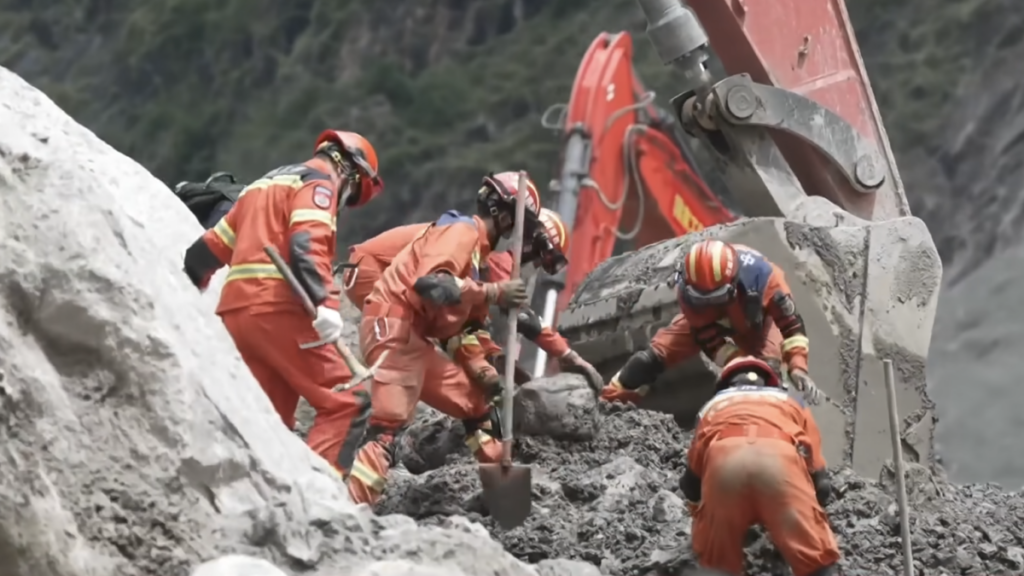
State media coverage has focused on Communist Party leaders and People’s Liberation Army rescue efforts, with reports rarely showing victims, survivors, or images of the destruction. This marks a sharp departure from Nepal’s transparent, human-centered coverage.
Inside China, officials and online influencers have been instructed to repeat only the government’s official casualty numbers. Anyone who questions those figures faces up to 10 days in detention and a 1,000-yuan fine, roughly $150. By Aug. 31, at least 10 people had already been punished for “spreading rumors” or distributing “false disaster information,” according to the report.
Tibet’s Longstanding Repression
Tibet was extremely difficult for foreign journalists to access even before the flood. The region is typically open only to government-guided tours, and Tibetans risk detention for speaking to foreign reporters or posting content that contradicts the official narrative. A BBC correspondent once noted that reaching sources in Tibet is often harder than in North Korea.
UN experts and human rights groups have long accused Beijing of forced assimilation and serious abuses in the region. Since 2009, more than 150 Tibetans have self-immolated to protest Chinese rule. On July 2, 2026, Tibetan activist Lobga Rangzen, who lived in exile, died after setting himself on fire outside the United Nations headquarters in New York.
The Federalist’s report, titled “China’s Censorship Of Tibet Flooding Proves Again The CCP Can’t Be Trusted,” draws direct parallels between Beijing’s current response and its handling of the early COVID-19 pandemic.
COVID-19 Playbook Repeated
In early 2020, Chinese officials in Wuhan and Beijing concealed the truth about person-to-person transmission for weeks, the report notes. They detained citizens for “spreading rumors,” harassed independent journalists, removed images of crowded hospitals, and likely undercounted deaths and infections. Beijing also pressured the World Health Organization to downplay the threat, with WHO Director-General Tedros Adhanom Ghebreyesus publicly praising China’s response even as human-to-human spread was being denied. The WHO did not declare a public health emergency until Jan. 30, and Taiwan—which was closely tracking cases—was excluded from emergency meetings.

An epidemic model later estimated that if China had acted just one week sooner, COVID cases could have fallen by about 66%. Acting three weeks earlier might have reduced cases by approximately 95%. The implication is stark: earlier transparency could have spared the world months or even years of disruption.
That history has left many global observers skeptical of Beijing’s assurances. A Pew Research Center survey found Xi Jinping’s reputation abroad at a historic low, with many people saying they do not trust him to “do the right thing” in world affairs.
Questions Over Early Warning
The trust deficit is now extending to the Himalayas, where Nepali and Indian officials are asking whether China gave Nepal adequate advance warning of the flood. China possesses far more advanced technology than Nepal, including AI-based monitoring and weather satellites. Indian scholar Brahma Chellaney noted that “China operates hydrological monitoring stations across the Tibetan headwaters, collecting real-time data on river levels and upstream conditions.”
Nepal’s science minister, Mahabir Pun, said Kathmandu received no warning from China and is now requesting a formal early-warning link. Former Nepali planning official Govind Raj Pokharel questioned why a country with advanced satellites failed to detect the upstream collapse and alert downstream communities.
Chinese officials have responded by insisting they made “every effort to monitor Himalayan terrain for risks and share the information with its neighbor.” But China’s censorship means Nepal has no independent way to verify what Beijing knew—or when it knew it.
Natural Disaster or Something More?
The Federalist report also highlights growing debate over the flood’s cause. China has dismissed it as entirely natural, and the U.S. Geological Survey has ruled out a dam failure as the trigger. However, Chellaney points to China’s massive infrastructure projects across the seismically active region—including highways, border facilities, and the world’s largest dam—as potential contributing factors.
Even Chinese geologists have raised concerns about the stability of terrain near the Yarlung Tsangpo dam project, describing the ground as having “loose structure and weak cohesion.” They warned that “after long-term immersion and under the influence of fault activity and earthquakes, instability of the slopes on both sides of the reservoir area can be extremely easily triggered.”
As Chellaney put it, “the boundary between natural disaster and human-made catastrophe is blurring in the Himalayas.” While this week’s flood may not be directly attributable to construction, future events could prove harder to separate from Beijing’s building spree.
A Pattern of Control Over Care
For The Federalist, the lesson from the Tibet flood mirrors the pandemic: when crises strike, China’s communist leadership defaults to censorship and information control, prioritizing political stability over the welfare of citizens and neighbors.
“The CCP cannot be trusted, especially in a crisis, because it always prioritizes power and control over the well-being of its citizens or the global community,” the report concludes. And with thousands still missing and families on both sides of the border desperate for answers, the cost of that secrecy may be measured in lives.
Source: thefederalist.com — https://thefederalist.com/2026/09/09/chinas-censorship-of-tibet-flooding-proves-again-the-ccp-cant-be-trusted/