
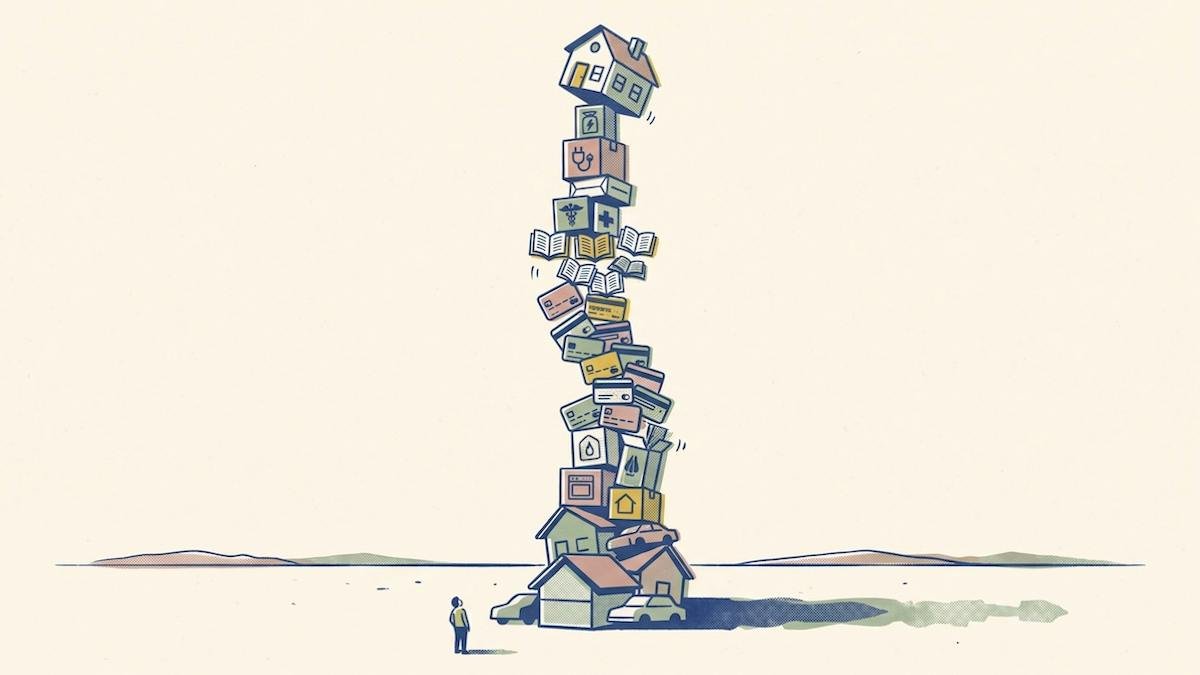
American household debt has climbed to an all-time high, and a new analysis from The Daily Wire argues the surge is being fueled less by economic necessity than by a widespread failure to understand what borrowing actually means. The outlet points to everything from viral car-repossession videos to eight-year auto loans as evidence that the country’s credit boom has distorted prices across major industries.
The piece opens with a puzzle that has grown harder to ignore: official metrics show a strong economy, with the stock market near record highs and unemployment low, yet millions of Americans report struggling with food prices, the cost of living, and job prospects. The Daily Wire frames the gap between the data and daily experience as a question nobody in power seems eager to answer.
Repo Videos as an Economic Indicator
As one illustration, the outlet points to the popularity of car-repossession videos on YouTube. The videos typically show tow-truck drivers seizing vehicles after missed payments, sometimes while owners run out to plead for their cars back. The Daily Wire argues the genre’s appeal says something uncomfortable about the country’s economic moment — that in a genuinely prosperous nation, repossession footage would not be a reliable source of mass entertainment.
The article also highlights the popularity of financial advice personalities such as Dave Ramsey and Caleb Hammer, who interview people carrying tens of thousands of dollars in debt. In one clip described by the outlet, a woman recounted calling her mother to celebrate receiving a credit limit of $8,000 — apparently without understanding that the figure represented money she owed rather than a voucher or statement credit.
That anecdote anchors the article’s central claim: that a growing share of consumers are being extended credit faster than they can grasp its terms. The outlet argues that when large numbers of people treat credit limits as free money, markets adjust. Demand rises, supply stays flat, and prices climb.
The 96-Month Loan
The Daily Wire traces that dynamic through the auto market. It notes that dealerships, including one in Houston highlighted by a YouTube channel run by Marissa Van, have promoted 96-month auto loans — eight-year terms that the outlet says are being advertised openly on social media. The piece predicts many of those borrowers will not keep the vehicles long enough for the math to work, and that when repossession happens, whatever equity they built through down payments and monthly payments will likely be wiped out at auction.

The scale of repossession activity cited in the article is striking. By one estimate, more than 3 million vehicles were repossessed in 2025 — more than 8,000 per day, a pace the outlet compares to the aftermath of the 2009 recession.
The article argues those losses affect more than the borrowers involved. Because buyers with access to large credit lines can bid up vehicles they cannot truly afford, the outlet says, they indirectly raise prices for everyone else — including shoppers who saved for a down payment and negotiated a reasonable rate. The result, according to the piece, is that the typical manufacturer’s suggested retail price for a new vehicle has risen roughly 46% over the past decade, from around $33,000 to more than $50,000. The article adds that no new vehicle now starts below $20,000, arguing manufacturers have little incentive to build budget models when showroom traffic arrives armed with credit.
Student Loans and the Price Feedback Loop
The same pattern, the outlet contends, played out in higher education. Once the federal government made student loans widely available, tuition climbed sharply. In both cases, the article argues, the availability of credit did not simply help buyers afford rising prices — it helped cause them. The piece describes this as an economic mechanism that rarely gets discussed in mainstream coverage: when access to borrowed money expands faster than the supply of goods, the borrowed money gets capitalized into the sticker price.
The Daily Wire also raises concerns about who is receiving credit, noting that until recently the country was admitting millions of immigrants annually, many of whom lack English proficiency, and that those newcomers are gaining access to credit as well. The outlet ties that trend back to the broader thesis that credit expansion without financial literacy amplifies demand — and therefore prices.
The overarching warning in the piece is fiscal and cultural at once: the bill for an economy built on easy borrowing will eventually come due. The article does not offer a specific policy prescription but closes by suggesting that the consequences — tow trucks, auctioned cars, wiped-out savings, and higher prices for careful buyers — are already arriving, thousands of times a day.
Source: www.dailywire.com — https://www.dailywire.com/news/household-debt-is-getting-out-of-hand-heres-why-its-at-an-all-time-high