
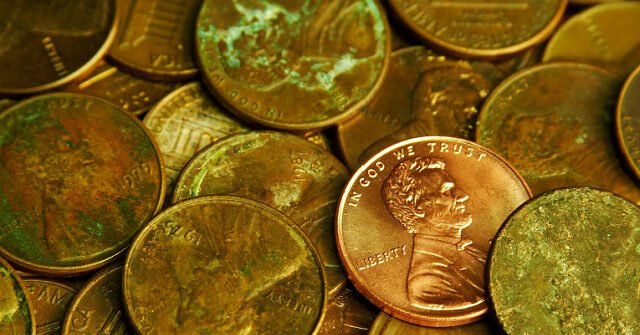
The House of Representatives voted unanimously Monday to pass the Common Cents Act, a bipartisan bill that would end production of the United States penny and require cash transactions to be rounded to the nearest five cents.
According to Breitbart News, Democrats and Republicans joined together to approve the measure, which would bar the U.S. Treasury from minting any additional one-cent coins and mandate that anyone selling goods or services for cash round “to the nearest amount divisible by five for the payment or transfer of cash.” Lawmakers clarified that pennies already in circulation would remain legal tender.
The bill was led in the House by Republican Conference Chair Lisa McClain (R-MI) and Rep. Robert Garcia (D-CA), the ranking member of the House Oversight Committee — an unusual pairing that reflects the rare cross-party consensus behind retiring the coin.
A coin that costs more than it’s worth
The push to eliminate the penny rests on a straightforward math problem. Producing each one-cent coin now costs 3.69 cents, far more than the coin’s face value. The Treasury has said that ending penny production could save roughly $56 million annually, according to a department press release cited in the reporting.
The House vote follows a move by the executive branch to wind down penny manufacturing. President Donald Trump directed Treasury Secretary Scott Bessent to stop making new pennies, characterizing the practice as “wasteful.” The U.S. Mint halted production of new pennies in November 2025, and the Wall Street Journal reported that the Treasury placed its final order for penny blanks by May 2025.
The legislation would make that pause permanent, preventing the Mint from restarting penny production in the future. If the Senate passes the bill as expected, it would take effect one year after enactment.
Rounding rules and what changes for consumers
Under the bill’s rounding requirement, cash purchases would be adjusted to the nearest nickel. The practical effect for shoppers would be limited to cash transactions; electronic payments would not be affected by the rounding provision as described. Because existing pennies would remain legal tender, consumers could still use them, though no new ones would enter circulation.
The unanimous House vote marks a rare moment of agreement in a chamber often defined by party-line splits. The bill’s two lead sponsors sit on opposite sides of the aisle, and the measure’s appeal appears to rest on fiscal rather than ideological grounds — a coin that loses money with every strike is a difficult thing to defend.
Attention now turns to the Senate, where the bill’s supporters expect passage. If that happens, the one-cent coin — a fixture of American commerce since the founding era — would cease production, though its existing stock would linger in pockets, jars, and cash drawers for years to come.
Source: www.breitbart.com — https://www.breitbart.com/politics/2026/09/16/house-unanimously-votes-stop-penny-production/