
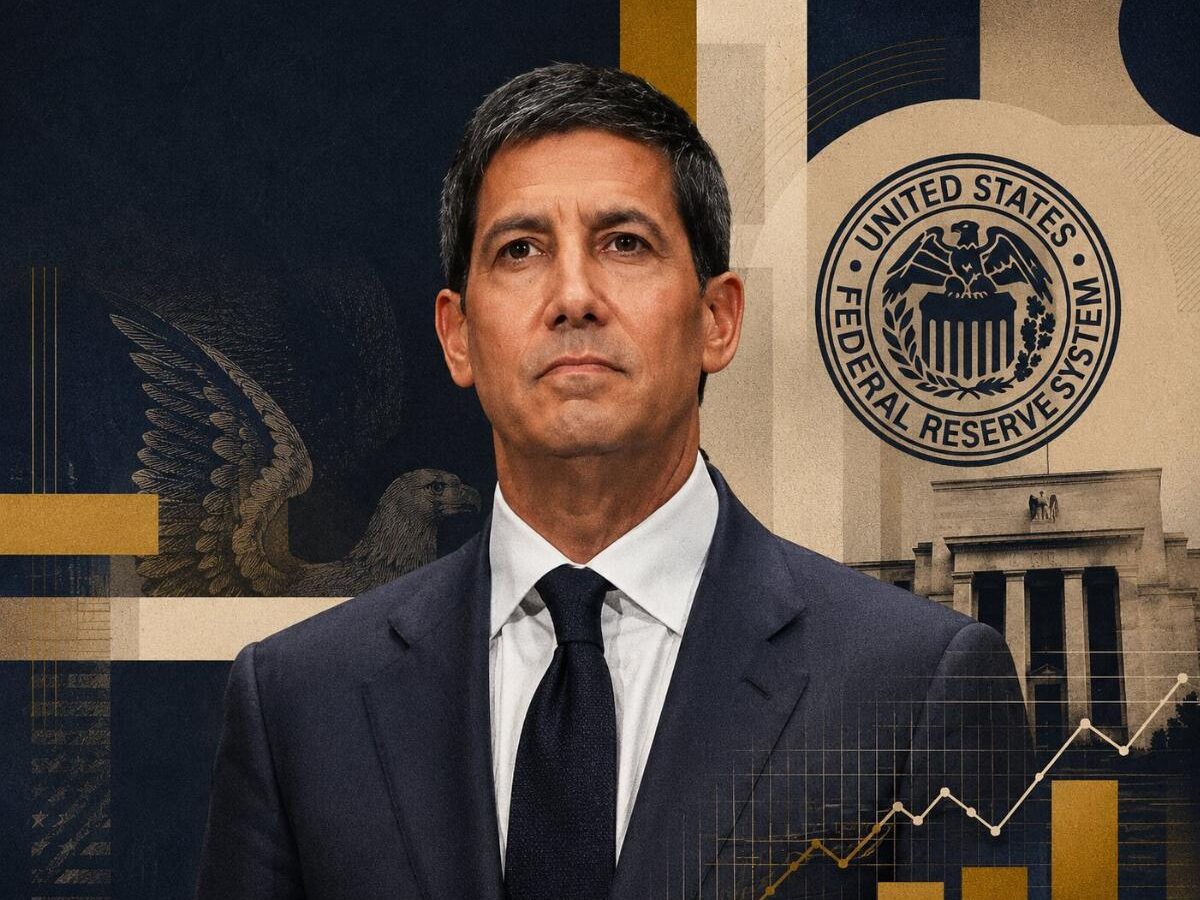
When Damian Paletta dug back into his own reporting for a Wall Street Journal political email, he probably didn’t expect it to land as a Rorschach test for how Washington feels about the Federal Reserve.
More than two decades ago, while reporting for American Banker, Paletta filed a Freedom of Information Act request for then-Fed Chairman Alan Greenspan’s calendar and phone logs. The materials arrived the week after Greenspan left office — timing Paletta flagged as suspicious. The most notable entry, as Paletta recounted in the Journal blast, was that Greenspan regularly consulted with a young Bush administration White House staffer about Fannie Mae and Freddie Mac. Calls between the White House and an “independent” Fed chair were supposed to be rare. The staffer in question, per Paletta: Kevin Warsh.
That’s the detail American Thinker’s Marcus Ebenhack seized on in a Sept. 18 commentary, which reads Paletta’s anecdote as a pointed signal about the current Fed chairman. Paletta’s immediate aim, Ebenhack writes, was to raise the question of whether Warsh consulted with President Trump before raising rates “this week,” and if so, how extensively. By resurfacing Warsh’s role as a young White House aide, Ebenhack argues, Paletta insinuates that this is a game Warsh has played for decades — maybe even invented.
Ebenhack concedes he may be reading more into the item than is there. “But I’m not sure what other purpose there could be for it,” he writes. To him, the more useful takeaway is precedent: coordination between the Fed and the White House is nothing new, and Warsh, as a junior Bush official, can’t have been the first or only person to do it.
Barney Frank and the ‘roll the dice’ moment
The other ghost Paletta’s story summoned, for Ebenhack, belongs to Barney Frank. The former Massachusetts congressman’s infamous phrase came during a Sept. 25, 2003, House Financial Services Committee hearing, where Frank pushed back on calls for tighter oversight and strict capital requirements at Fannie Mae and Freddie Mac. Overregulation, he argued, would undermine affordable housing goals.
“I do think I do not want the same kind of focus on safety and soundness that we have in OCC and OTS,” Frank said, referring to the Office of the Comptroller of the Currency and the Office of Thrift Supervision. “I want to roll the dice a little bit more in this situation towards subsidized housing.”
No meaningful regulation followed. Five years later, the subprime mortgage market collapsed and dragged the global financial system down with it. Frank’s words became a staple of critics who saw them as evidence of a flippant Democratic attitude toward subprime oversight. Ebenhack notes he’d been reading Journal op-eds warning of an impending crash for years before 2008, which makes the idea that nobody could have seen it coming, in his telling, ludicrous.
His sidebar observation lands with a certain force: only in America could a major figure and, in his framing, arguably central architect of the 2008 crisis go on to co-author the sweeping 2010 Dodd-Frank Wall Street Reform Act, which imposed tighter restrictions on the banking system.
What the anecdote is actually being used for
It’s worth separating what Paletta reported from what it’s being made to mean. Paletta’s fact is archival: Greenspan talked housing finance with a Bush White House staffer who turned out to be Warsh, and the logs surfaced after Greenspan left the building. That fact, on its own, doesn’t prove anything about 2026. It does, however, complicate a familiar story about the Fed as an institution walled off from political pressure.
Ebenhack’s reading is that the past is being deployed to frame the present — that Paletta isn’t just recounting history but laying groundwork for a question about what Warsh might have discussed with Trump before this week’s rate decision. Whether that’s fair to Paletta is debatable. Ebenhack himself flags the interpretive leap. But the underlying dynamic he describes is real enough in Washington: an old phone log becomes a parable, and a parable becomes a predicate.
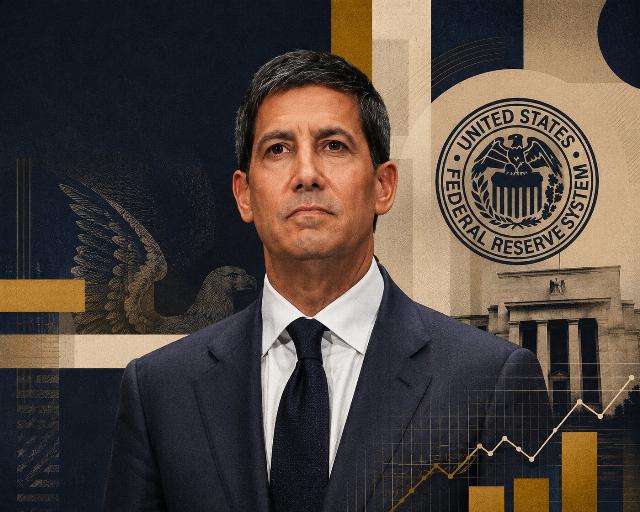
The counterargument, implicit in Ebenhack’s piece, is that if Fed-White House coordination has a long bipartisan pedigree, then singling out the current chairman for it is less a scandal than a ritual. Warsh’s defenders could reasonably note that talking to the White House about Fannie and Freddie in 2002 is not the same as taking instructions on rates in 2026. Ebenhack doesn’t dispute that point so much as sidestep it: his concern is the pattern, not the particular instance.
The bigger fight underneath
Strip away the personalities and what’s left is the perennial argument over Fed independence — an ideal that has always been more aspirational than operational. Chairmen consult. Staffers shuttle. Phone logs get FOIA’d two decades later. The question is whether any of it crosses from access into influence, and that question rarely gets a clean answer.
What makes the current moment distinctive, Ebenhack suggests, is Trump’s scale. “Like most everything else associated with Trump,” he writes, “any perceived interference with the Fed, is going to be done as bigly as everything else he does.” It’s a line that captures the essay’s attitude: the machinery of Washington influence hasn’t changed, only the volume has.
For readers on the right, the Frank thread does a different kind of work. It’s a reminder that the 2008 crisis had authors, that they were warned, and that some of them went on to write the rules meant to prevent the next one. Whether Warsh inherits that legacy or gets tarred by proximity to it is, for now, an open question — and one that a 20-year-old phone log can’t answer on its own.
What the log can do is remind everyone that the wall between the Fed and the White House has always had doors in it. The argument is over who walks through them, how often, and whether anyone bothers to knock.
Source: www.americanthinker.com — https://www.americanthinker.com/blog/2026/09/barney-frank-gone-but-not-forgotten/
Source: www.americanthinker.com
Related coverage
- Jensen Huang’s Ouster Sparks Outcry: Was Nvidia’s CEO Pushed Out Over Unproven Allegations?
- Media’s ‘get Trump’ ethos: Six cases where the facts don’t fit the narrative
- AG Blanche’s ‘Confession’ Sparks Outrage Among Corporate Media
- American Thinker: A Returning Crocodile Reveals the Bureaucracy’s Failure to Measure What Matters