
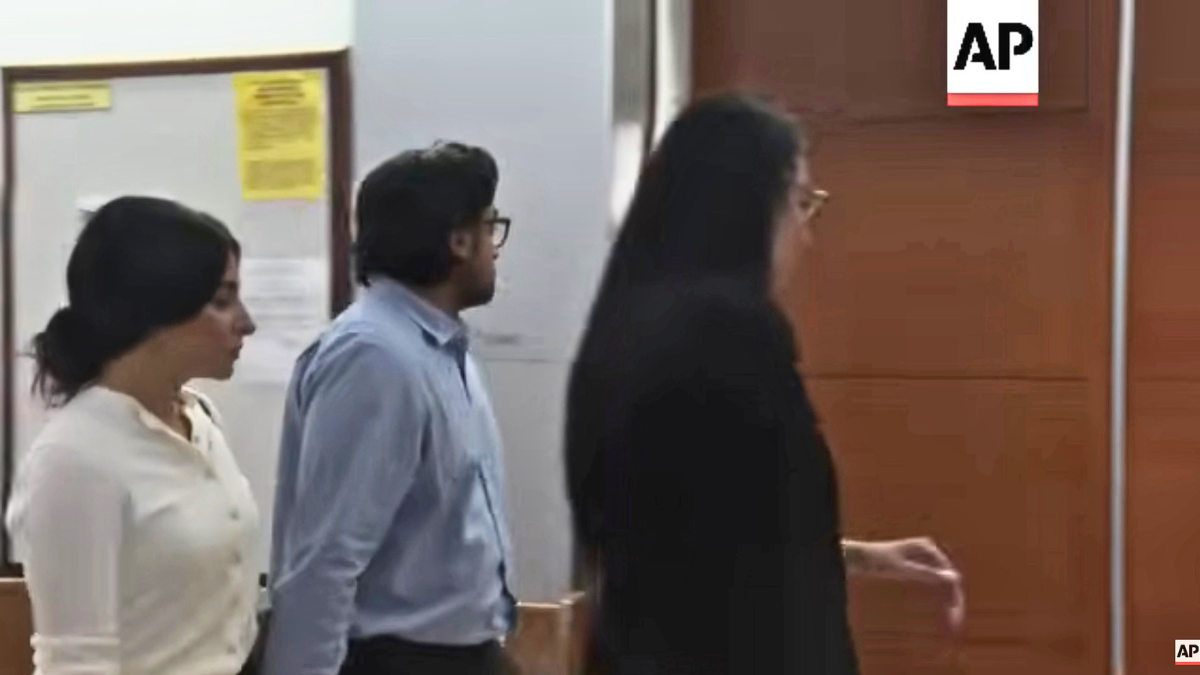
A custody battle that has drawn national attention is now headed to the nation’s highest court. McKenna West, a surrogate mother who refused a demand to abort the child she was carrying, has filed an emergency brief with the U.S. Supreme Court after a judge granted custody to the intended parents earlier this month, according to reporting by The Federalist.
The case centers on a baby boy — called Gabriel by West, Rumi by the intended parents — who was born just over a month ago and is currently receiving treatment in a Dallas hospital for a serious but treatable heart condition.
A Heart Condition and a Demand
West, originally from Alaska, had agreed to serve as a surrogate for Nausheen Gilkar and Omar Ahmed, a couple from California. At a 20-week scan, a doctor discovered that the baby had a serious heart condition that could be treated. According to the account in The Federalist, Gilkar and Ahmed responded by demanding that West obtain an abortion.

West declined. Instead of proceeding with a late-term abortion, she kept the baby and traveled to Texas, where Attorney General Ken Paxton intervened. As The Federalist reported, Paxton obtained a court order mandating that treatment be provided, saying the intended parents had “refused to agree that they will consent to the life-saving surgery for Gabriel after he is born.”
Texas law treats an unborn child as a person with legal protections, while California law allows abortion at any stage of pregnancy — a disparity that sits at the heart of the jurisdictional fight now before the justices.
Solomon’s Choice, Revisited
The Federalist, which published the original account, compared the dispute to the biblical story of King Solomon, who resolved a maternity dispute by proposing to cut the child in half. One woman accepted the division; the other gave up her claim to spare the child’s life. Solomon identified the latter as the true mother.

In this case, the publication argued, no such test is necessary. West has demonstrated her commitment by keeping the baby, fleeing to a state where he could receive care, and continuing to fight for his treatment. Gilkar and Ahmed, by contrast, initially sought to end the pregnancy and, according to the account, requested a refund when that did not happen.
Gilkar and Ahmed have denied allegations that they would deny their son necessary medical care. Gilkar has said the baby is “the most beautiful person I’ve ever seen” and has insisted, “He’s the love of our lives.”
West, for her part, has said she would abandon her custody bid if she were assured the baby would continue to receive appropriate care. She has expressed fear that once the baby is removed from Texas to California, there will be less pressure to keep him alive and that his well-being would depend entirely on his parents’ goodwill.

Custody Granted, Appeal Filed
Although the courts officially granted custody to Gilkar and Ahmed earlier this month, West filed an emergency brief with the Supreme Court, citing fears that the baby “could soon be removed from Texas.” The Federalist reported that she does not believe “the baby will continue receiving the medical treatment he needs.”
The case has become a flashpoint in broader debates over surrogacy, parental vetting, and the legal status of unborn children. The Federalist argued that commercial surrogacy treats children as commodities to be bought and sold, and that unlike adoption — where parents undergo rigorous screening — couples using surrogates face little scrutiny.
“They could be sexual deviants who want a human plaything, eccentric Chinese billionaires who want to sire hundreds of children, or just dissatisfied adults who see little problem with killing their offspring for being defective,” the publication wrote.
The outcome now rests with the Supreme Court, which must decide whether to intervene before the baby is transferred out of Texas. For West, the stakes are straightforward: she wants the child she carried to have a chance at the life-saving care he needs.
Source: thefederalist.com — https://thefederalist.com/2026/09/18/parents-who-wanted-to-abort-their-children-should-not-have-custody-of-them/