
Kids have always done reckless things on wheels. The difference now, according to a commentary published in American Thinker, is how much machine sits between a child and the pavement.
In a piece for the outlet, writer Mike McDaniel recounts his own helmet-free childhood of bike stunts and road rash, then draws a line between that era and the present one. The bikes he and his friends rode, he notes, were mostly incapable of generating death-dealing speeds. Today’s e-bikes are a different category of object entirely.
His argument isn’t primarily about nostalgia. It’s about physics, and about what happens when a child with no experience and an underdeveloped sense of risk climbs onto something that can outrun their reaction time.
A Doctor’s Direct Plea
McDaniel builds his case around a viral warning from a pediatric operating room surgeon identified as Cynlyn, who addressed parents online with an unusually blunt instruction: don’t buy your child an e-bike.
“The consequences of e-bike accidents are life-changing and deadly,” the physician said, according to McDaniel’s account. “Kids should not be riding them. At the very minimum, they should be wearing a helmet.”
The surgeon’s message reportedly reached more than 16 million viewers and prompted an outpouring from parents whose children had been severely injured or killed. McDaniel writes that the motorized two-wheelers have claimed hundreds of lives in recent years, citing 2026 data from the U.S. Consumer Product Safety Commission. He also notes that the injured and killed are disproportionately young males.
What the Hospital Data Shows
The commentary points to a May 2026 study from NYU Langone Health researchers, titled “The Fast and the Fragile: Neurosurgical Trauma in the Age of Micromobility,” which examined 900 patients treated at Manhattan’s Bellevue Hospital for injuries stemming from electric bike and scooter use.
Roughly a third of those patients, the investigators found, had suffered traumatic brain injuries. Thirty percent required intensive care. Most of the riders, according to the findings, were not wearing helmets.
McDaniel frames those numbers as the predictable result of a mismatch. Many e-bikes marketed to kids can exceed 30 mph, he writes, and many have no pedals at all. Children rarely wear helmets of any kind. At even 20 mph, he argues, events unfold faster than a kid can anticipate or respond to — and kids lack the mental, emotional, and physical preparation those speeds demand.
A Personal Testimony, and a Preemptive Rebuttal
McDaniel anticipates the obvious objection: he himself recently hit 42 mph on a steep downhill stretch of his usual non-electric ride. He addresses the hypocrisy charge head-on rather than dodging it.
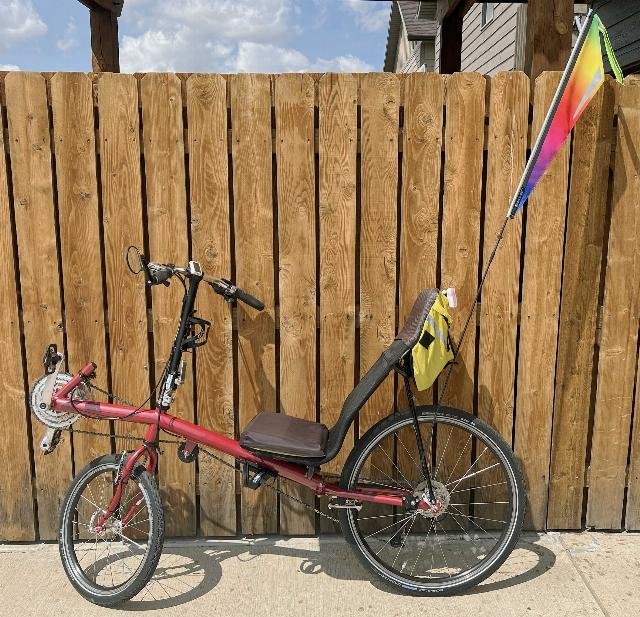
His answer is experience. He cites more than 60 years of riding, puncture-resistant tires, a machine he knows millimeter by millimeter and inspects regularly for the slightest fault, a top-rated helmet, and a route he rides often enough to know every bump and defect. He says he wouldn’t have attempted the speed if there were real risk, and notes that he once hit 62 mph on a lighter, faster recumbent under similar conditions — an experience he describes as sufficient the first time.
Kids, he writes, have none of that. They don’t have the experience, they don’t maintain their machines to that degree if at all, and they lack the mental development to judge precisely what their equipment can do and what constitutes a reasonable risk.
To illustrate the stakes, McDaniel relays a mother’s account of her son’s crash on June 7, 2025. The helmet saved his life, she said, but he still sustained a skull fracture, a broken nose, broken ribs, a broken elbow, a reattached upper lip, and a compound fracture to his left leg severe enough that, in her words, “if it were any worse, it would have been amputated.”
Discipline, Not Bubble Wrap
The remedy McDaniel proposes is deliberately modest. He concedes that kids will always take stupid risks and rejects the idea of wrapping them in bubble wrap. What he asks for instead is parental discipline: make sure children get substantial exercise, and don’t hand them machines a reasonable parent knows they can’t resist using to defy the laws of physics.
It’s a conclusion that sits in an uncomfortable spot between two familiar camps. It doesn’t call for bans or new regulations, and it doesn’t treat the problem as a matter of better product labeling or age gates. It places the decision where the purchase happens — with the adult holding the credit card.
That framing is likely to satisfy neither the parents who see e-bikes as a legitimate transportation solution for teenagers nor the safety advocates who would prefer manufacturers and regulators to shoulder more of the burden. McDaniel’s own earlier piece, “Our kids need MAHA,” worried that electric scooters and bikes are replacing the incidental exercise his generation got while thinking it was just having fun. The injury question, he suggests, is the more serious one he ran out of word count to address the first time.
Whether that argument lands may depend on how parents weigh a familiar tradeoff: the freedom and mobility a machine offers a kid against the speed that makes it appealing in the first place. McDaniel’s position is that the two can’t be separated, and that the second one is winning.
Source: www.americanthinker.com — https://www.americanthinker.com/blog/2026/09/parental-discipline-restraint-and-bikes/