
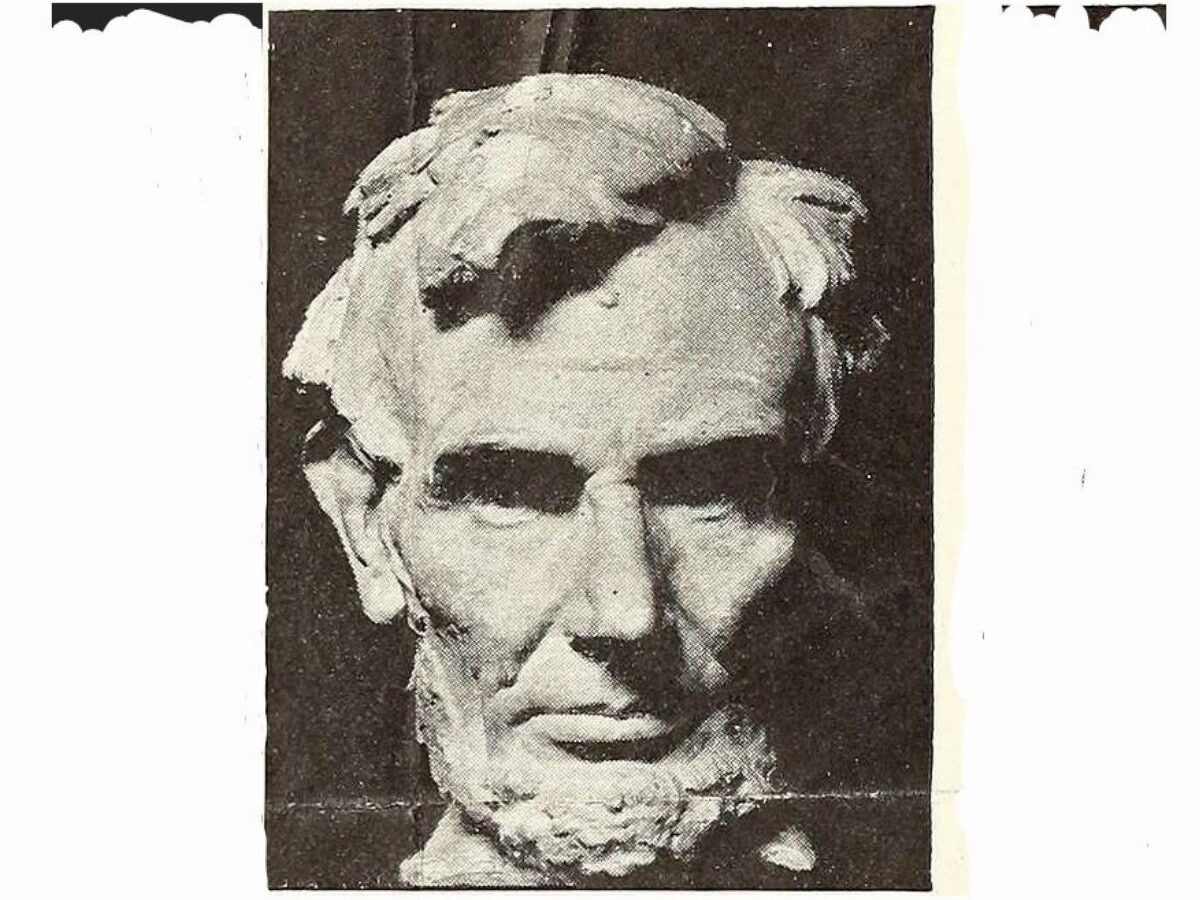
An essay published by American Thinker on September 20, 2026 argues that President Trump should invoke the emergency “prerogative powers” once used by Abraham Lincoln and Grover Cleveland to confront what the author describes as a Democratic National Committee campaign against national unity. The piece, written by former CEO and law-and-policy author Matthew G. Andersson, is an argument rather than a news report, and it leans heavily on a selective reading of 19th-century history and a handful of Supreme Court precedents to make its case.
Andersson’s core claim is that conditions today mirror 1861 closely enough to justify extraordinary presidential action. He writes that Lincoln’s highest priority was preserving the Union, and that Lincoln pursued that goal through five emergency measures: raising a militia, imposing a naval blockade, suspending habeas corpus so that domestic opponents could be detained without immediate court proceedings, expanding military financing, and summoning a special session of Congress to retroactively bless what he had done. Those actions, the author notes, later came to be described as prerogative powers.
An Unusual Comparison
The essay then takes a sharp turn. Andersson asserts that the DNC threatens national unity through election fraud, civil and economic disruption, interference in foreign affairs, and what he calls a proven intent to commit large-scale domestic violence. Unlike the Confederacy, he writes, the DNC does not field a military; its “army” is irregular and operates under the cover of traditional institutions, which in his view makes it appear legitimate. He also claims the party uses its own organization as a corporate shell for the Democratic Socialists of America — a claim the piece asserts without documentation.
From there the essay draws an extended and inflammatory analogy between the present and 1860. Andersson argues that the division the DNC seeks is the same as it was before the Civil War: keeping modern political “slaves” on their plantations while importing more. He describes the millions of people who crossed the southern border illegally as having been loaded onto a fully financed slave trade route, assigned locations upon arrival, transported there, and effectively branded as the party’s political property — digitally registered, traceable through a phone, funding, a driver’s license, medical care, housing, and implied ballots cast in their “master’s” favor after being placed on what he calls doctored voter rolls. All of it, he writes, is financed by taxpayers.
For the radical left, Andersson concludes, the Civil War never ended — but emancipation is not the goal. Total control over what they consider their property, society and its choices, is.
From Lincoln’s Law Practice to Presidential Prerogative
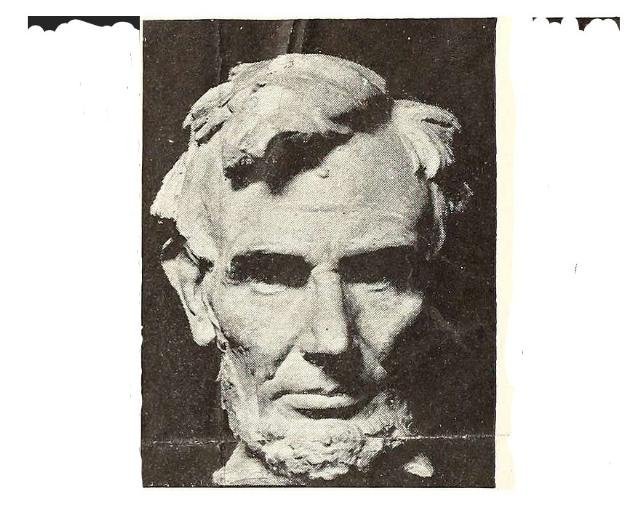
The essay is at its most substantive when it turns to legal history. Andersson asks where Lincoln got the legal ideas that shaped his presidency. Part of the answer, he suggests, lies in two decades of small-town legal practice on the Illinois prairie, where law often had to be improvised and was backed mainly by necessity, conviction, and persuasion. He quotes the legal historian James Willard Hurst to the effect that Lincoln’s jurisprudence amounted to doing what was necessary for the country’s current working needs — an approach Andersson says shows that presidents can function as lawmakers, making policy and effectively legislating.
He also invokes Lincoln’s April 1864 letter to Albert G. Hodges, in which the president wrote, “I claim not to have controlled events, but confess plainly that events have controlled me.” For Andersson, Lincoln was acting under his oath to preserve the Constitution, amputating a limb to save a life — and today’s threats to national unity, he argues, need to be amputated in similar fashion.
That framing leads to the legal heart of the piece: the concept of presidential prerogative. Andersson notes that the idea has been invoked repeatedly since Lincoln, including by Theodore Roosevelt on a large scale for land conservation, and in contexts far less dramatic than civil war or insurrection, as a kind of implied authority and duty to act as trustee of the general interest. He cites Hurst’s Growth of American Law: The Law Makers for that proposition and describes prerogative as a conceptual bridge connecting the commander-in-chief role to the chief executive role.
His key modern precedent is In re Debs, arising from President Cleveland’s intervention in the 1894 Pullman strike, which had disrupted the national economy. In its 1895 ruling, the Supreme Court broadly sanctioned the idea of presidential prerogative, writing that “the entire strength of the nation may be used to enforce in any part of the land the full and free exercise of all national power and the security of all rights entrusted by the Constitution to its care,” that “the strong arm of the national government may be put forth to brush away all obstructions,” and that if emergency arises, the army and militia are at the service of the nation to compel obedience to its laws. Andersson, again citing Hurst, points out that the Court applied the Postal Clause and the general welfare of the public through its right functioning — an interpretation he says undergirds Trump’s executive order on mail ballots.
The Corporate Target
Andersson acknowledges one feature of the present moment that neither Lincoln nor Cleveland faced: the threat is not organized along a neat north-south dividing line or embodied in a single commercial corporation. Instead, he writes, the dividers are decentralized and networked by technology.
Yet he finds in In re Debs a useful question about corporate disruption of public law. The DNC, he notes, operates through the DNC Services Corporation, a private company. In his view that corporate form actually strengthens the case for presidential prerogative, resting on a broader legal basis that would allow the corporation to be subjected to sanctions, asset freezes, and regulatory enforcement — including antitrust and criminal fraud claims — after a national emergency is declared on national security grounds.
The essay closes with a call to action. Andersson argues that current conditions are ripe for presidential prerogative because election fraud is imminent. To avert a crisis, and while the House is in early recess, he writes that Trump can summon his “inner Lincoln.” U.S. case law, similar circumstances, and American history are uniquely on his side, he concludes — including the option of calling a subsequent special session of Congress before November.
It is worth being clear about what this piece is and is not. It is an opinion essay that stacks historical analogy, legal doctrine, and a broad set of factual assertions — many of them contested or unsupported within the text itself — into a call for aggressive unilateral action. The claims about election fraud, a “proven intent” to commit domestic violence, and a financed “slave trade route” are presented as premises rather than demonstrated facts, and the DNC is described as an existential threat without evidence being offered in the piece. Readers should weigh it accordingly: as an argument for expanding executive power, not as a report on events.
Source: www.americanthinker.com — https://www.americanthinker.com/blog/2026/09/the-prerogative-powers-of-the-executive/