
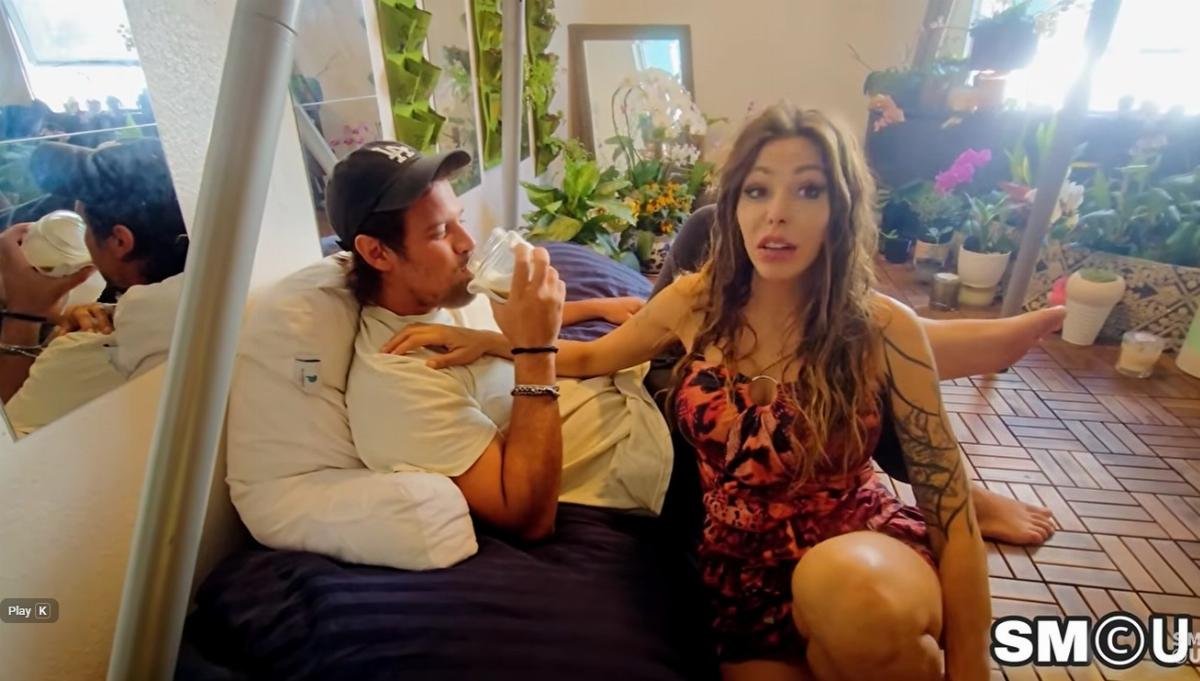
A homeless woman in Santa Monica who calls herself “Daisy the Healer” has become the centerpiece of an American Thinker editorial arguing that the city’s homelessness spending has curdled into something closer to luxury living than social service — and that she is now parlaying that arrangement into a run for local office.
According to the opinion piece, published September 20, 2026 and written by Monica Showalter, the woman — identified in the article as Lindsay Davis — is drug-addicted, formerly homeless and has what the piece describes as a history of aggressive explosive rages. What she also has, the editorial says, is free housing for life near the beach, free food, free drug paraphernalia and free transportation, with no requirement that she work or enter drug treatment. The article characterizes these benefits as coming from the City of Santa Monica.
An apartment tour, and what came next
The editorial leans heavily on video footage it says was captured by the outlet Santa Monica Closeup, in which Davis gives a tour of the unit she occupies. According to the piece, the apartment was arranged through an NGO called Step Up, and Davis indicates it is no longer sufficient — she says she is in line for what the article describes as a luxury apartment on the beach within five months, with retail rents the piece pegs at $2,400 to $4,000 a month. She names the building as Sea Castle, next to the Shutters hotel, and says she has a caseworker who can get her, in her words, anything she wants.
What she already receives, per the editorial’s account of the video, is a long list: weekly grocery deliveries from Whole Foods, Bristol Farms and Trader Joe’s, purchased with an EBT card; a Nespresso machine, plus a second one dedicated to making foam, which she demonstrates by whipping up a hazelnut mocha; access to luxury spices for her cabinet; fresh orchids and other flowers delivered every Wednesday; hot yoga therapy; EMDR specialty therapy; and an ice machine capable of producing 250 pounds of ice a day for cold plunges after those hot yoga sessions. The piece also notes a boyfriend who travels back and forth to Italy, and says the video appears to show an extensive makeup wardrobe, expensive sneakers and plastic surgery.

The article is blunt that the drug problem appears unaddressed — “it doesn’t seem she’s lost contact with the drugs,” Showalter writes — and points to Davis’s appearance at a Santa Monica City Council meeting as evidence.
The political turn
Then comes the part the editorial clearly finds richest: Davis is running for City Council. Showalter describes the candidacy as an “open-the-coffers platform” built on the premise that money is free, and notes Davis said in the video that all she needed was 100 valid signatures, which she reportedly gathered without much trouble.
According to the piece, Dr. Houman David Hemmati was among those who spotted the situation and offered context, pointing out that the building housing Davis’s taxpayer-funded unit — complete with cold plunge and unlimited high-end groceries and fresh flowers, as the editorial summarizes his posts — sits directly adjacent to a high-end restaurant that was recently shut down over a vermin infestation.
Fellow commentary cited in the piece describes a “beautiful apartment with COLD PLUNGE” next door to five-star restaurants, two blocks from the beach, provided at public expense.

The argument underneath
From there Showalter widens the lens. Her claim is that Santa Monica is out of money, that it cannot pay its firefighters, and that it has blown everything it has on homeless programs of this kind — programs that, in her telling, do nothing to stop drug use. A city that a few years ago ranked among the most beautiful in Los Angeles County is, in her words, going to the dogs.
The editorial’s explanation for why this persists is political, not administrative: Davis, she argues, is useful to powerful political groups that make up what the piece calls the homeless industrial complex, which it describes as the last remaining industry in the blue cities of America. In that framing, Davis lives like a queen while ordinary residents work all day, endure brutal commutes and pay exorbitant taxes — and now she wants power of her own.
The piece closes on a warning rather than a policy proposal: that this is what the left wants for the rest of the country, and that this is “literally their model for a New American Man.”
Stated that baldly, the editorial is less an argument than a provocation, and readers will calibrate accordingly. But the underlying questions it raises are not trivial ones, and they are being asked in cities far beyond Santa Monica: what conditions, if any, should accompany publicly funded housing, particularly for people struggling with addiction and untreated mental illness; whether services structured around harm reduction end up enabling the very behavior they were meant to mitigate; and how a city balances compassion against the fiscal reality of a budget that, per this account, cannot cover its own fire department.
What the editorial does not do is engage with the possibility that Davis’s circumstances reflect a system doing genuinely difficult work imperfectly rather than a conspiracy of convenience. Nor does it examine what caseworkers at organizations like Step Up are actually empowered to require of clients, or what the alternative looks like for someone with a documented history of violence and active addiction. Those gaps matter, because the strongest version of the critique is about policy design — incentives, conditions, accountability — and not about one woman’s Nespresso machine.
The more immediate test is electoral. Santa Monica voters will decide whether a candidate whose campaign, as described here, rests on the premise that the coffers are bottomless belongs on the body that sets the budget. That is, at minimum, a coherent way for a city to settle the argument the editorial is having with itself.
Source: www.americanthinker.com — https://www.americanthinker.com/blog/2026/09/bums-of-santa-monica-living-their-best-lives-in-state-financed-luxury/