
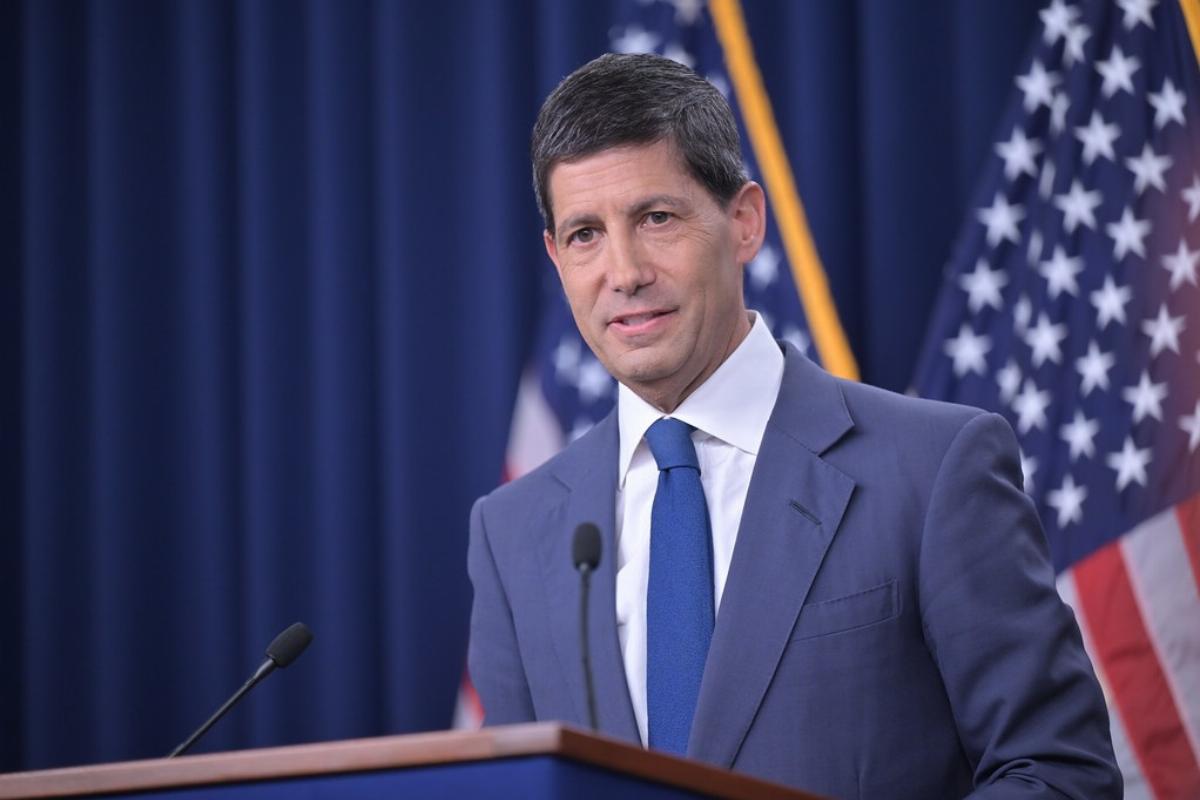
Kevin Warsh has made one thing plain since taking the helm at the Federal Reserve: he wants to be called “Chairman.” That much, according to a new commentary in American Thinker, is not in dispute — CNBC itself acknowledged the preference in a piece headlined “Call Kevin Warsh the Fed ‘chairman.'” The argument in the American Thinker essay, written by Noel S. Williams, is that the network has since spent much of its airtime and copy doing the opposite.
Williams frames the issue as a straightforward matter of respecting a public official’s stated preference, not a stylistic quibble. He notes that Warsh, unlike the typical Fed official given to layered, hedged language, has been unusually direct about how he wants to be identified. That directness, in the essay’s telling, removes any ambiguity — and therefore any excuse.
The Examples, as the Essay Lists Them
The piece assembles a series of CNBC headlines and references that use the shorter title, which Williams presents as evidence of a pattern rather than isolated slips. Among them: a market-analysis headline about investors’ next move after Nvidia and Warsh; a report on President Trump saying he told Warsh to vote for a hike alongside the rest of the Fed board; a line referring to “Fed Chair Warsh” and what he is or isn’t likely to do the next day; a Jackson Hole analyst roundup describing Warsh’s speech as pushing hike odds higher and potentially putting the Fed “at odds” with the Treasury; and a markets preview noting the dollar and bond markets were “on edge” ahead of Jackson Hole as Treasury Secretary Bessent’s market intervention piled pressure on Warsh.
Williams says he could fill ten pages with similar examples but offers the handful to make the point. His characterization of the motive is blunt: he attributes the usage to what he calls “woke conditioning,” arguing the choice is deliberate rather than careless.
It is worth separating the two claims the essay braids together. One is factual and narrow — that CNBC has, on multiple occasions, used “Chair” in reference to Warsh. The other is interpretive: that the usage reflects an ideological commitment rather than editorial convention. The second claim is the author’s inference, not something the cited headlines establish on their own.
The Trump-AP Comparison
To argue that there ought to be consequences, Williams reaches for a recent precedent. When the Associated Press declined to adopt the “Gulf of America” name, he writes, Trump barred the outlet’s reporter from the Oval Office and Air Force One. Williams concedes the ban “didn’t stick” — but argues the process mattered more than the outcome. The point, in his framing, was made regardless.
He proposes the same treatment for Warsh: reporters who insist on “Chair” should be excluded from his events. As supporting evidence, he points again to the CNBC chief economist who, in the earlier linked piece, conceded that “Chairman” is Warsh’s preferred title. If even the network’s own economics chief acknowledges it, Williams reasons, there is no remaining justification for the shorter form.
That concession, assuming it reads as the essay describes, is a notable detail. It means the dispute isn’t about what Warsh wants — that’s documented — but about whether outlets should be bound by it. That’s a genuinely contested question in journalism, where style guides, not subject preferences, typically govern titles, and where adopting an official’s preferred terminology can shade into public relations rather than reporting.
The Yellen Thought Experiment
The essay’s central rhetorical move is a hypothetical. Imagine, Williams writes, calling Janet Yellen — who served as Fed chair before Warsh — “Chairman.” His prediction is that it would never happen, at least not repeatedly and defiantly. If it did, he argues, the offending journalists would be summoned for a dressing-down, referred to human resources for sensitivity training, and pressed into DEI programming.
The asymmetry he’s pointing at is real in the sense that gendered titles have been reworked across institutions over the past decade, and the shift has not been symmetric in practice: “Chairman” was largely retired in favor of “Chair” or “Chairwoman” for women, while the generic “Chair” became the default for everyone. Whether that history makes the ongoing use of “Chair” for a man an act of defiance or simply house style is exactly where the argument turns — and where readers will likely divide.
Aim at the Reporters, Not the Style Desk
Williams saves his sharpest language for the individual journalists. He notes that some of the CNBC reporters using “Chair” have male names, then speculates that organizational pressure pushed them into what he calls feminist compliance. From there the piece descends into mockery — describing them as emasculated, joking about vitamins marketed to women, and telling them to take testosterone injections, closing with “that’s Chairman Warsh to you.”
Whatever one makes of the underlying complaint, that register is the essay’s own choice, and it’s the part most likely to repel readers who might otherwise share the irritation. There’s a substantive version of this argument — that newsrooms should honor a title a subject has explicitly and publicly requested — and then there’s the version on display, which spends its energy on the character of the reporters rather than the merits of the style question.
It’s also worth being precise about what a ban would mean. Excluding reporters from Fed events isn’t a private matter between a chairman and a network; it affects who gets to ask questions about interest-rate decisions that move markets and mortgages. The AP episode Williams cites is instructive less as a template than as a caution: the exclusion generated its own news cycle and, by his own account, didn’t hold.
The underlying dispute won’t be settled by exhortation. Style guides change slowly, and newsrooms tend to guard their independence on exactly these questions — sometimes defensibly, sometimes out of habit. Warsh, for his part, has been clear about what he wants. The essay’s contribution is to insist that clarity should settle the matter, and to argue that anything short of compliance is a choice — one that ought to carry a price.
American Thinker’s author ends on that note: that speaking one’s mind matters to the republic, and that readers who agree should support the publication. It’s a standard appeal from an opinion outlet, and it lands where the essay has been headed all along — less a report on Fed communications than a case for enforcing a title, with the enforcement mechanism left deliberately vague.
For readers trying to weigh the complaint on its merits, the useful question isn’t whether the headlines exist. They do, and the essay lists them. It’s whether a stated preference from a public official should override a newsroom’s own conventions — and whether refusing to let it is rudeness, politics, or just the way institutional style works. The essay answers firmly. The rest of us don’t have to.
Source: www.americanthinker.com — https://www.americanthinker.com/blog/2026/09/cnbc-that-s-chairman-warsh-to-you/
Source: www.americanthinker.com
Related coverage
- Swalwell FBI encounter part of wave of Dem scandals, writer argues
- Maryland Gov. Wes Moore Accused of Exaggerating Military Service in Afghanistan
- Leftist Hypocrisy Exposed? Family Feud Reveals Political Contradictions in Oregon
- GOP faces a Nazi-style test: Will it excommunicate Dan Bilzerian before Florida’s primary?