
President Trump has made the case against a nuclear Iran in a single, repeated line: Iran can never have a nuclear weapon. According to a commentary published September 21 in American Thinker, that formulation leaves the most important half of the argument unspoken — the part about what happens if the administration fails.
Writing for the outlet, John Conlin argues the White House is betting that voters will connect the dots between the war and the catastrophe it is meant to avert. His conclusion: that bet is a losing one, and it could cost Republicans dearly at the ballot box.
The problem with arguing in the negative
Conlin frames the dilemma as a matter of management — something he likens to running a company or a life. The hardest decisions are never between good and bad, but between this and that, and you rarely learn what the road not taken would have brought. The counterfactual disappears precisely because it never happened.
That, he contends, is the trap the administration is in. Trump keeps asserting that Iran cannot be permitted a bomb, essentially asking the public to fill in the rest. But voters, in Conlin’s telling, do not live in hypotheticals. They live in the present tense — and in that present tense, fuel prices are very high, with the pain falling especially hard on groceries, since energy costs ripple through nearly every product on the shelf.
The political consequence, as he sees it, is that the public is unhappy with the administration’s performance and may exact a price in the coming elections. He adds a dismissive aside about the alternative on offer — that electing what he calls socialists and commies would fix anything is, to him, a mystery. He reaches for H.L. Mencken’s famous observation that no one has ever lost money by underestimating the intelligence of the plain people, invoking it with evident disgust at the electoral dynamic he expects.
What is missing from the administration’s presentation, the piece argues, is the word “versus.” The present choices are never weighed against the alternative. Trump and his team, Conlin writes, have only weeks to make that alternative vivid rather than trusting repetition to do the work.
Painting the scenario in specific, ugly detail
Conlin then does what he says the White House should do: spells out the scenario.
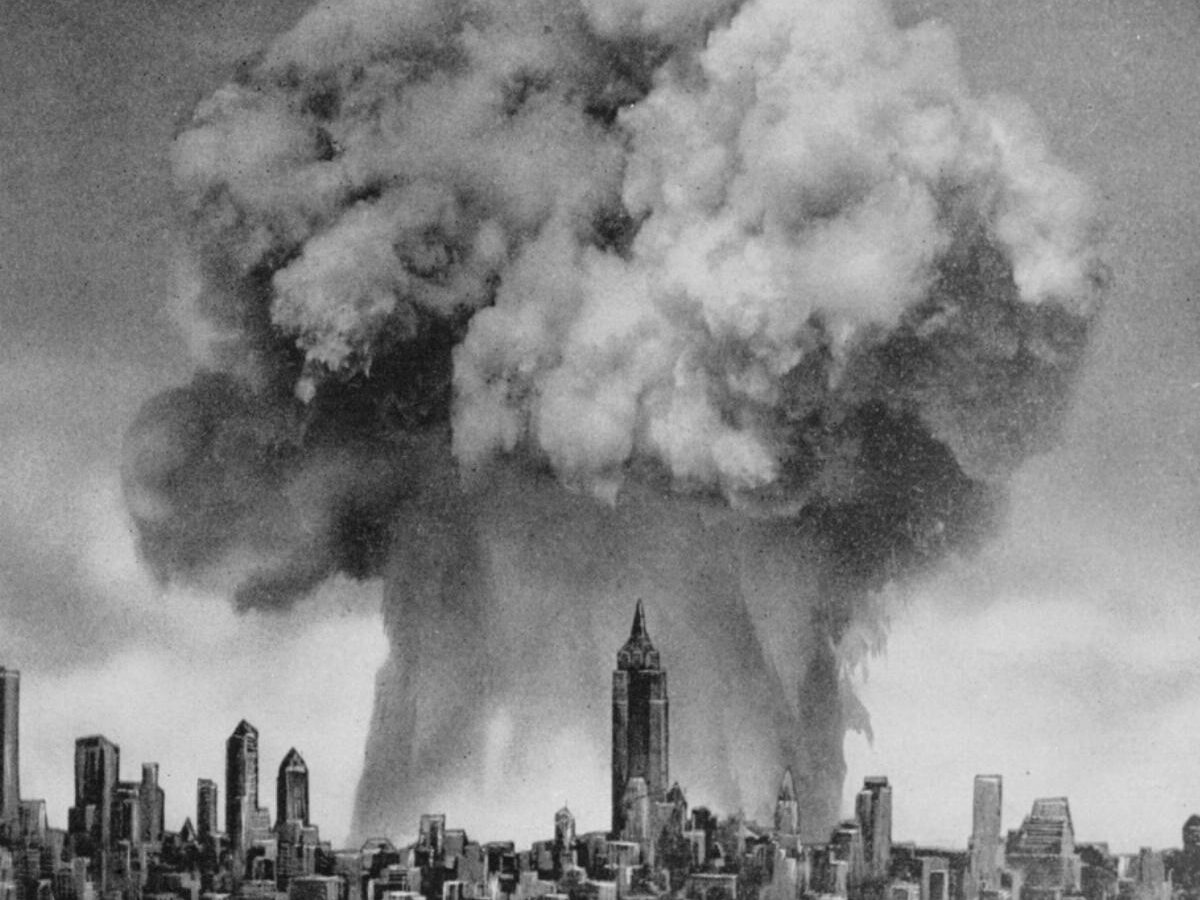
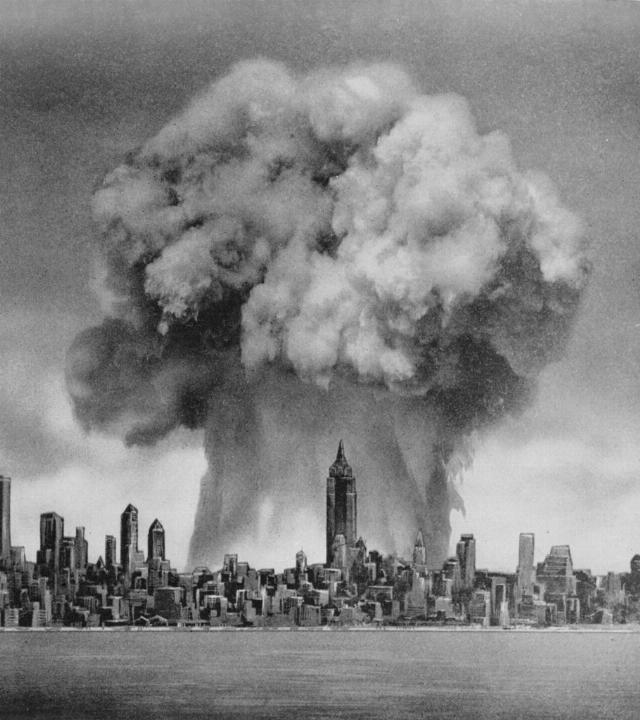
His first assumption is that a nuclear-armed Iran would move quickly against Israel — the “Little Satan” in the phrasing he borrows from Tehran’s rhetoric. Israel has already said it would respond in kind if struck with nuclear weapons. From there he sketches a chain: one or two detonations in or around Israel, the near-immediate end of the country as it exists, an Israeli response with multiple warheads into Iran, and tens of millions dead.
The economic aftershocks, in his telling, would be just as severe. Oil at $400 a barrel or higher. Fuel prices at triple today’s levels. At that point, he writes, grocery prices stop being the concern — availability does. Food lines could become commonplace, basic services could become difficult or impossible to deliver, and a worldwide recession unlike anything the globe has seen could take hold.
And that scenario, he stresses, does not even assume Iran manages to strike the United States — the “Great Satan.” If that happened, the damage would be worse still, and it would not account for some other adversary deciding the moment had arrived to act.
His point is one of proportion. The present is squeezing the average American harder than anyone would want, and he concedes that much. But the consequences of Iran actually using a nuclear weapon, he writes, are astronomically worse than the short-term pain of today. Of that, he says, there is no doubt.
Giving the president the benefit of the doubt — with a caveat
Conlin does not spare the president entirely. He writes that he wishes Trump had ended the war forcefully long ago — but immediately adds that the president has far more information than he does, so he extends the benefit of the doubt.
He is also careful to spread responsibility for the current squeeze. Any honest analysis, he writes, would place a great deal of the blame on previous administrations of both parties. The war is not the sole author of the price pressures voters feel.
What follows is a communications prescription. Managing the what-ifs is never easy, he acknowledges, but in this case the administration needs to explain very quickly what was racing toward the country — a threat he puts at easily less than a year away — had it not chosen this route. You cannot expect people to connect the dots for you, he writes. You have to do it for them.
The warning attached to that advice is stark: if the White House fails to help the public see the catastrophic alternative, it faces a very bad election day — and, in his view, the whole country will suffer the consequences of those election decisions.
The piece closes on a broader note about the importance of free expression to the republic, followed by the outlet’s standard appeal for reader donations to support its staff and keep its voices heard.
An argument about persuasion, not policy
Read closely, the commentary is less a defense of the war’s conduct than a critique of how it is being sold. Conlin does not claim the current path is painless or ideal. He claims the alternative is unthinkable, and that an unthinkable alternative only works as an argument if someone makes it thinkable — in clear words, and in images the public will actually absorb.
It is a familiar problem in wartime politics: the costs of action are immediate, visible, and felt at the pump and the checkout lane, while the costs of inaction are speculative and easy to dismiss as scare-mongering. Conlin’s contention is that the administration has allowed that asymmetry to stand. Whether the White House takes the advice, and whether voters reward it if it does, is the question the next few weeks are set to answer.
Source: www.americanthinker.com — https://www.americanthinker.com/blog/2026/09/the-iran-war-and-managing-the-what-ifs/
Source: www.americanthinker.com
Related coverage
- Rasmussen Poll Finds Democrats Nearly 50% More Likely Than Republicans to Report a Mental-Health Diagnosis
- Trump’s $90 Medicare Rebate Excludes the 55% of Seniors in Medicare Advantage, Columnist Says
- American Thinker Argues Lost Faith and Patriotism—Not Poverty—Explain America’s Loneliness Crisis
- Trump as ‘Loudest Whistleblower in History’? Op-Ed Argues Democrats Targeted Him for Exposing Corruption