
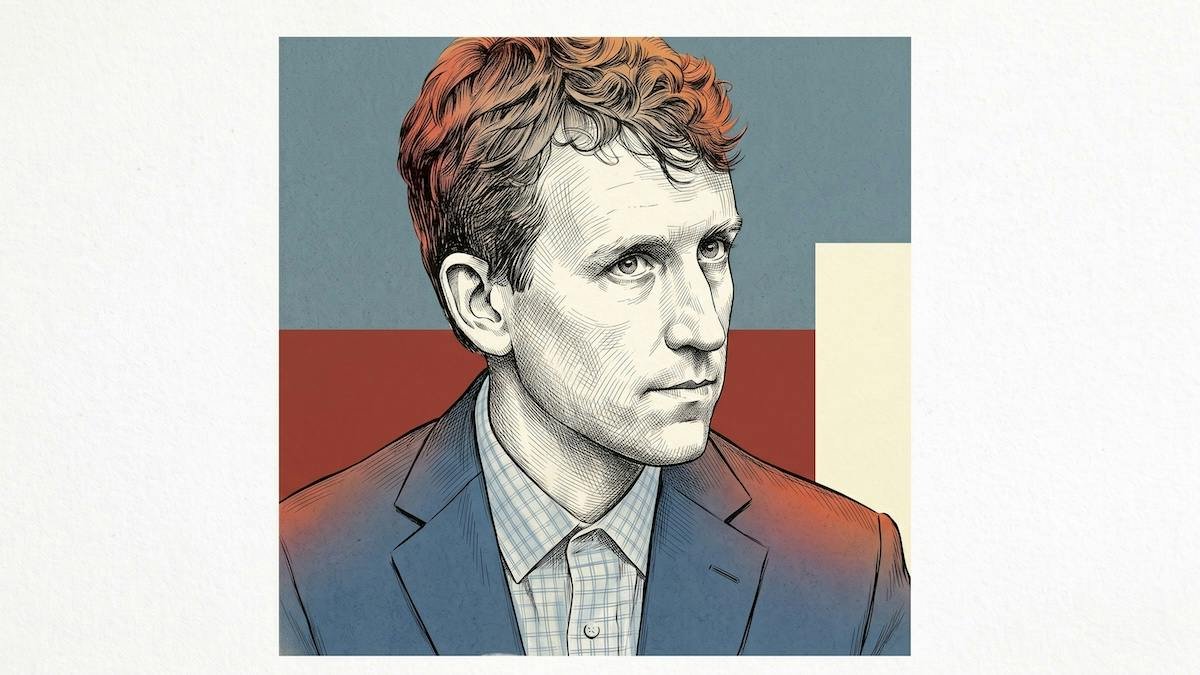
Patrick Clancy, whose ex-wife Lindsay Clancy killed their three children, is facing a new wave of public scrutiny—not for anything he did, but for choosing to forgive her. In an interview with Ross Douthat on “60 Minutes,” Patrick opened up about his decision, saying, according to The Daily Wire, “And I think when it comes to forgiveness, I also felt that if I didn’t get there, I would be eaten up inside, forever.”
Perhaps more startling was the revelation that Lindsay never asked for his forgiveness. That detail has fueled a spectrum of reactions, from those who applaud his grace to those who question his motives, and still others who deride him as weak.
A Case That Shocked the Nation
The murders of Cora, Dawson, and Callan Clancy drew intense national attention. Lindsay Clancy was charged in connection with their deaths, and the subsequent trial laid bare a family tragedy that left many searching for answers. Patrick, who was working from home at the time and had hired a nanny to help, has been described by those who know him as a devoted father and supportive husband.
Yet even before the trial, Patrick found himself under a microscope. Some conspiracy theorists baselessly accused him of being the actual killer, while others criticized him for moving on too quickly after the divorce. After he ran the Boston Marathon in 2024 in memory of his children and raised $75,000 for Boston Hospital—where his son Callan spent his final days—some tried to use that act of remembrance as evidence of either guilt or improper haste. The scrutiny intensified after he voiced forgiveness.

The Biblical and Practical Roots of Forgiveness
Patrick’s decision to forgive has deep roots in his upbringing. Raised in a large Catholic family, he was taught the importance of forgiveness from an early age. The Daily Wire notes that the Bible repeatedly commands believers to forgive, citing Matthew 18, where Jesus tells Peter to forgive “not seven times, but seventy-seven times,” and the Parable of the Unforgiving Servant, which warns against withholding forgiveness after receiving it. Ephesians 4 similarly instructs believers to “be kind and compassionate to one another, forgiving each other, just as in Christ God forgave you.”
Beyond religious doctrine, Patrick has spoken about the practical necessity of forgiveness. He told Douthat he didn’t want the weight of resentment to consume him for the rest of his life. As The Daily Wire puts it, “Nursing a grudge would do just that, preventing him from finding the healing he so needs.” Forgiveness, in this view, does not erase grief or absolve Lindsay of responsibility—but it does free Patrick from a burden that could otherwise define his future.

Anger, he seems to recognize, offers no path to healing. Without forgiveness, he would spend his days consumed by what happened rather than grieving and gradually moving forward. That doesn’t mean the pain disappears. It means he refuses to let it dictate the rest of his life.
The Court of Public Opinion
The public response to Patrick’s forgiveness has been far from uniform. Some praised his strength and compassion. Others pointed out that he has an ongoing civil case against Lindsay’s health care providers, suggesting his words may be constrained by legal considerations. A third group dismissed him as a “sniveling wimp.”
For his part, Patrick has consistently said he doesn’t know what goes on in his own head except for himself, and no one else can dictate the timeline for his healing. Before the murders, he appears to have been a loving and dedicated husband who worked hard to support his ex-wife, hiring a nanny and working from home to be present and helping her seek mental health care after Callan’s birth. Those who know him say it’s no surprise he would want to find new paths and people to share his love with.
A Lesson for the Rest of Us
The Daily Wire’s Rich Cromwell argues that Patrick’s forgiveness is a sign of strength, not weakness. He quotes Sun Tzu: “Anger may in time change to gladness … But a kingdom that has once been destroyed can never come again into being; nor can the dead ever be brought back to life.” Patrick’s kingdom—the life he built with Lindsay—is gone forever, as are the children he lost. But by forgiving, Cromwell writes, Patrick makes way for gladness and the possibility of building a new life.
For those nursing grudges over far smaller offenses, the lesson is clear: forgiveness is only partly for the forgiven. Its larger role is in freeing the forgiver from the shackles of rage.
Source: www.dailywire.com — https://www.dailywire.com/news/patrick-clancys-radical-forgiveness