
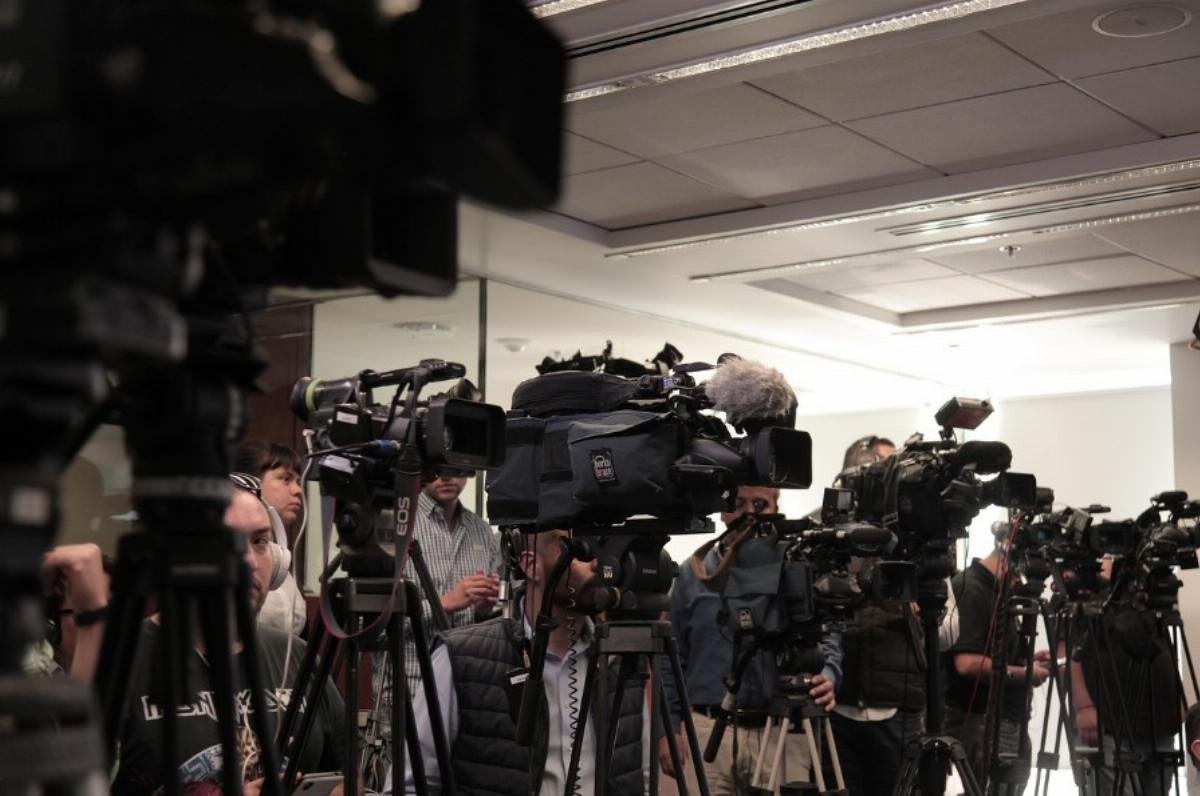
The relationship between the White House and the journalists who cover it has rarely been warm, but a new commentary in American Thinker argues the dynamic has tipped so far toward hostility that it may be time to rethink who sits in the briefing room at all.
In a piece published September 23, 2026 and filed under the outlet’s media and culture section, writer Earick Ward opens with a blunt framing: the press, in his telling, has been “relentless” in its negative coverage of the president. From that premise he poses a question rather than a demand — why not try a different press pool?
The question is the whole of the argument as presented in the piece, which is less a detailed policy proposal than a provocation aimed at the established Washington press corps. Ward does not lay out a roster of who should be added or removed, nor a mechanism for how such a change would be implemented. The editorial’s energy comes from the implied contrast: the same outlets cycle through the briefing room year after year, and in his view, the coverage they produce has grown uniformly critical.

A long-running complaint, reframed
Grievances about White House coverage are hardly new. Presidents of both parties have complained that the correspondents assigned to them dwell on the negative, chase conflict, and treat routine missteps as scandal. What gives Ward’s framing its edge is the proposed remedy. Rather than asking the press to be fairer, he floats changing the composition of the pool itself — a structural answer to what he treats as a structural problem.
That idea cuts against decades of tradition. The White House press pool is a rotating group of correspondents from major wire services, broadcast networks, newspapers, and radio outlets who travel with the president and share their reporting with the wider press corps. Membership has historically been determined by the White House Correspondents’ Association in coordination with the administration, and the arrangement exists largely so that a small, manageable group can accompany the president while still giving the broader public a window into his movements and statements.
Any effort to redraw that roster would immediately raise questions the American Thinker piece does not attempt to answer. Who decides which outlets qualify? Would a smaller or reconfigured pool give the public less access, not more? And would a president who reshapes the pool in his favor set a precedent that the next administration could turn against outlets he dislikes?
The case being made, and what it leaves out
Ward’s editorial is best read as an expression of a persistent frustration among conservative media consumers rather than a blueprint. It assumes its audience already agrees with the core claim — that the president is being treated unfairly — and moves quickly to the rhetorical question in its headline.
Still, the underlying debate has real substance. News organizations argue that aggressive scrutiny of any president is not bias but the job, and that the tone of coverage reflects events rather than animus. Administrations of both parties have pushed back against that reasoning, sometimes by limiting access, sometimes by bypassing traditional outlets in favor of friendlier venues. The American Thinker piece lands squarely in that ongoing argument, taking the side that the current arrangement is broken and that replacing the participants is a legitimate option.
What the commentary does not do is engage with the counterargument directly, or reckon with the practical consequences of a pool chosen on ideological grounds. Those omissions are notable given how consequential the question is. The press pool is not just a perk for journalists; it is the mechanism by which the public learns what the president said, where he went, and whom he met. Change who is in the room and you change what the country sees.
Why it matters beyond the opinion page
Commentary like Ward’s rarely changes policy on its own. But it does reflect a mood, and moods shape incentives. When a significant slice of the president’s supporters believe the press corps is irredeemably hostile, pressure builds on the White House to do something about it — whether by cutting back briefings, freezing out certain reporters, or, as this piece suggests, rethinking the pool entirely.
For now, the American Thinker article stands as one writer’s answer to a question that has no easy resolution: in a polarized media environment, what does fair coverage of a president even look like, and who gets to decide? Ward’s answer is to change the questioners. Whether that would produce better coverage — or simply more agreeable coverage — is the argument the piece leaves for its readers to settle.
Source: www.americanthinker.com — https://www.americanthinker.com/blog/2026/09/how-about-a-new-white-house-press-pool/