
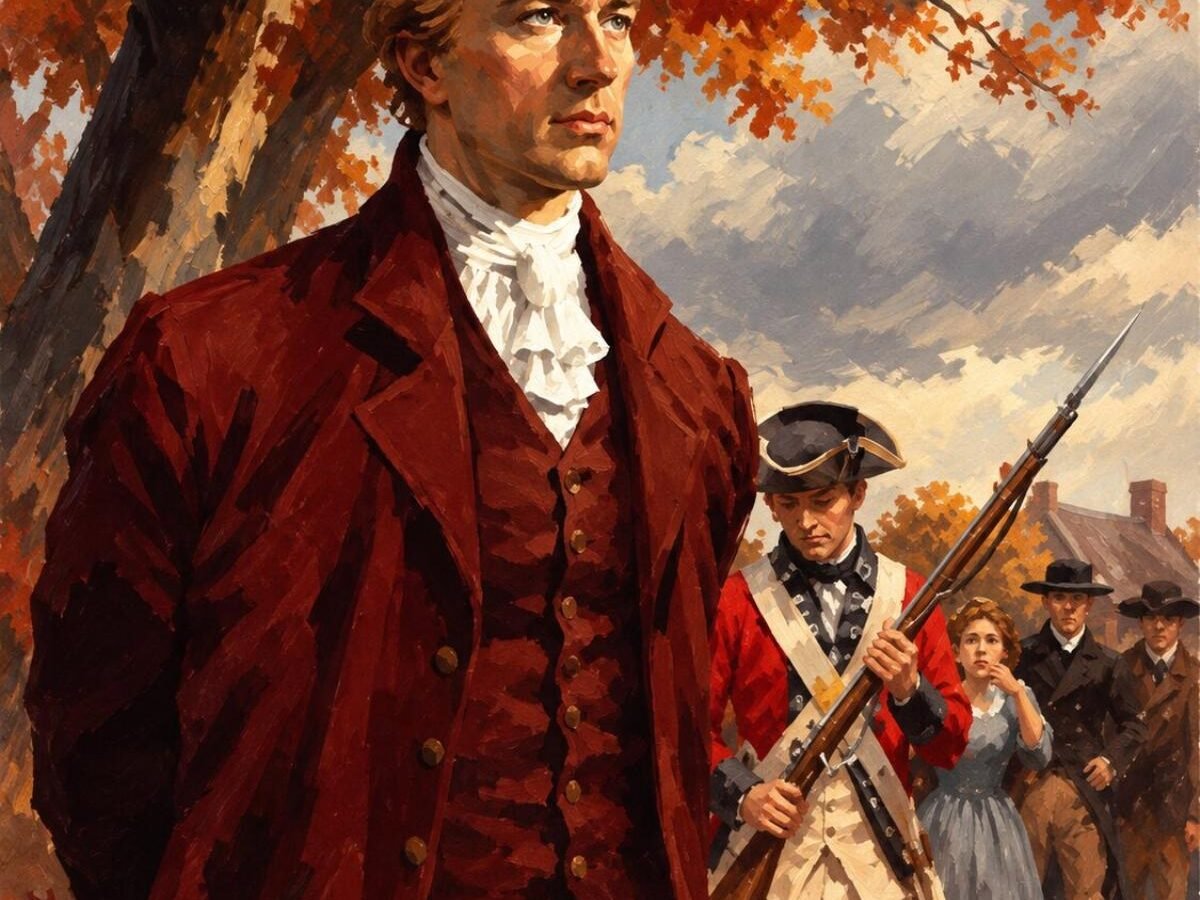
Two events separated by two and a half centuries have been placed side by side this September, and the juxtaposition is doing a lot of argumentative work. According to an essay in American Thinker by James Zumwalt, Secretary of War Pete Hegseth has launched a military recruiting campaign that kicked off in Texas under the banner of the “Send Me Tour.” The date Zumwalt keeps returning to, however, is September 22, 1776 — the day, 250 years ago, that Nathan Hale was hanged by the British in New York City.
Zumwalt’s piece, filed under the outlet’s American History vertical, is less a recounting of the recruiting drive than a meditation on what he sees as a gap between the values Hale embodied and the ones he believes dominate American life now. His framing is direct: a young man who volunteered for a near-suicidal intelligence mission and died for it is being remembered, 250 years later, mostly by people who have never heard of him.
A volunteer, not a conscript
The bare facts of Hale’s story are familiar to anyone who sat through a certain kind of American history class, and Zumwalt walks through them with an eye toward the contrast he wants to draw. Hale was twenty-one years old and a captain in the Continental Army when General George Washington put out the call for someone willing to go behind enemy lines. Washington needed to know what the British were planning and where their troops were moving. Hale volunteered.
His cover was a Dutch schoolmaster — a disguise he used to move through New York City and observe British activity without attracting notice. Zumwalt notes that Hale spent several days taking notes on what he saw, material meant to be delivered back to Washington. Then he was caught.
The circumstances of the capture remain murky. Zumwalt writes that the details are unclear, but that the prevailing belief is that a loyalist cousin of Hale’s recognized him and turned him in. Whether or not that particular family betrayal is accurate, the outcome is not in dispute. Hale was brought before British General William Howe, who ordered him hanged the following morning. There was no trial. The execution moved so fast that Hale was denied access to a clergyman and even to a Bible.
A British officer who watched the hanging later wrote that Hale died with dignity. That officer also recorded what has become the most quoted line in the entire episode — Hale’s reported final statement, that he regretted having only one life to lose for his country. Zumwalt calls these the words of a man who plainly loved his country more than himself.
The argument beneath the history
That is where the essay stops being a history lesson and starts being a lament. Zumwalt’s claim is that Hale’s words would strike many contemporary ears as almost blasphemous — that in an America he describes as having turned away from the values of the founding generation, a sentiment that selfless is no longer legible to a large share of the public.
He points to what he characterizes as a forty-year decline in military recruitment numbers through 2022 as evidence. In his telling, honor, family, and love of country have been displaced by values centered on the individual rather than the group, and the old Three Musketeers refrain — all for one and one for all — has gone largely unheard for four decades.
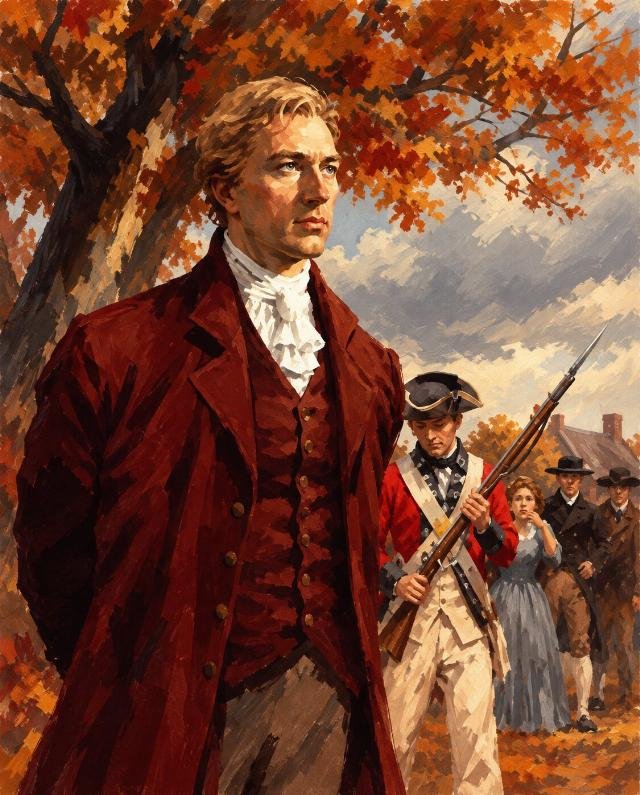
It is worth being precise about what is and is not being argued here. Zumwalt does not claim that young Americans are cowards, and he does not claim that the recruiting slump has a single cause. His contention is narrower and more cultural: that the decline in volunteering for military service is a symptom of a deeper shift in what Americans are taught to value, and that the shift is traceable in part to schools that treat the country’s early history as unimportant.
Franklin’s answer, and the question that follows
From Hale’s death, Zumwalt jumps forward almost exactly eleven years, to September 17, 1787, and the Constitutional Convention. Benjamin Franklin was among the founders present as the framework of American government was set down. Elizabeth Willing Powel, described in the essay as a prominent socialite and writer, put a question to him about whether the delegates had produced a republic or a monarchy. Franklin’s reply — a republic, if you can keep it — supplies Zumwalt with his closing frame.
The question he leaves readers with is whether twenty-first-century America can, in fact, keep it. His stated hope is that the recruiting surge he attributes to the Trump administration will bring more young people into service, and that they will take up the role of keepers of the republic that Hale and others like him bought at such a cost.
That hope is doing a lot of work in the essay, and it’s worth noting how much of it rests on contested ground. The claim that the anniversary “passed unnoticed” is Zumwalt’s characterization, not a documented finding about how schools or the public marked the date. The alleged loyalist cousin who turned Hale in is presented as a belief rather than an established fact. And the causal link between classroom instruction and enlistment behavior is an interpretive leap, not something the essay demonstrates.
What the piece does do, effectively, is place two very different September moments in the same frame. On one side is a twenty-one-year-old with a notebook and a disguise, hanged within hours of his capture, denied even a Bible. On the other is a modern recruiting tour with a slogan built for volunteers — “Send Me” — and a country debating what, if anything, it still expects of the people it asks to serve.
Whether that debate resolves the way Zumwalt hopes is, by his own admission, an open question. He closes by insisting that the ability to speak our minds matters more than ever to the republic he says we all have a stake in preserving — a line that lands as both a defense of the outlet he’s writing for and a reminder that the argument over what America owes its dead is still very much alive.
Source: www.americanthinker.com — https://www.americanthinker.com/blog/2026/09/a-patriot-s-failed-mission-remembered-for-his-historic-regret/