
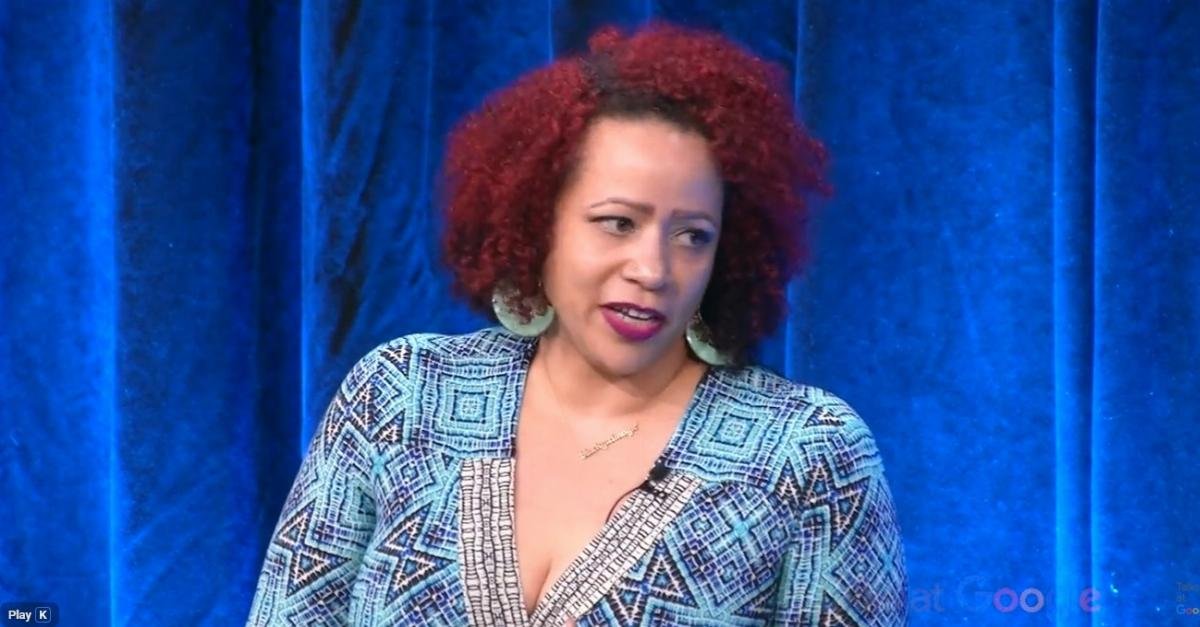
Nikole Hannah-Jones spent years arguing that school choice was a vehicle for white and Asian families to abandon integrated public schools. This month, in a lengthy essay for The New York Times Magazine, the 1619 Project author acknowledged that she had placed her own daughter in a struggling public school, and that the experience forced her to re-examine what she had believed about why those schools fail.
According to American Thinker’s Monica Showalter, the admission has handed school choice advocates a potent talking point — and they are not being quiet about it. Showalter argues that the advocates Hannah-Jones spent years portraying as racists now have the upper hand in the debate, and she says Hannah-Jones owes them an apology.
What Hannah-Jones Actually Wrote
In the essay, Hannah-Jones described a decision born of ideology: she had the means to send her daughter elsewhere but chose a segregated, low-performing public school to make a point about equality. The result, she wrote, was that her child received a worse education than she could have had.
Showalter zeroes in on a passage from Hannah-Jones’s earlier writing about New York City’s screened middle and high schools. In that passage, Hannah-Jones called the system’s sorting of students a “tawdry bargain” designed to keep white and wealthier parents from exiting the public system, and argued that academic screens, gifted-and-talented programs, and portfolio-based admissions function as proxies for segregation.
Showalter counters that the reasons Hannah-Jones’s daughter’s school failed had nothing to do with racism or segregation. The problems, she writes, were bad teaching methods, an emphasis on “equity” over academic standards, and a lack of accountability — the very problems that drive parents of all backgrounds to seek alternatives.
An Establishment Consensus, Not a Lone Voice
American Thinker makes the case that Hannah-Jones was not operating in isolation. Showalter lists a series of institutional publications that framed school vouchers and choice as racially suspect over the past decade, citing the Center for American Progress’s 2017 piece on the “racist origins of private school vouchers,” a National Education Association article on the “racist beginnings” of vouchers from 2026, a Brookings Institution piece on school choice and segregation, a University of North Carolina at Chapel Hill paper called “Opt-Out Education: School Choice as Racial Subordination,” and a 2020 piece from the Arkansas Education Association describing vouchers as an “enduring racist practice.”
The implication is that the anti-choice position was not simply one writer’s conviction but a broader institutional stance — and that the institutions that promoted it have not had to reckon with the consequences the way Hannah-Jones now has.
The 2017 Interview
Showalter also revisits a 2017 video in which Hannah-Jones laid out her theory of school choice in New York City. In the transcript, Hannah-Jones argued that choice in the city “doesn’t tend to help with integration” and instead allows “white and middle-class parents who are in neighborhoods with segregated schools to get away from those schools.” She noted that the city’s best schools are disproportionately white and Asian while Black and Latino students make up the majority of the district.
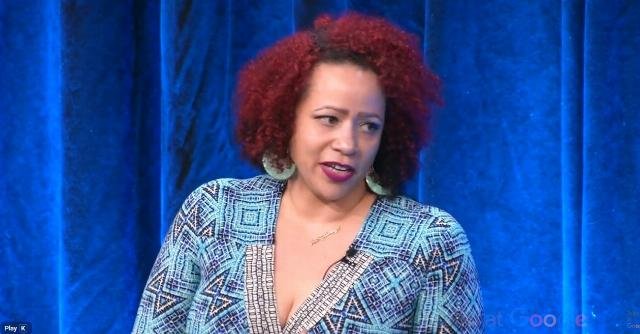
Hannah-Jones pointed to barriers she said kept low-income families out of selective schools: a specialized high school admissions test that, she said, the Department of Education acknowledges covers material not taught in most Black and Latino students’ schools; an application process for middle and high schools that requires in-person submissions during school hours; and portfolio requirements that assume preparation many students never receive. Parents working hourly-wage jobs, she argued, cannot afford to take time off to navigate that process, so choice ends up benefiting the families who are already advantaged while creating a “veneer of equality.”
Showalter finds the logic wanting. If Black and Latino students lack access to good schools, she asks, who is preventing them from applying? If those students aren’t being taught what the entrance exams cover, she argues, the fault lies with the teachers’ unions rather than with the white and Asian parents who want no part of the system’s failures. And the claim that low-income children cannot assemble a portfolio, she writes, strains credulity in the internet age — as does the suggestion that a parent earning $8 an hour would decline to get a child to an exam that could change the child’s life.
Showalter’s sharpest point is that the framing erases Black parents who have fought hardest for choice. She notes that in 2013, Black parents in Louisiana battled to keep their children in good schools through a state voucher and school choice program, that the Obama administration tried to shut the program down, and that a court sided with the parents and allowed them to keep their children in better schools. Test scores in subsequent years rose to the top tiers nationally across the South, including in Mississippi and Louisiana, she writes.
Hannah-Jones, an education reporter long before she joined The Times in 2015, has never addressed that Louisiana fight, according to Showalter — a silence that Showalter treats as telling.
The Pushback Begins
The response from the other side of the argument is already arriving. Showalter points to an op-ed published in The Wall Street Journal the same day as her piece, written by school choice advocate Maude Maron. In Maron’s account, Hannah-Jones repeatedly pressed her during a 2019 interview: “What are you willing to give up for equality?” Maron says Hannah-Jones invoked “integration” and “segregation” so often — 69 times in a 90-minute interview, by her count — that the conversation felt stuck in 1954.
For school choice supporters, the significance of the moment is not merely that a prominent critic changed her mind about her own child’s schooling. It is that her essay implicitly validates the instinct they say drove them all along: that parents who can move their children to better schools do so because the schools they are leaving are not teaching, not because of animus toward the children who remain.
Source: www.americanthinker.com — https://www.americanthinker.com/blog/2026/09/school-choice-advocates-demonized-by-nikole-hannah-jones-are-now-coming-back-to-haunt-her/