
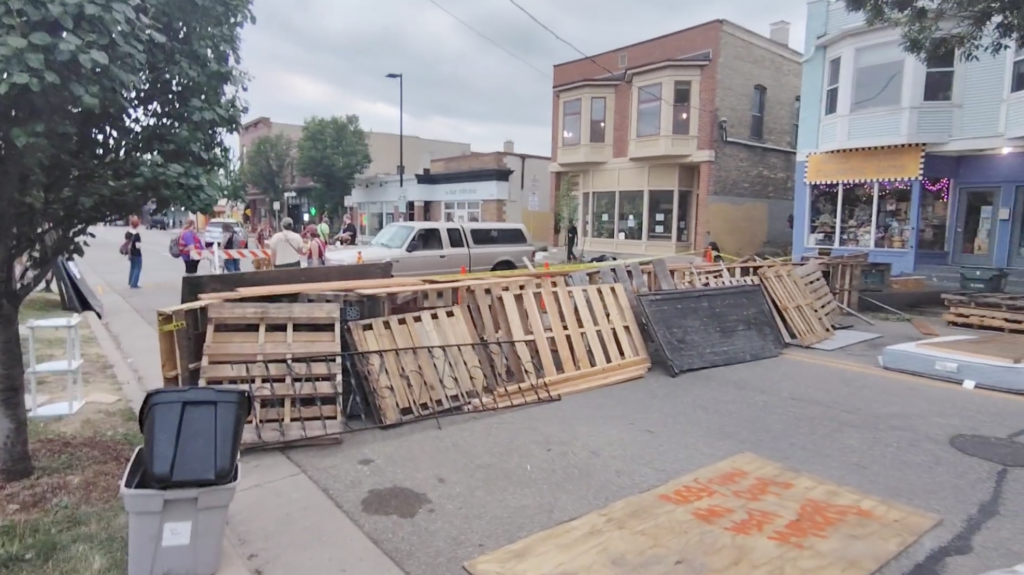
A multi-block occupation zone in Madison, Wisconsin has extended into its third week following a fatal officer-involved shooting on July 22, raising questions about public safety, property rights, and the city’s response to ongoing street closures.
The situation began when four Madison police officers attempted to arrest Corey Ruiz, who according to police was armed with a knife. Video footage shows Ruiz resisting arrest before an officer shot and killed him. Police reported that Ruiz had pulled out his knife and injured an officer prior to the shooting.
Court records show Ruiz had an extensive criminal history spanning 17 years, with 86 separate charges including 11 for resisting or obstructing officers, 14 for bail jumping, and 12 for disorderly conduct. Additional charges included battery, strangulation, vehicle theft, cocaine possession, and threats against law enforcement and judicial officials.
Political Response and Initial Protests
Hours after the shooting, Francesca Hong, a Wisconsin gubernatorial candidate who describes herself as a democratic socialist, addressed protesters with a bullhorn. “A man died at the hands of state-sanctioned violence,” Hong told the crowd, later adding under pressure from protesters that “this state-sanctioned violence was an execution.”
Protesters subsequently disrupted the weekly “Concerts on the Square” event at the Wisconsin State Capitol, taking over the stage with bullhorns and confronting attendees. Additional demonstrations included occupying a press conference at City Hall and blocking access to businesses along State Street, a commercial corridor connecting the Capitol to the University of Wisconsin-Madison campus.
Autonomous Zone Established
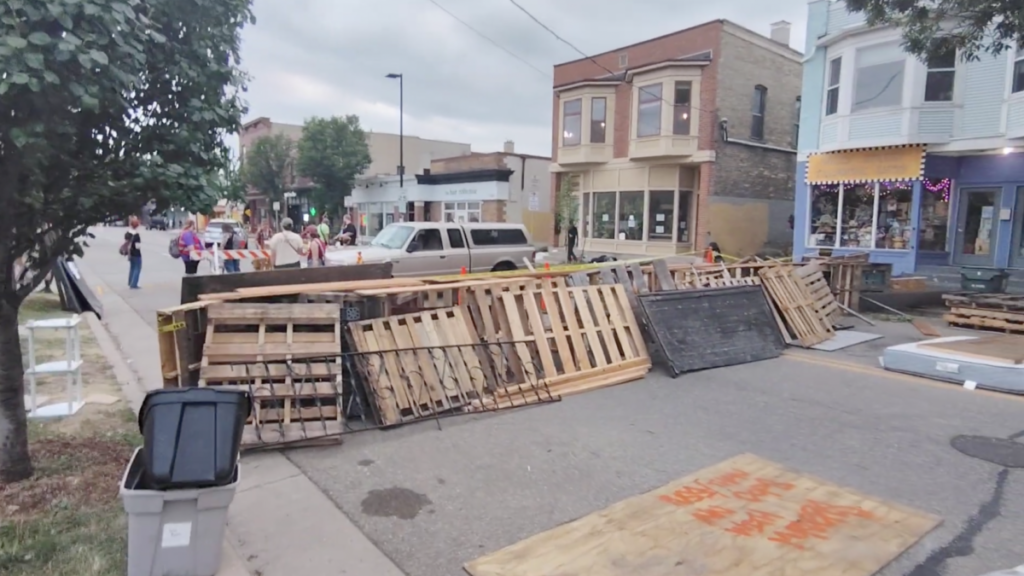
What began as spontaneous protests has evolved into what demonstrators call the “Corey Ruiz Autonomous Zone,” occupying several blocks near the intersection of Willy Street and Baldwin Street. The area features tents, wooden pallets, mattresses, and various barricades, with observers noting the presence of nail boards and garbage-can obstructions.

Madison city officials have installed their own barricades around the protest zone and informed citizens the area will remain closed “until further notice.” Portable toilets have also appeared at the site, though city officials deny providing them.
Economic and Safety Impact
Local business owners are reporting significant financial strain from the ongoing closures. Restaurant operators in the affected area have expressed concerns about meeting rent obligations and maintaining payroll while customer access remains restricted.
Residents living near the autonomous zone describe dealing with what they characterize as a city-sanctioned homeless encampment, citing frequent outbreaks of violence and disruptions to daily life. Homeowners and business operators report being unable to freely move through the area or conduct normal commerce.
Legal Questions
The situation raises legal issues regarding enforcement of existing ordinances. Madison city code prohibits blocking or obstructing public streets, and Wisconsin state law classifies street obstruction as a criminal offense. Civil rights statutes also provide mechanisms for business owners to pursue legal action against both protesters and government officials when constitutional rights are infringed.
According to The Federalist’s reporting, many of the organizers and participants in the occupation identify as socialists or communists, part of a broader movement visible in cities across the United States including New York, Michigan, and Minnesota.
The Madison Police Department has not issued a timeline for clearing the occupied zone, and city officials have not announced plans to enforce existing street obstruction laws. The standoff continues as business owners calculate mounting losses and residents navigate disrupted access to their homes and neighborhoods.
The situation in Madison reflects broader tensions in American cities over policing, protest rights, and the balance between civil demonstration and public order. As the occupation enters its fourth week, questions persist about how and when municipal authorities will address the ongoing street closures and their economic impact on the surrounding community.
Source: thefederalist.com — https://thefederalist.com/2026/08/04/the-lawless-zone-in-madison-is-a-preview-of-america-under-socialism/