
Britain’s Labour government is weighing an expansion of its planned tax on high-value homes that would lower the threshold at which the levy kicks in, a move that could land hardest on the party’s own electoral base, according to reporting by The Times of London.
Citing government sources, The Times reports that cutting the threshold from £2 million to £1.5 million is being actively considered in Downing Street as ministers hunt for new revenue to fund spending commitments. Under the current proposal, affected households would owe an additional £2,500 to £7,500 per year on top of existing property taxes. Lowering the threshold would bring roughly a quarter of a million more households into the net, according to the paper’s reporting.
A Tax That Falls on Labour’s Heartlands
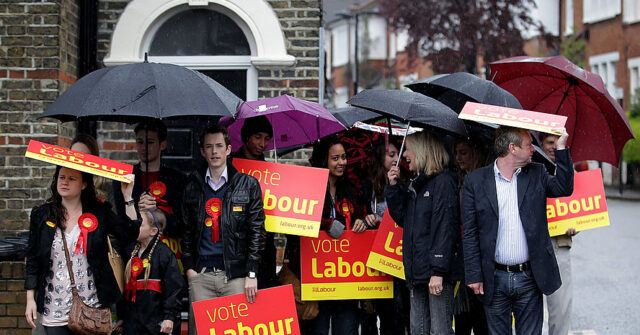
The political arithmetic is awkward for the government. Analysis reported by The Times finds that nine out of ten of the constituencies facing the highest concentration of newly liable households are Labour-voting — and that not a single right-wing-voting seat appears in the top 20 most-affected areas.
Those areas are London’s wealthiest postcodes, including the former parliamentary seat of Keir Starmer and the seat held by his predecessor as Labour leader, Jeremy Corbyn. The pattern extends further down the rankings: no constituency held by Reform UK appears among even the top 200 areas expected to see the largest numbers of households hit by the charge, according to the analysis.
That geographic skew reflects a broader shift in the coalition Labour now represents. The party has moved a long way from its industrial working-class roots and today draws its support substantially from university-educated, urban, middle-class voters alongside migrant communities — precisely the demographic most exposed to a tax aimed at expensive property.
Backbench Unease in London
The electoral risk has not gone unnoticed inside the party. Several London Labour MPs have reportedly broken ranks to urge the Prime Minister to reconsider the property tax raid, warning it could imperil their chances of re-election.
A Treasury spokesperson did not immediately respond to a request for comment, and Downing Street has not confirmed that any threshold change has been decided.
Critics of the proposal argue the burden would not stay confined to the very wealthy. Because the tax is set at fixed cash values rather than indexed to inflation, decades of rapid house-price growth in Britain — which has consistently outpaced wage growth and GDP — would steadily pull more ordinary families into the charge over time, a process known as fiscal drag. At a £1.5 million threshold, the analysis suggests, many middle-class households in expensive parts of the country could find themselves liable sooner than expected, with more drawn in with each passing year.
Supporters of the policy counter that taxing high-value property is a defensible way to raise revenue from those best able to pay, even when those households happen to vote Labour. The debate echoes a familiar tension for centre-left parties in high-cost cities: policies designed to redistribute wealth often fall first on the affluent urban professionals who form a core part of their modern base.
A Wider Pattern
The mansion tax is not the only front on which the current government’s policies are colliding with the interests of its wealthier, left-leaning voters. As previously reported, Prime Minister Andy Burnham has said he intends to reverse the previous administration’s approach of renting the cheapest available properties when housing newly arrived migrants in government-funded accommodation. Instead, migrant settlements would be spread into wealthier areas as a matter of what Burnham has described as a “point of principle” — social solidarity.
That policy, too, would land most visibly on affluent, largely Labour-voting neighbourhoods. Meanwhile, polling suggests the vast majority of Britons believe the government is not doing enough to enforce border controls in the first place, a disconnect that complicates the political story the government is trying to tell.
Taken together, the two policies sketch a government willing to impose costs on its own supporters in pursuit of its stated priorities — and a parliamentary party beginning to calculate what that costs at the ballot box.
Source: www.breitbart.com — https://www.breitbart.com/europe/2026/09/25/up-the-middle-classes-labours-looming-mansion-tax-would-hit-its-own-voters-hardest/