
Louisiana congressional candidate Stephen Wagley says the voters he talks to are asking the right questions about the artificial intelligence data centers moving into their communities — and he thinks elected officials owe them answers.
During an appearance on Breitbart News Saturday with host Matthew Boyle, Wagley said the frustrations constituents are voicing about Amazon’s drone delivery tests in the Baton Rouge area have become a kind of rehearsal for the much larger debate over data center development. According to Breitbart’s account of the interview, Wagley described the drone issue as a “good segue” into the data center conversation, because it taught residents what it feels like to live next to fast-moving technology without knowing who is in charge.
“All this week, I’ve actually been hearing about a new issue,” Wagley said, describing a large Amazon facility that has been operating in Baton Rouge for several years with generally positive results. Deliveries, he said, arrive quickly, and the facility itself has been well received. The trouble started when the company began experimenting with drone deliveries.
Residents initially found the drones novel, Wagley said, but the reality has been different from the pitch. The aircraft are flying far more often than anyone expected, they are louder than anticipated, and they are larger than most people imagined — roughly 85 pounds apiece. One crashed recently, he added, which sharpened the sense of unease.
From Drones to Data Centers
People living directly under the flight paths, Wagley said, are now fielding so many drone overflights each day that they want the program stopped or at least capped. Just as striking to him is the confusion that followed: nobody seemed to know which office to call, which agency has jurisdiction, or what rules actually apply.
“Everyone, including the officials, are learning as they go,” he said. That experience, in his telling, is “a good segue into the data centers.”
Wagley was careful not to position himself against economic development. He noted that many voters are strongly pro-growth and are open to the idea that data centers could be a genuine asset if they deliver on their promises. The problem, as he frames it, is not the projects themselves but the process surrounding them — specifically, the non-disclosure agreements he says elected officials sign when negotiating to bring data centers into a community.
That secrecy, according to Wagley, leaves residents without the information they need to evaluate what is being built next to them. He said the lesson from the Amazon drone episode and other situations is that citizens have to “know what questions to ask” — and then actually get answers.
The Questions Voters Want Answered
The questions Wagley listed are practical ones. How much water will a data center consume? Will the facilities end up importing workers from places like San Francisco rather than hiring locally? Will the jobs created be long-term positions for people who already live in the area? These are the kinds of concerns, he argued, that residents raise when they cannot get straight answers from the officials negotiating on their behalf.
“Most of the citizens that I’m talking to, I think that their concerns are very valid, because they can’t even get answers to these questions because there is no transparency,” Wagley said. “There is no accountability, and I think that’s pretty simple, and I think we at least owe them that.”
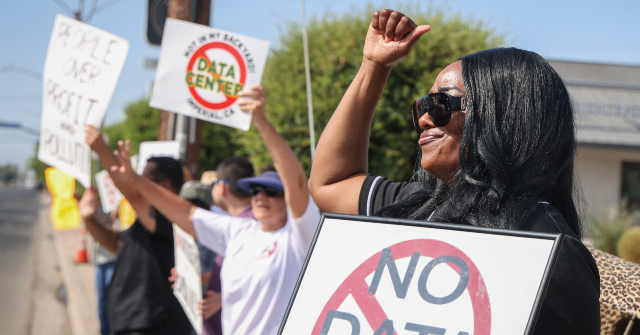
Wagley’s comments land in the middle of a broader national argument over how quickly AI infrastructure is being built and how much say local communities get in the process. Data centers are water- and power-intensive, and the speed of their rollout has begun to generate friction in states and counties where residents learn about projects only after deals are signed.
For Wagley, the answer is not to halt development but to change the terms of the conversation. He said officials should be forthcoming about what they are agreeing to, so that voters can weigh the benefits against the costs with real information in hand.
The interview reflects a candidate working to channel voter anxiety that crosses party lines — frustration with noise, transparency, and a sense that decisions are being made above residents’ heads. Whether that message translates into support at the ballot box is a question only voters can answer, but Wagley is betting that the demand for answers is strong enough to matter.
Source: www.breitbart.com — https://www.breitbart.com/politics/2026/09/26/exclusive-stephen-wagley-voters-concerns-over-ai-data-centers-are-very-valid/