
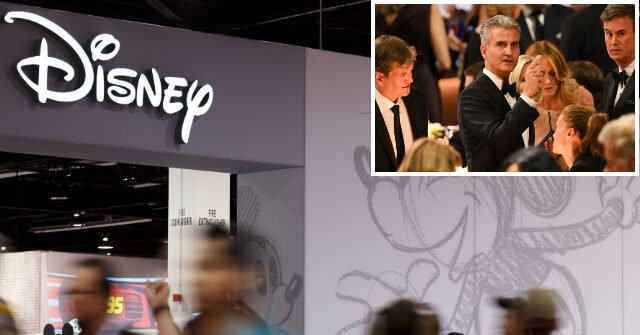
Disney is gearing up for another round of layoffs, with a restructuring of its television operation expected to cut hundreds of jobs and consolidate divisions, according to a report in the Wall Street Journal cited by Breitbart News. The move would mark the company’s fourth round of cuts in 2026, following three earlier waves that have already reshaped its workforce.
The Journal report, described by Breitbart as coming from “people familiar with the matter,” says a primary goal of the reorganization is to build a TV business that serves streaming customers rather than the traditional broadcast and cable model that has defined the industry for decades.
The Weight of a Linear Empire
Disney’s television holdings are sprawling. The company outright owns ABC’s broadcast network and eight affiliate stations, plus seven cable channels: Disney Channel, Disney Junior, Disney XD, Freeform, FX, FXX, and FXM. It holds a roughly 75 percent stake in three National Geographic cable networks, about 80 percent of five ESPN networks and three additional sports networks, and a half-interest in A&E, History, Lifetime, and LMN.
All told, Disney owns or partially owns around 25 linear TV outlets while operating just four streaming services: Disney+, Hulu, ESPN Select, and ESPN Unlimited.
The mismatch isn’t just structural — it’s reflected in the numbers. As Breitbart’s John Nolte noted, the flagship Disney Channel averaged only 110,000 primetime viewers in 2025 on a Live+7 basis. Six of the company’s networks draw fewer than 100,000 viewers on average.
Those figures raise an uncomfortable question for the company: how do you sustain entire networks when almost no one is watching them?
Cable’s Shrinking Economic Engine
The answer, at least historically, lies in carriage fees. Cable and satellite providers pay to include networks in their channel packages, and subscribers pay for those packages whether or not they watch the channels inside them. A portion of every cable bill flows back to the networks, allowing low-rated outlets to remain profitable as long as they’re bundled into large packages.
But as more households cancel cable in favor of streaming, carriage fee revenue shrinks. Networks that depend on forced bundling rather than advertising revenue tied to viewership become harder to sustain. That dynamic is what’s driving Disney’s restructuring, according to the Journal report.
Yet the pivot toward streaming faces its own headwinds. Disney+ and Hulu together count 196 million worldwide subscribers. YouTube, by comparison, reports 2.7 billion monthly users. YouTube also accounts for 14.2 percent of television viewing time — a figure that excludes mobile, tablet, and desktop consumption — while Disney’s platforms hover near five percent of TV time.
This gap matters as Disney bets its television future on streaming growth. The company is consolidating divisions and cutting staff in part to redirect resources toward direct-to-consumer products, but the competition for viewers is no longer just other legacy studios. It’s a vast ecosystem of user-generated content that costs far less to produce and commands far more of the audience’s attention.
Whether that shift will produce a leaner, more competitive Disney or simply a smaller one remains an open question. The reported layoffs, however, suggest the company sees little choice but to keep cutting as it tries to find out.
Source: www.breitbart.com — https://www.breitbart.com/entertainment/2026/10/02/nolte-after-3-rounds-of-layoffs-in-2026-disney-grooming-syndicate-plans-hundreds-more/