
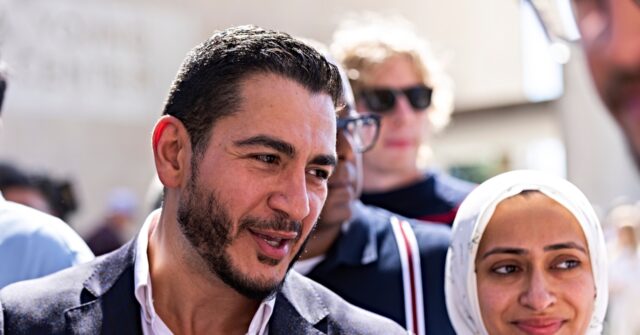
Michigan Democratic Senate candidate Abdul El-Sayed said on a podcast that Arabs in America carry a reputation for pestering women and running corner stores where customers get shortchanged — remarks that surfaced this week as a Detroit car crash reignited tensions between Black and Arab communities in the state.
El-Sayed, who is running against Republican Mike Rogers, made the comments during an appearance on the Higher Learning podcast, according to Breitbart News. He was asked what he has been doing to “resonate” with Black voters.
The candidate said he has been having “great conversations” with people, but he acknowledged a gap in how some Black Americans experience Arab-owned businesses and Arab men in public. “Too often when folks meet somebody who looks like me, it’s not a good experience,” he said, describing people seeing Arabs “from behind bulletproof glass in a liquor store or in a gas station.”
He went on to list other harms: women being catcalled, children being sold drugs, and expired food being sold to customers. “They’re being catcalled, if they’re a woman,” El-Sayed said. “Their kid is being sold a Lucy out the back, if they buy food its beyond its expiration date.”
The remarks drew attention because of who made them. El-Sayed is a former Detroit health director who has become a national progressive figure, and Rep. Alexandria Ocasio-Cortez (D-NY) has said he “represents the politics of the future” for America. He is also the most prominent Muslim candidate for Senate in the country this cycle, and his comments about his own community’s reputation cut against the usual campaign-trail register.
A Detroit crash and a hate-crime allegation
El-Sayed’s podcast appearance came after a car crash in Detroit involving an Arab driver accused of running a red light and hitting a vehicle driven by a Black woman, according to Fox 2, as reported Tuesday.
The victim’s attorney, Johnny Hawkins, held a news conference at the Westin scheduled for 6:30 p.m. Tuesday to call on the prosecutor’s office to charge the incident as a hate crime. Hawkins says his client was allegedly tormented by an angry mob of Muslim men who used racial slurs. It is also alleged that items were stolen from the victim’s vehicle while the crowd allegedly worked to shield the Muslim driver and her vehicle.
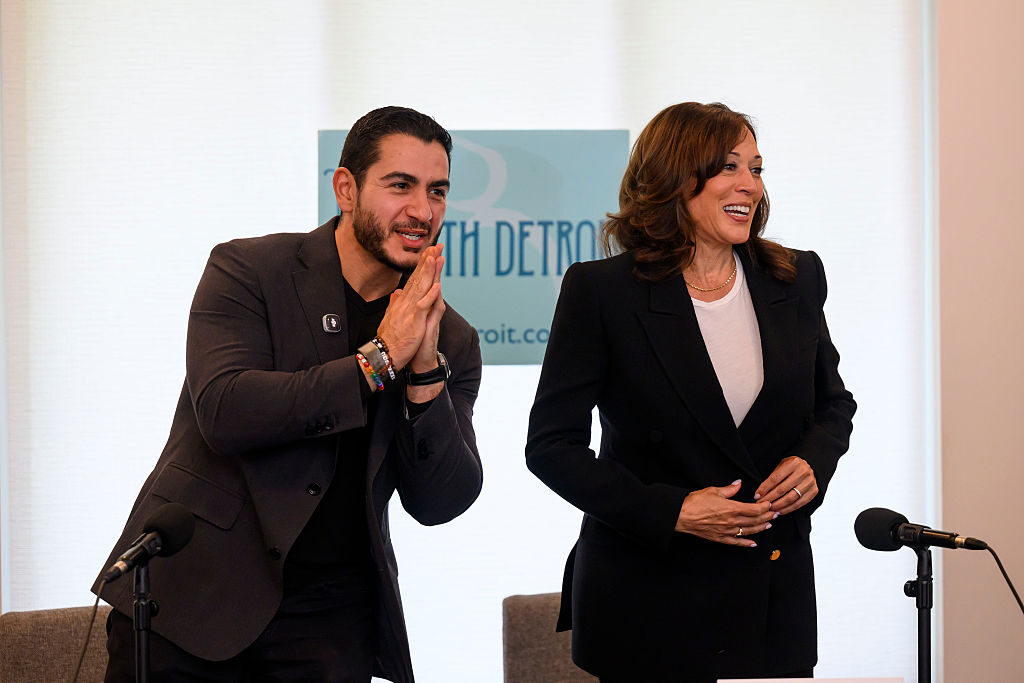
Social media videos circulating afterward showed Black Americans speaking about Arab influence in their communities and others arguing that the Democratic Party has failed Black voters — a message that has found traction in parts of Detroit, where Arab and Black residents have long shared neighborhoods and, at times, friction.
El-Sayed’s faith and his history with Black voters
El-Sayed has cited the Quran as the inspiration behind his politics and has compared himself to Jesus, a framing that has drawn scrutiny from critics who say it blends religious testimony with campaign messaging.
He has also struggled with name recognition and favorability in his own state. Breitbart News reported September 25 that “A majority of Michigan voters hold an unfavorable view of Democratic Senate nominee Abdulrahman Mohamed El-Sayed (aka Abdul El-Sayed), according to a poll commissioned by a Republican group and released this week.” The poll was paid for by a GOP-aligned group, and its release came as the race entered the fall stretch.
Rogers, his Republican opponent, has tried to frame the contest as a choice between extremes. He described El-Sayed as the “Democratic Socialists of America darling right now” and characterized the race as “crazy versus common sense.”
The Senate seat is open in a state that has swung between parties in recent cycles, and the contest has drawn national attention as a test of how far left a statewide Democratic coalition can stretch. El-Sayed’s coalition depends heavily on young voters, progressives and Arab American communities in metro Detroit — the same communities whose tensions with Black Detroiters he was addressing on the podcast.
What the exchange reveals
Whether the comments help or hurt El-Sayed is an open question. Speaking frankly about inter-community grievances can be read as an attempt at honesty, or as an admission that reinforces stereotypes his opponents will use against him. Black voters in Detroit have historically been the decisive bloc in Democratic primaries, and any erosion there would complicate his path.
The exchange also reflects a broader conversation playing out in Michigan and other states with large Arab American populations about how those communities fit into the Democratic coalition — and how the party addresses tensions that occasionally surface between groups that usually vote the same way.
El-Sayed’s campaign has not responded publicly to the podcast clip in the days since it circulated. The comments come as the race against Rogers moves into its final weeks, with both campaigns expected to compete hard for Detroit-area voters.
Source: www.breitbart.com — https://www.breitbart.com/midterm-election/2026/10/02/video-leftist-michigan-u-s-senate-candidate-abdul-el-sayed-arabs-in-america-have-a-reputation-for-pestering-women/
Source: www.breitbart.com
Related coverage
- Pandemic Diary Revelations Reignite Debate Over Public Health Officials’ Private Conduct During COVID-19
- Ukrainian Sea Drones Allegedly Strike Russian Warship in Libya
- DOJ Seizes Over 1,000 Websites Illegally Streaming World Cup Matches
- “Godfather” of Mexican Cartels, Convicted in DEA Agent Murder, Dies in Prison at 80