
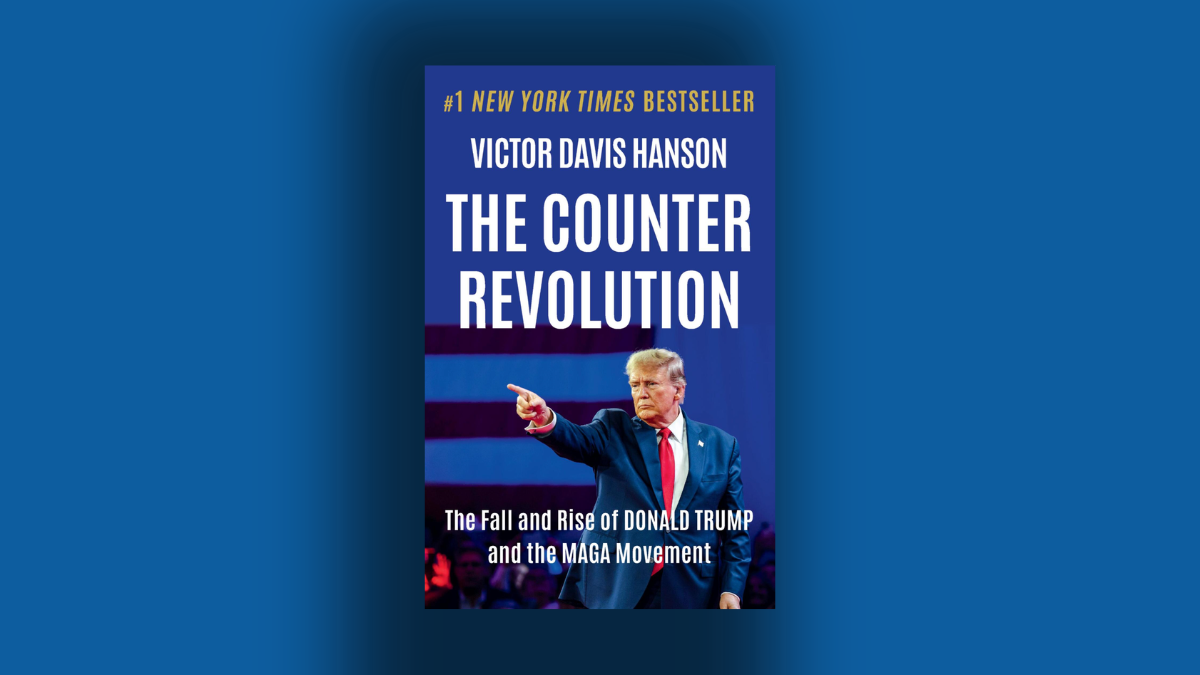
A new book from historian Victor Davis Hanson argues that Donald Trump’s return to the White House represents the most dramatic political comeback in American presidential history — and that the movement Trump built will outlast the man himself, according to a review published in The Federalist.
The book, The Counter Revolution: The Fall and Rise of Donald Trump and the MAGA Movement, traces how a president who left office in January 2021 under a cloud of impeachment, criminal investigations, and corporate ostracism managed to win back the presidency just four years later.
From Political Exile to the Oval Office
Hanson’s account begins in the aftermath of the 2020 election, when, as the review describes it, Trump’s political prospects appeared finished. Allies distanced themselves. Administration officials resigned. Two days after the January 6 riot, Twitter banned Trump from its platform permanently, and Facebook followed months later. When he tried to migrate to Parler, Amazon, Apple, and Google removed the app from their stores. Banks pulled back too: Deutsche Bank announced it would no longer do business with Trump or his company, Signature Bank closed two of his personal accounts, and JPMorgan Chase and Bank of America said they would not finance future Trump Organization projects.
“Popular wisdom held that his political career was over,” Hanson writes, as quoted in the review.

What followed, according to the book, was an extraordinary legal and political siege. Between 2021 and 2025, Trump was targeted in five different courtrooms and faced 91 felony charges along with roughly $500 million in combined fines. In August 2022, the FBI searched his Mar-a-Lago home — the first time in American history an ex-president had been subjected to such a raid. When he launched his third campaign, nearly half the states attempted to remove him from the ballot.
The review notes the irony that this sustained opposition campaign unfolded against a first-term record that included a 1.2 percent inflation rate, near record-low peacetime unemployment, a secure southern border, and the Operation Warp Speed vaccine development effort.
Why the Comeback Worked
Hanson identifies several factors behind Trump’s resurrection. The first was what he calls Trump’s “boundless septuagenarian energy” — the former president staged more public campaign events than Kamala Harris and Tim Walz combined during the 2024 race.
The second was Trump’s apparent imperviousness to setbacks, a trait Hanson describes as a refusal to indulge in self-critical introspection.
The third factor, per Hanson, was the Democrats’ own weaknesses. Harris struggled to separate herself from an unpopular incumbent president and from her own record as vice president, while the party’s escalating rhetoric against Trump — and the criminal and civil cases brought against him — ultimately made him a more sympathetic figure, the review argues. Hanson writes that Democrats seemed “strangely oblivious to this paradox: The more they searched for questionable ways to abort a Trump candidacy and later to neuter his administration, the more they only further empowered it.”
Finally, the review credits the strength of Trump’s campaign operation, led by Susan Wiles, with mastering new media and focusing on the issues that polled in his favor: immigration, the economy, crime, trade, and anti-woke cultural flashpoints. That message drew influential figures into Trump’s orbit, including Elon Musk, Tulsi Gabbard, Robert F. Kennedy Jr., Larry Ellison, Marc Andreessen, Ben Horowitz, David Sacks, and Bill Ackman.
Despite being outspent roughly three-to-one and facing largely negative press coverage, Trump’s team dispatched Biden’s candidacy and then defeated Harris, improving his share of the vote in 89 percent of counties nationwide, according to the book.
Trump’s Weaknesses — and What Comes Next
Hanson does not spare Trump from criticism. The review notes he describes the president’s “mercurial disposition, his unorthodox methods, his unique appearance and blunt, often cruel speech, and his unfiltered stream-of-consciousness social media posting.”
Looking past Trump’s second term, which will end in January 2029, Hanson considers the future of MAGA without its founder — whether Vice President J.D. Vance would carry the agenda forward or distance himself from his political benefactor. The review names Vance, Marco Rubio, and Ron DeSantis as possible successors.
Hanson argues it is highly unlikely the Republican Party will revert to the Bush-era orthodoxies that have been thoroughly discredited among conservatives. Instead, the movement’s survival will hinge on the personal charisma and rhetorical skills of whoever inherits it.
But the qualities that most enrage Trump’s critics — the coarseness, the eccentricities, the rudeness his opponents insisted would doom him — were, in Hanson’s view, exactly what made him such a formidable adversary. That, he argues, is why Trump’s legacy will continue to shape American politics long after he leaves office.
“Unless Democrats find another charismatic leader — on the level of Bill Clinton, Barack Obama, or Trump himself — and unless they move toward the political center, the Democrats are likely to lose any election that pits them against a workmanlike MAGA Republican candidate,” Hanson writes.
His conclusion, as quoted in the review, is blunt: “By engraving, warping, and thereby emasculating the Democratic Party, Trump made it possible for Trumpism to outlast him.”
Source: thefederalist.com — https://thefederalist.com/2026/10/02/how-trumpism-will-outlast-trump/
Source: thefederalist.com
Related coverage
- Democrats Court-Packing Plans Draw Fury Amid SCOTUS War Threats
- Jeffries Backs Reversing Trump-Era DACA Deportations: ‘Undo the Damage’
- Canadian Doctors Renew Push to Legalize Euthanasia for Disabled Newborns
- France’s Student Riots Cost $33M, Nearly 7,000 Arrested as Unrest Spreads to Belgium and Italy