
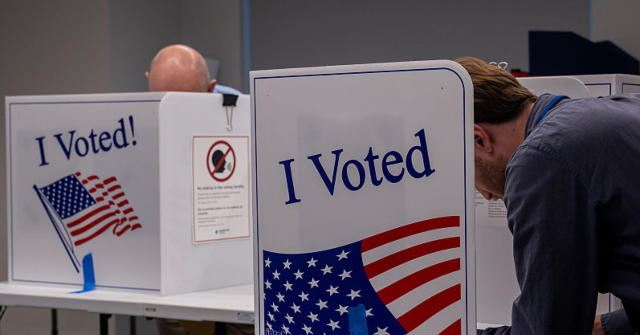
A federal judge in Miami has dismissed a criminal case against a noncitizen who voted in the 2020 election, ruling that Congress lacked the constitutional authority to pass the 1996 law banning noncitizens from voting in federal elections. The decision, handed down by U.S. District Judge David Leibowitz, could unsettle prosecutions of illegal voting across the country, according to Breitbart News.
Leibowitz, appointed to the bench by President Joe Biden in 2024, issued a 31-page opinion throwing out the case against Chelsea Michelle Ann Cox, who knowingly cast a ballot in Broward County despite not being a U.S. citizen. In the ruling, the judge contended that the Constitution reserves decisions about voter eligibility to the states, not the federal government.
‘The Prosecution Cannot Stand’
The federal statute at issue, enacted in 1996, makes it a crime for noncitizens to vote in federal elections and carries penalties of up to a year in prison and fines. Leibowitz found that the law ran afoul of Article I, Article II, and the 17th Amendment.
“When you’re prosecuted based on a law that Congress did not have the authority to pass, the prosecution cannot stand,” Leibowitz wrote.
The ruling drew a sharp rebuke from the Trump administration’s Department of Homeland Security. James Percival, DHS general counsel, wrote on X that the decision turned a rare event into a protected right.
“A Biden appointed judge in Florida says that federal bans on noncitizen voting are unconstitutional,” Percival posted. “The thing that never happens is now ‘constitutionally protected activity!'”
Federal prosecutors had maintained that Congress’s broad powers over immigration give it the authority to exclude noncitizens from voting. They also pointed to a 1970 Supreme Court case that upheld a congressional law lowering the voting age to 18, arguing the precedent shows Congress can set rules for federal elections.
A Case With National Implications
If Leibowitz’s ruling holds, it could complicate future prosecutions of noncitizens accused of voting illegally—cases that have become a focus of election integrity efforts in recent years. The Cox case is among a small number of such prosecutions, and a definitive appellate ruling could determine whether the 1996 statute survives.
The judge’s opinion does not address whether Cox herself should face consequences under state law, only that the federal charge against her could not proceed. It is not yet clear whether federal prosecutors will appeal the decision to the Eleventh Circuit Court of Appeals.
Leibowitz’s appointment came in 2024 as part of a wave of Biden judicial nominees. His ruling is the latest in a series of federal court decisions that have tested the boundaries of congressional power over elections, an area where states have traditionally held sway but where Congress has also asserted authority.
For now, the case against Cox has been dismissed, and the legal question of whether Congress can ban noncitizen voting—something it has done for nearly three decades—remains unsettled in the Southern District of Florida.
Source: www.breitbart.com — https://www.breitbart.com/immigration/2026/10/02/biden-judge-claims-congress-cant-stop-noncitizens-from-voting/
Background and context
The latest developments around Biden-Appointed Judge Rules Congress Can’t Ban Noncitizens From Voting, Tosses 2020 Case come amid a broader debate over politics, institutional accountability, and the policy choices that shape everyday life. Understanding the immediate facts is only the first step; the wider impact depends on how officials, institutions, and the public respond in the days and weeks ahead.
FedFront’s coverage focuses on verifiable details, identifiable sources, and the practical consequences of political decisions. Readers should review official statements, primary documents, and court or agency records before drawing final conclusions about any disputed claims.
Why it matters
Stories like this can influence legislation, regulatory enforcement, public trust, and the balance of power between government institutions. Even when the immediate headline fades, the underlying policy, legal, or political questions often continue to shape future decisions.
What to watch next
- Official responses, statements, or policy changes
- Legislative, regulatory, or court action
- Follow-up reporting and independent verification
- Public reaction and broader political fallout
FedFront will continue monitoring this story and update coverage as new information becomes available.
Source: www.breitbart.com
Related coverage
- Daily Wire Columnist Says Homecoming Photos Show a Generation of Parents Who ‘Have Given Up’
- CFP Accused of Alabama ‘Brand Bias’ in Latest Playoff Rankings Controversy
- Democrat Pollster Doug Schoen: Radical Base Keeps Dragging Democrats Back to Toxic Trans Issue
- New Orleans Riverboat Capsizes After Tanker Collision; All Passengers Survive ‘Miracle on the Mississippi’