
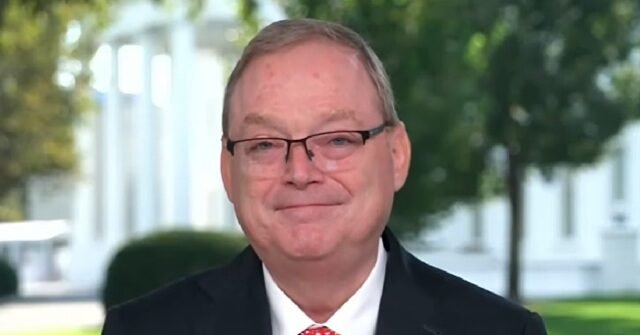
Mortgage rates above 7% are not a sign of inflation, according to White House National Economic Council Director Kevin Hassett, but a side effect of an economy so strong that businesses are borrowing heavily to build factories—sometimes at the expense of lending to homeowners. Hassett made the argument Friday during an appearance on Fox News Channel’s “America’s Newsroom,” where co-host Bill Hemmer pressed him on the political and economic headache of elevated borrowing costs for homebuyers.
Hemmer framed the issue bluntly: “Quickly now, here is the bug in the basket that popped up this week, alright: Current mortgage rates are well above 7% now, and for the housing market, that is not good. Your response on that.”
A Different Kind of Rate Rise
Hassett’s answer amounted to a defense of the administration’s broader economic record, arguing that the forces pushing long-term interest rates higher are not the same as the inflation-driven rate spikes that typically spook policymakers and voters. When the economy is growing at a rapid clip, he said, “longer-term interest rates can sometimes go up, not because of inflation, but because, like, all of these businesses have a high demand for capital because they’re building factories, and so they borrow and people are building factories instead of maybe lending to homeowners.”
In other words, the same capital that might otherwise flow into the mortgage market is being pulled toward industrial construction. That competition for investment dollars can nudge mortgage rates upward even when inflation itself is not the culprit—an argument that effectively reframes a political liability as evidence of economic vitality.
Hassett did not dismiss the pain that higher rates inflict. He said the administration “definitely want[s] mortgage rates to go down” and that it feels “the pain of the first-time homebuyer,” adding that policies addressing the issue are in the pipeline. He did not specify what those policies might be or when they would be announced.
Housing Data as a Counterweight
To make his case that high rates have not derailed the housing market, Hassett pointed to a set of indicators that he said have climbed over the summer. He cited “the boom in the economy and the strong labor market and the strong wage growth,” arguing that “on net, housing supply, housing purchases, housing permits are way up year-over-year.”
The logic, as Hassett laid it out, is that rising incomes can offset the sting of higher borrowing costs. “When incomes go up and mortgage rates go up, then you have to sort of look at the whole picture to think about the housing market,” he said. His conclusion: “housing data is actually up from this because the rest of the economy is doing so well.”
That framing puts the White House in the position of celebrating manufacturing investment and labor market strength while acknowledging that the same dynamics are making homeownership more expensive for the very first-time buyers it says it wants to help. It is a tension that has played out repeatedly in recent economic messaging: strong growth is politically valuable, but so is affordable housing, and the two do not always move in the same direction.
What It Means for the Mortgage Market
The 7% threshold carries symbolic weight. For much of the past two decades, homebuyers became accustomed to rates far below that level, and a return to the high range has squeezed affordability across the country. For a median-priced home, the difference between a rate in the low 3% range and one above 7% translates into hundreds of dollars more per month in payments, cooling demand and sidelining some would-be buyers.
Hassett’s argument suggests the administration views the rate environment as a byproduct of capital demand from a factory construction boom rather than a sign of monetary policy failure. Whether voters and prospective homebuyers accept that explanation is a different question. The White House appears to be betting that a robust labor market—and the wage gains that come with it—will ultimately matter more to households than the headline mortgage rate.
For now, the administration is signaling that relief may be coming in the form of unspecified policies aimed at the housing market, even as it credits the broader economy for keeping housing activity from falling off a cliff. The coming months of data on permits, purchases, and supply will test whether that optimism holds up—and whether the factory boom Hassett describes continues to keep pressure on the mortgage market.
Source: www.breitbart.com — https://www.breitbart.com/clips/2026/10/02/white-house-on-high-mortgage-rates-rates-can-rise-due-to-factory-boom/