
In an essay for American Thinker, writer Jeffrey Folks uses the figure of the 13th-century Persian poet Jalāl al-Dīn Muhammad Rūmī as a measuring stick for modern Iran — and finds the Islamic Republic and its Revolutionary Guard wanting. The piece, published October 4, 2026, is less a work of literary criticism than a political argument, one that reads Rumi’s legacy of universal love against what Folks describes as a regime built on hatred and conquest.
Folks opens by noting that Rumi, described as the most important Persian poet and still widely read around the world, lived and wrote at a time when his verses were commonly set to music — a practice he compares to the way Dante’s poetry was sung by ordinary people in the region that became Italy. Though a devout Muslim who affirmed Mohammad’s primacy among prophets, Rumi held that all humanity is one and that all religions worship a single God, Folks writes. His followers in Konya, where he spent much of his adult life, included Muslims, Jews, Christians, and people of other faiths.
A poet of love against a doctrine of power
The author zeroes in on Rumi’s reputation as the “poet of love,” arguing that his writing centers on love of self and others and a rejection of what Folks calls ideology. Rumi, he writes, dismissed the notion that truth must be sought through a particular church or a God “in the sky,” insisting instead that the seeker look inward rather than to outward officials or institutions. While Rumi revered the Quran and the example of Mohammad, he believed the contemporary leadership of Islam had grown corrupt and misguided and needed reform and purification through a spiritual order centered on asceticism and divine love within the believer’s heart, according to Folks.
That contrast sets up the essay’s central claim: there are no poets or philosophers of Rumi’s stature in modern-day Iran, and few outside the country would describe its leadership — particularly the Islamic Revolutionary Guard Corps — as a religion of love. Folks notes that Rumi welcomed followers from all regions and faiths, teaching them through schools, lectures, letters, poetry, and song, and calls him arguably the most enlightened and least parochial major poet in world history.
Quoting the IRGC
To press the point, Folks quotes statements attributed to the IRGC’s leader. In one, the leader says, “We have crushed the enemies’ bones in all battles. As you can see, they fled the region in humiliation and from now on, they will not have a room in this region. We know what the enemies want as well as the depth of their intentions. They want to diminish the divine light.” Another quote warns that in Lebanon, “tens of thousands, even more than one hundred thousand missiles, are ready to be fired to create a hell for the Zionists at the moment of making the divine predestination happen.” A third accuses the United States of doing “the most work of oppressing, suppressing, and hanging of the freedom-seekers in the world,” producing most of the world’s torture devices, shipping them to dictators, and teaching torture techniques to imprison “the seekers of truth, justice and freedom.”
Folks calls it “preposterous” for Iranian leaders to level such accusations given their own record. He cites a January 25, 2026 article in Time reporting that roughly 30,000 protesters have been killed by the Iranian government, a figure covering only through January of that year, and notes that many of the dead were also tortured. He acknowledges similar practices exist in other authoritarian states but argues Iran’s toll — including some 200,000 young men and women killed in the Iran-Iraq war — is enormous even for a radicalized country of 87 million. Alongside those deaths, he points to an estimated 15,000 political prisoners, dozens on death row, and hundreds already executed for offenses such as speaking out or engaging in political activity. He singles out Saleh Mohammadi, a 19-year-old champion wrestler hanged in March 2026.
Civilization ancient and modern
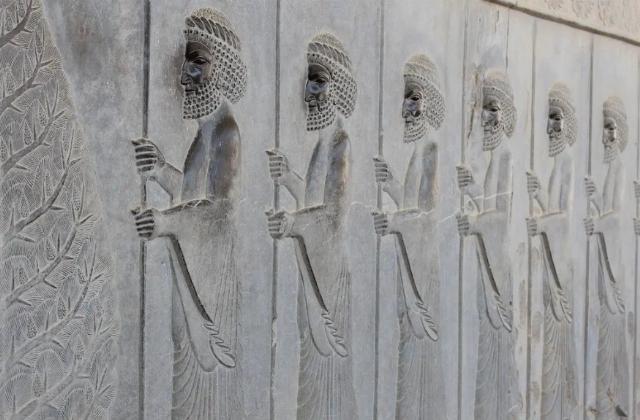
The essay frames Rumi’s writing as one sign among many of the high civilization of ancient Persia, a period when, as Folks puts it, the West was still in the Dark Ages. Nothing comparable can be said today, he argues. While the West and America in particular flourish with per capita incomes as high as $70,000 a year, Iran is collapsing “as all authoritarian dictatorships eventually do,” with a per capita income in 2025 of less than $4,000 and presumably far less in 2026 — this in a country holding some of the world’s largest oil and gas reserves.
Folks finds it both infuriating and bizarre to watch Iranian leaders appear on state media claiming victory in a war with America when, in his telling, the country’s economy and military have already been devastated. His conclusion is that there will be no new Golden Age in Iran so long as its leaders and the segment of the population backing them remain ruled by hatred — the very emotion he says Rumi spent his life preaching against. Rumi’s writings, he notes, remain among the most popular published works in the world some eight centuries after his death. Folks doubts anything of the kind will be said of the chants of “Death to America” and “Death to Israel” coming out of Iran today.
The piece closes with an appeal from the publication for reader donations, a standard note accompanying American Thinker’s commentary. As an opinion essay, it blends literary reflection with a pointed political indictment, using one of Persia’s most enduring cultural exports to argue that the country’s present leadership has abandoned the very ideals that once made it a beacon of civilization.
Source: www.americanthinker.com — https://www.americanthinker.com/articles/2026/10/the-persian-poet-and-the-irgc/
Source: www.americanthinker.com
Related coverage
- Allan Feifer: America’s Crisis Isn’t the Constitution — It’s the Bureaucracy Built on Top of It
- John Cleese Reportedly Aids Sikh Restaurant Owner After Arrest Over Anti-Muslim Stance
- California’s High-Speed Rail Project Crumbles Under Corruption and Mismanagement
- DOJ Files 27 Lawsuits Against Sanctuary Cities as Philadelphia ICE Masking Policy Is Halted