
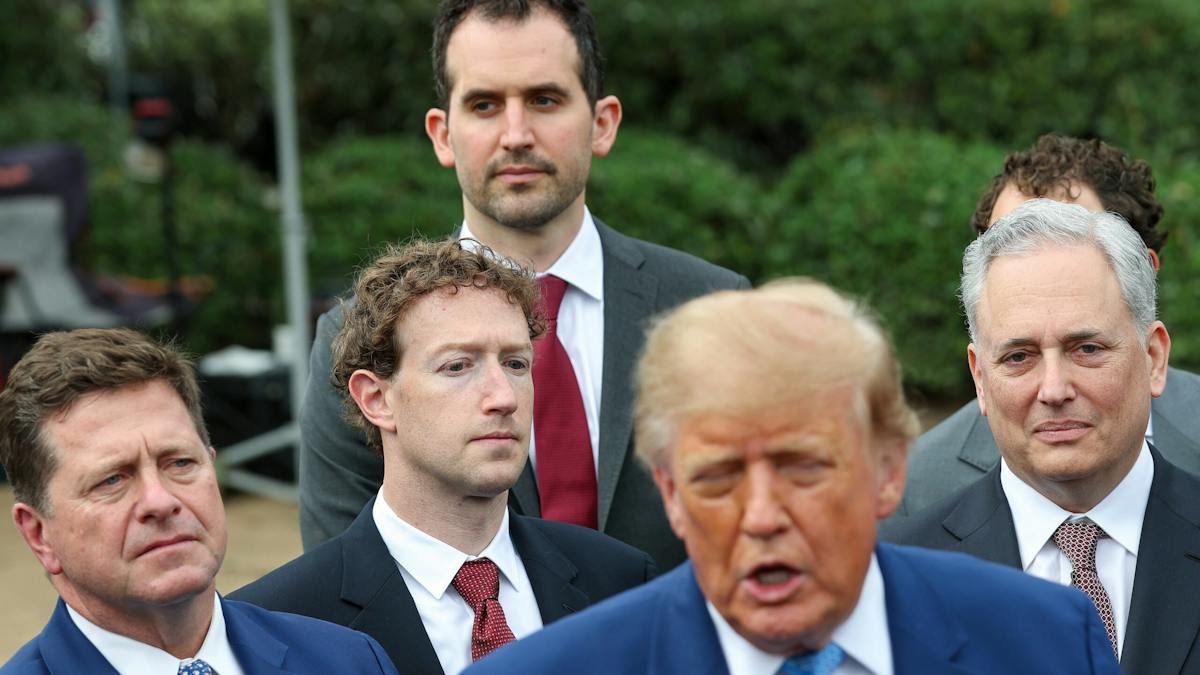
President Donald Trump has named Director of National Intelligence Jay Clayton to lead a newly created White House task force on artificial intelligence, which the administration is branding “super intelligence.” The appointment, confirmed by a White House official to The Daily Wire on Monday, follows weeks of internal deliberation over who would take on the role.
Clayton will hold both positions simultaneously, keeping his post atop the intelligence community while chairing the task force. Trump announced the creation of the “Super Intelligence Force” on Sunday, describing its mission as ensuring “that America continues to lead the World in Super Intelligence, which many say is bigger than the industrial revolution, and the internet.”
A Tight Timeline and a Broad Mandate
The task force has 120 days to study the risks and benefits of artificial intelligence and produce recommendations that will shape the administration’s policy going forward. That deadline puts pressure on a group assembled from across the federal government, with members drawn from both the cabinet and independent agencies.
Clayton brings a background in law and finance rather than technology. He previously chaired the Securities and Exchange Commission and served as U.S. attorney for the Southern District of New York, roles that centered on financial regulation and federal prosecution. He is joined on the task force by Federal Trade Commission Chair Andrew Ferguson, Under Secretary of Defense for Research and Engineering Emil Michael, and Office of Personnel Management Director Scott Kupor.

The roster also includes several of Trump’s cabinet members: Vice President JD Vance, Treasury Secretary Scott Bessent, and Secretary of War Pete Hegseth. According to Trump, the group will report directly to him and to White House Chief of Staff Susie Wiles, and will work with both the federal government and the private sector — with the aim of winning the global AI race while protecting “the interests” and improving “the lives of all Americans.”
Sacks: Board Is More Practical Than Democratic Approach
David Sacks, who served as Trump’s previous AI czar, praised the structure in comments reported by The Daily Wire. He called the board a solution “far more practical than what Democrats want,” characterizing the opposing approach as a “freeze on frontier development while China races ahead.” According to Sacks, the board will oversee whether private companies are adhering to safety commitments and will hold company leadership accountable when standards are not met. He added that Democrats should be praising “what President Trump has accomplished.”

Sacks’s remarks suggest the administration is positioning the task force as a deregulatory alternative to stricter AI oversight proposals, though the group’s actual recommendations will not be known until its 120-day window closes.
Tech Leaders Sign On — Public Opinion Remains Wary
The announcement follows a White House gathering last week at which Trump invited private sector technology leaders to discuss the future of AI. Google CEO Sundar Pichai, Anthropic CEO Dario Amodei, Meta CEO Mark Zuckerberg, xAI’s Elon Musk, and OpenAI President Greg Brockman signed the “White House Accord on Super Intelligence,” pledging to develop frontier models that promote both safety and prosperity.
That industry enthusiasm is not mirrored in public polling. A September Gallup report ranked the United States near the bottom of 37 countries surveyed on optimism about AI’s impact. Only 36% of U.S. adults familiar with the technology expect it to help people in their country, according to the findings. While the Trump administration has made AI leadership a centerpiece of its messaging, support for the technology has also been slipping in red states, indicating that Republican voters are not uniformly aligned with the White House’s posture.
The task force’s compressed timeline means its findings — and how the administration chooses to act on them — will land amid that unsettled public mood. For Clayton, the dual role will require balancing intelligence priorities with a policy portfolio that spans national security, economic competitiveness, and consumer protection concerns touching multiple federal agencies.
Source: www.dailywire.com — https://www.dailywire.com/news/trumps-new-super-intelligence-czar-has-120-days-to-deliver