
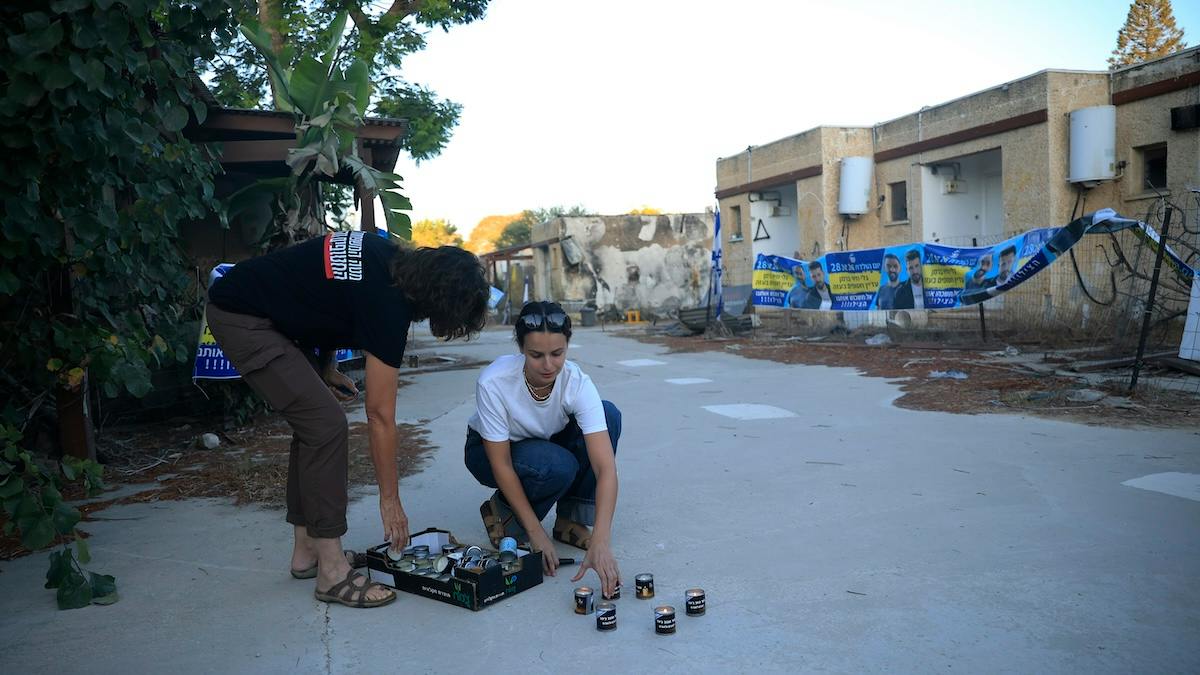
A first-person account published by The Daily Wire describes a journalist’s trip to Israel, where he walked through communities attacked on Oct. 7, 2023, and spoke with survivors — and came away struck less by the scale of the destruction than by how the people he met chose to carry it.
The writer, part of a group of journalists traveling through College Fix and Passages, says he arrived in Israel still carrying anger from a mass shooting in his own hometown: the 2022 attack at Robb Elementary in Uvalde, Texas, where 19 children and two teachers were killed. He had grown up in Uvalde, knew some of the children and their relatives, and had known the shooter. If his family had not moved, he writes, his sister could have been at the school that day.
What he says he found in Israel — among people who had lost far more — was not the bitterness he expected.
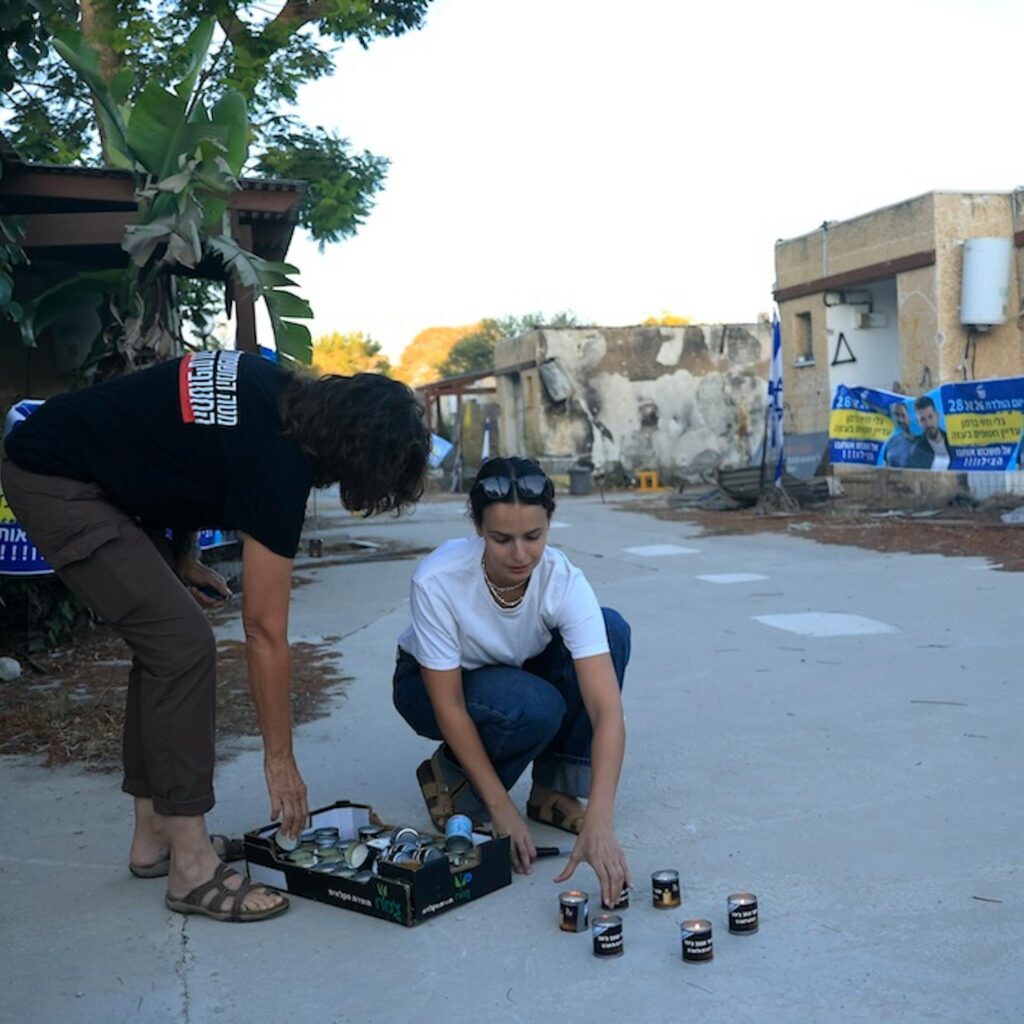
Walking the ruins of a kibbutz
According to the account, the group spent a full day visiting sites of the Oct. 7 massacre. One was a kibbutz whose gate borders Gaza, left largely untouched since the attack. The writer describes walls riddled with bullet holes, rooms blackened by grenades, and children’s toys covered in dust among the rubble. Homes where families had lived ordinary lives, he writes, became the rooms in which they were killed.
He says Hamas terrorists moved from house to house without distinguishing between young and old, men and women, or any difference of race or religion — shooting people in their beds and burning families alive. Standing on the grounds, he writes that he found it difficult to reconcile the remains of the village with what had been carried out inside those houses, and that the problems he had carried from the United States suddenly felt small by comparison.
A survivor’s account at the Nova festival grounds
At the site of the Nova music festival, the group listened to Shalev Biton, a young man close in age to the writer, describe his survival on Oct. 7. Biton recounted fleeing as Hamas gunmen moved through the festival grounds hunting people down, according to the account.

A Bedouin Muslim farm worker hid Biton and others, the writer reports. When the terrorists reached the farm, they shouted that they knew he was hiding Jews and demanded to know where they were, threatening to kill him if he refused to say.
Biton told the writer, “I wouldn’t wish that horror on any human being, including civilians in Gaza,” adding, “In the eyes of Hamas, they don’t see Jew or Muslim; you’re just in their way.”
‘They had every reason to hate’
The writer emphasizes that the Israelis he met had ample cause for hatred — many had lost friends, neighbors, and family members. Some had come home to find relatives killed, or had survived by only minutes while others were taken or shot in front of them.

He also spoke with Muslims, Christians, and Jews who asked to remain anonymous and whose relatives had been brutally slain or tortured — in some cases, the sources themselves had discovered what was left of them. For many in the region, the writer notes, this kind of loss is not confined to Oct. 7 but has become a recurring feature of life shaped by repeated geopolitical conflict.
Yet the people he spoke with remained composed, he writes. They wanted Hamas dismantled and had advocated for the safe return of the hostages. Some even said they hoped those who carried out the attacks might one day change.
That restraint, the writer argues, was “the refusal to become what had tried to destroy them.” He contrasts it with his own experience after Uvalde, when, in his initial shock, he repeated a false rumor that the shooter was transgender and was cut off by peers who said linking transgender identity to mental illness was transphobic and politically incorrect — while bodies of children he had grown up around were still being identified.
He writes that the episode left him angry and hardened, and that he dedicated himself to politics and journalism with a sharper sense of purpose afterward. He also notes that war and terror in the Middle East had long been his central subject, and that years of Western coverage portraying Israelis as uniquely bloodthirsty had shaped what he expected to encounter — an expectation he says the trip overturned.
He left Israel, he writes, with a deeper understanding of the conflict, but most of all with the people living through it on his mind. Their resilience, in his telling, was not performative but faithful and deeply human, and their refusal to let grief harden into hatred is what stayed with him.
The piece was published as part of Upstream, The Daily Wire’s section for culture and lifestyle features built around personal stories.
Source: www.dailywire.com — https://www.dailywire.com/news/they-had-every-reason-to-be-bitter-the-israelis-i-met-werent
Source: www.dailywire.com
Related coverage
- Seattle Minimum Wage Set to Hit $22.14 in 2027 as Restaurant Closures Mount
- Protesters Storm Microsoft’s Amsterdam Data Center Site, Hang ‘Fuck AI’ Banner in Palestine Protest
- Referee Accidentally Fractures ECU Player’s Leg in Bizarre Sideline Collision
- DEA Zeroes In on ‘Incriminating’ Texts Between Hayden Panettiere and Alleged Drug Dealer