
For decades, Washington has treated Social Security as the “third rail” of American politics — touch it and you die. But a new Daily Wire opinion piece is challenging that assumption, arguing that the political consensus around the program’s untouchability is not just wrong, but “complete garbage.”
The article, written by a Daily Wire contributor, contends that the fear of proposing changes to the federal retirement program has paralyzed both parties, leaving them to watch as the program heads toward insolvency rather than risk blame. Neither party, the piece argues, wants to be the one holding the bag when the system runs dry — so they simply plan to let it happen.
Bush’s 2004 Bet
The source of this argument is a take from Daily Wire host Matt Walsh, who called Social Security reform “political poison” even as he condemned the program in stark terms. Walsh described “taking huge chunks out of the paychecks of young working Americans in order to pay for the retirements of older Americans who have a net worth several times higher” as “morally abhorrent and economically insane.”

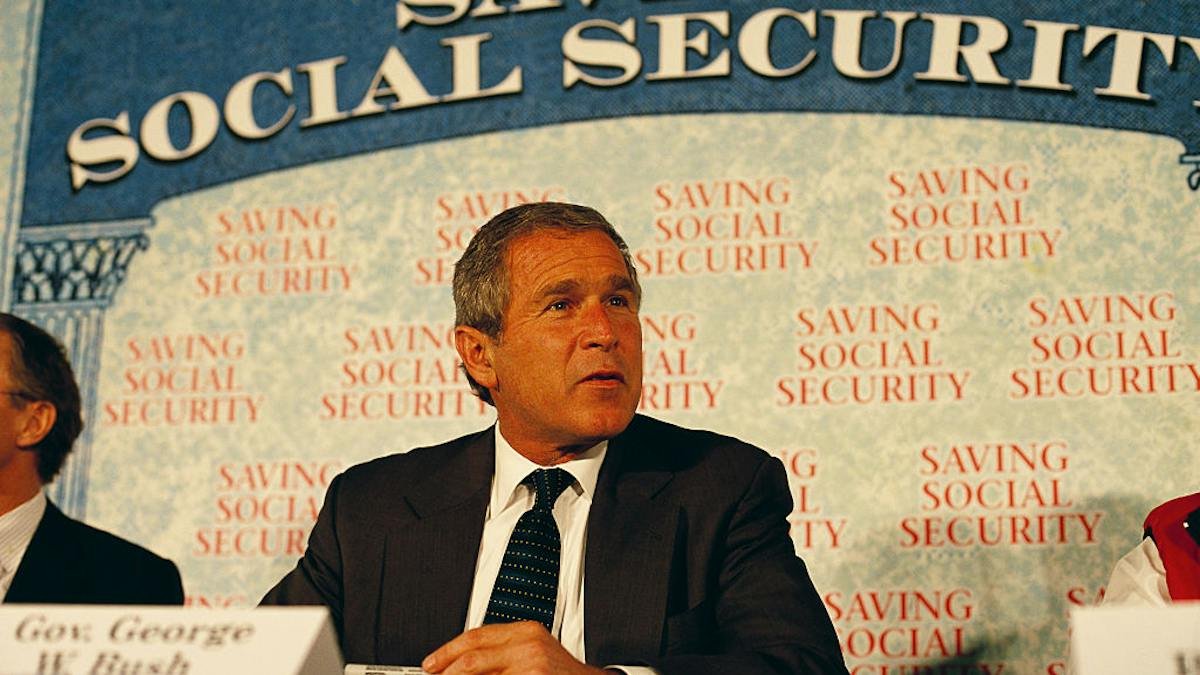
The Daily Wire piece points to George W. Bush as the last politician to champion Social Security reform on a national stage — and, crucially, to win. Bush used his 2004 State of the Union address to introduce a plan to let younger workers divert part of their Social Security taxes into personal retirement accounts, framing it as an “ownership society” that would give Americans control over their own retirement savings.
That proposal, the Daily Wire notes, drove Democrats — including Bush’s 2004 opponent, John Kerry — and liberal writers at outlets like The Atlantic to fury. But it did not cost Bush the election. He won reelection and entered his second term vowing to spend his political capital on Social Security reform, repeating the call in his 2005 State of the Union address.
Public Worry, Political Stalemate
At the time, Americans were nearly unanimous in their concern. According to a March 2005 Gallup poll cited by the Daily Wire, 92 percent of Americans said they were worried about the Social Security system — 48 percent a great deal, 21 percent a fair amount, and 20 percent a little.

But that concern did not translate into legislative success. Bush needed Democratic support in a Senate where Democrats were in the minority, led by Harry Reid, whom the Daily Wire describes as famously effective at keeping his coalition together. The piece notes that overriding the filibuster was not considered an option in that political era, and Bush needed at least five Democrats to break ranks. A massive AARP-backed public campaign against the plan, the Daily Wire argues, ensured those Democrats never felt enough pressure to defect.</n
Public support for Bush’s plan fell — not, the Daily Wire insists, because the plan was bad, but because it had no path through Congress. By the end of the summer of 2005, Hurricane Katrina had devastated New Orleans, the wars in the Middle East were growing unpopular, and Bush needed his political capital elsewhere. He abandoned the fight.
Yet public anxiety about Social Security did not fade. By March 2006, the same Gallup poll found 94 percent of Americans worried — 51 percent a great deal, 29 percent a fair amount, and 14 percent a little. And this March, Gallup found 90 percent still worried — 43 percent a great deal, 29 percent a fair amount, and 18 percent a little.
An Inevitable Deadline
The Daily Wire piece argues that this steady, decades-long concern undercuts the idea that reform is politically toxic. If voters have consistently told pollsters they are worried about Social Security, the reasoning goes, a politician who runs on fixing it should not automatically be doomed.

The article does not pull punches about the program’s origins or its critics. The author declares Franklin Delano Roosevelt “our worst president, dead or living,” blaming him for strapping the nation with Social Security in 1935 as part of the New Deal and setting the country on a path to trillions in debt. Harry Reid is called “one of our worst-ever senators,” credited with defeating Social Security reform through legislative procedure and interest-group money rather than persuasion.
Even by conservative estimates, the Daily Wire says, insolvency is less than a decade away. The piece acknowledges that reforming a program every American expects to one day collect from is not easy — but argues that it will be even harder to tell Americans the checks are not coming because their leaders were too cowardly to try.
The argument lands at a moment when neither party has shown appetite for a serious Social Security overhaul, and when the program’s long-term finances remain a perennial campaign talking point rather than a legislative priority. Whether the Daily Wire’s challenge to the “third rail” consensus changes any minds in Washington is another question — but the piece is a reminder that the last politician who ran hard on the issue won the White House, and the program he tried to change is still waiting for a fix.
Source: www.dailywire.com — https://www.dailywire.com/news/what-if-fixing-social-security-isnt-political-suicide