
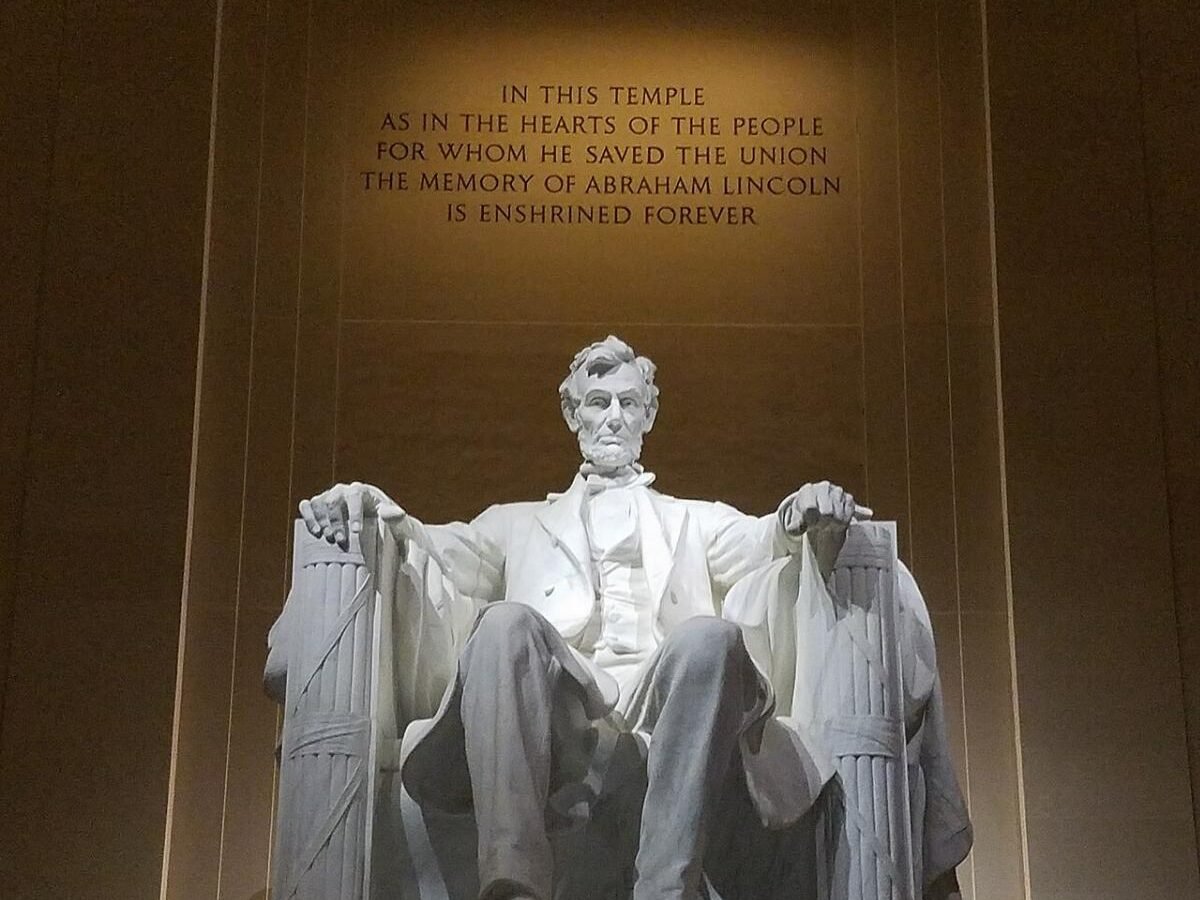
The Civil War remains America’s most fought-over memory, and the latest skirmish is over what it actually meant. In a new essay for American Thinker, Bill Ponton pushes back against a recent critique of Matt Walsh’s takeaway from the conflict, arguing that we suffer from “historical myopia” when we judge the men of 1860 by the standards of a nation they never knew.
Ponton’s core claim is straightforward: before the war, the question of whether the union was a voluntary association or a permanent compact was genuinely unresolved — and it was that unresolved question, not some abstract moral clarity, that drove the conflict. “We cannot understand how our country almost broke apart without casting ourselves back to that mindset,” he writes.
That framing puts him at odds with those who insist the war was always about slavery, or who dismiss the states’-rights argument as a post-war myth. Ponton does not deny the centrality of slavery — he doesn’t really engage it — but he argues that the constitutional ambiguity about secession was real and widely believed, especially in the South. “In the back of everyone’s mind the possibility that the union might dissolve was real,” he observes. “In fact, it should be obvious that popular opinion in the South viewed the union as voluntary or otherwise the conflict would not have gotten the support that it did and would not have been fought with such tenacity.”
The war, in his view, was a laboratory test of that principle — and the North’s victory settled it forever. “The Civil War tested the principle of state preeminence to destruction,” he writes. “Northern victory in the Civil War decided once and for all that union was mandatory.”
Even Abraham Lincoln, Ponton notes, avoided the constitutional question of secession in the Gettysburg Address, instead framing the war as a fight for democratic government itself. But Ponton finds that argument incomplete: Lincoln “does not fully explain how partial dissolution of the union would hasten an end to democratic rule in general.”
Ponton is careful to say he prefers the modern United States — a large, unified nation spanning the continent — but he insists that preference has “little bearing on what the union meant to Americans in 1860.” Historical figures, he argues, cannot be expected to share our vocabulary of values.
To illuminate that gap, he draws a parallel with Bismarck’s wars of German unification, which unfolded around the same time. Both Lincoln and Bismarck sought national unity, he notes, but Bismarck achieved it through “a series of short, sharp shocks,” while Lincoln had to fight a four-year war of attrition — a war the South could never win given the North’s manpower and industrial advantage. Yet both sides kept fighting. Ponton’s explanation is blunt: “the South mostly for the sake of honor and the North out of dogged determination to come out ahead.”
That willingness to fight on in a losing cause may be hard for modern readers to grasp, but Ponton suggests it was a matter of identity and pride, not just policy. The war, in his reading, was the crucible in which a coherent national identity was finally forged — something we now take for granted.
Ponton closes by endorsing what he admits is an unfashionable view: that we should “revere the valor of soldiers and leaders on both sides of the conflict.” He acknowledges the statement is not popular, but says, “I believe it to be the correct one.”
The essay is a direct response to a prior piece critiquing Matt Walsh’s Civil War commentary, and it sits firmly in a long-running debate over how to honor the past without erasing its contradictions. Ponton’s central plea is for humility — a willingness to see that “people possess a universal interpretation of concepts across space and time” is a mistake.
Whether readers agree with his emphasis on honor and states’ rights, or with his sidelining of slavery as a central cause, his essay raises a question that transcends the Civil War itself: how do we judge a generation whose assumptions we no longer share? Ponton’s answer, in effect, is that we must try — not to excuse, but to understand.
As he puts it, “It is a mistake for one to assume that people possess a universal interpretation of concepts across space and time.” That may be the most durable lesson of his piece, one that applies not only to the Civil War but to any historical reckoning we undertake today.
Source: www.americanthinker.com — https://www.americanthinker.com/blog/2026/08/historical-myopia/