
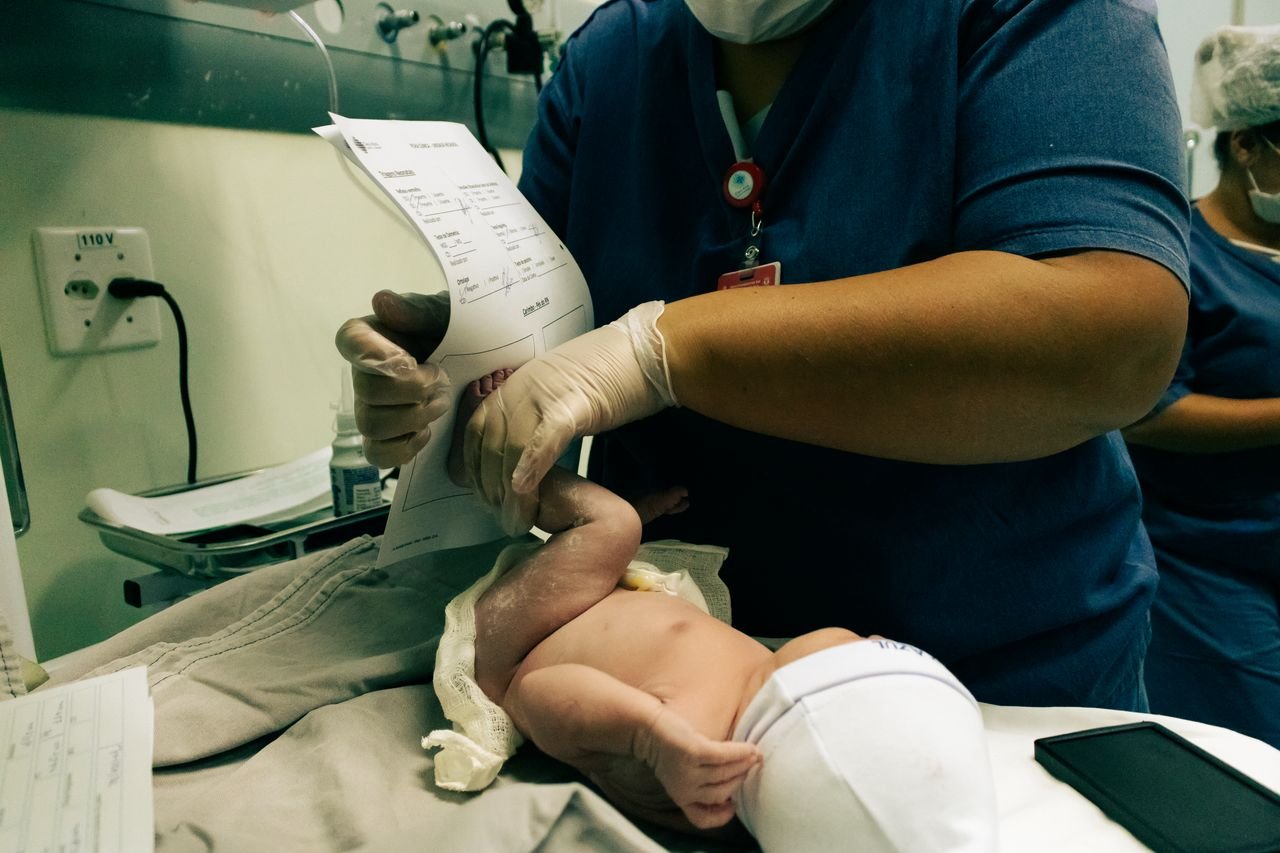
President Trump is pressing forward with efforts to restrict birthplace citizenship despite a recent Supreme Court ruling against his administration, issuing two executive orders this week that aim to narrow the categories of people who can claim U.S. citizenship by birth. According to a report from The Federalist, the orders are designed to work within the confines of the court’s decision while still curtailing what the administration describes as abuse of the citizenship system.
The Supreme Court ruled in Trump v. Barbara (2026) that birthplace citizenship is not recognized for children of foreign diplomats residing in the United States, nor for children of “alien enemies in hostile occupation.” That ruling, which The Federalist characterizes as “disastrously anti-American,” prompted the White House to clarify and enforce those exceptions while keeping the broader fight alive.
New Executive Orders Target Birth Tourism and Enemy Aliens
One executive order, “Continuing To Protect The Meaning and Value of American Citizenship,” specifies that the government will not recognize birthplace citizenship for children whose parents are alien enemies, including members of designated foreign terrorist organizations—a list that now includes several Latin American cartels. It also denies citizenship to children of diplomatic personnel from foreign countries, with the order providing a detailed definition of who qualifies as diplomatic personnel.
A second order, “Ending Birth Tourism,” frames birth tourism as a form of immigration fraud. The order argues that individuals who obtain temporary nonimmigrant visas while intending to give birth in the United States are being dishonest about their purpose, seeking to “establish a permanent foothold in the United States by securing the advantage of citizenship for their children and then potentially for themselves.” The administration notes that while no federal statute explicitly bans birth tourism, the practice is already de facto illegal because it involves misrepresentation on visa applications and frequently involves other accompanying crimes, as the Department of Justice has recently observed.
The order directs the Departments of State and Homeland Security to scrutinize visa applicants more closely, prevent entry for foreign nationals engaged in birth tourism, and revoke visas from those who have already participated in such schemes. The DOJ has announced it will investigate and prosecute individuals and businesses operating illegal birth tourism networks.
Administration Eyes Further Steps
Beyond the executive orders, The Federalist outlines a range of additional measures the administration could pursue. These include exercising “departmentalism”—the theory that the executive branch can interpret the Constitution independently of the Supreme Court—and explicitly defining the exceptions to birthplace citizenship that the court has recognized.

The article points to historical precedents: President Andrew Jackson rejected the Supreme Court’s interpretation on the national bank in 1832, and President Lincoln rejected the Court’s Dred Scott ruling by issuing passports to free Black Americans. In the strongest version of this approach, Trump could publicly repudiate Trump v. Barbara and declare his administration will only recognize citizenship in line with his original executive order, the piece suggests.
But the administration appears to be taking a more moderate path, aiming to achieve indirectly what the Court blocked directly. The Federalist notes the administration is already pursuing an aggressive “remigration” strategy: deporting illegal immigrants at record levels, terminating Temporary Protected Status, increasing denaturalizations, and slashing legal immigration through regulatory changes.
The piece also suggests the administration could require female visa applicants to demonstrate they are not pregnant when seeking admission, though it acknowledges this cannot prevent pregnancies that occur after entry.

Congressional and Judicial Avenues
The Federalist report notes that Justice Kavanaugh, in his concurring opinion in Trump v. Barbara, suggested Congress could amend 8 U.S.C. §1401(a) to explicitly designate illegal immigrants and temporary visitors as exceptions to the general rule of birthplace citizenship. Republicans are urged to pursue that legislative route, as well as a constitutional amendment, though the latter is seen as unlikely in the near term.
The article warns that lower courts will likely challenge any further administrative actions, and that even the Supreme Court will carefully review whether the new orders comply with its ruling. Still, the piece argues that with control of federal executive agencies, Trump can “creatively achieve essentially the same outcome he wants—i.e., a massive drop in ‘anchor babies’ being born to noncitizens.”
The Federalist concludes that while the first round of the legal fight went against the administration, the broader effort to restrict birthplace citizenship remains active. “The war to restore the meaning and value of American citizenship is far from over,” the article states, crediting Trump with showing “how to keep fighting.”
Source: thefederalist.com — https://thefederalist.com/2026/08/13/trump-can-still-fight-birthplace-citizenship-abuse-after-scotus-refused-to/