
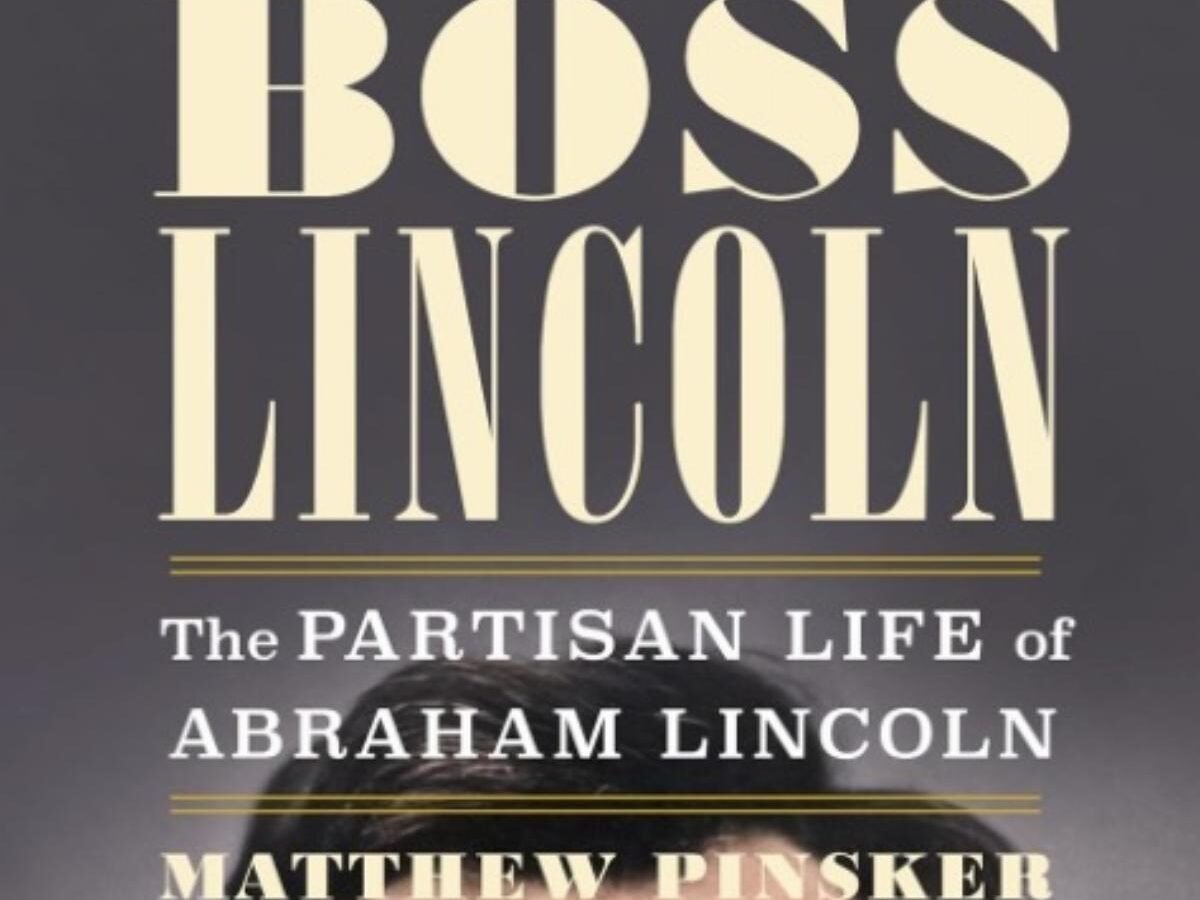
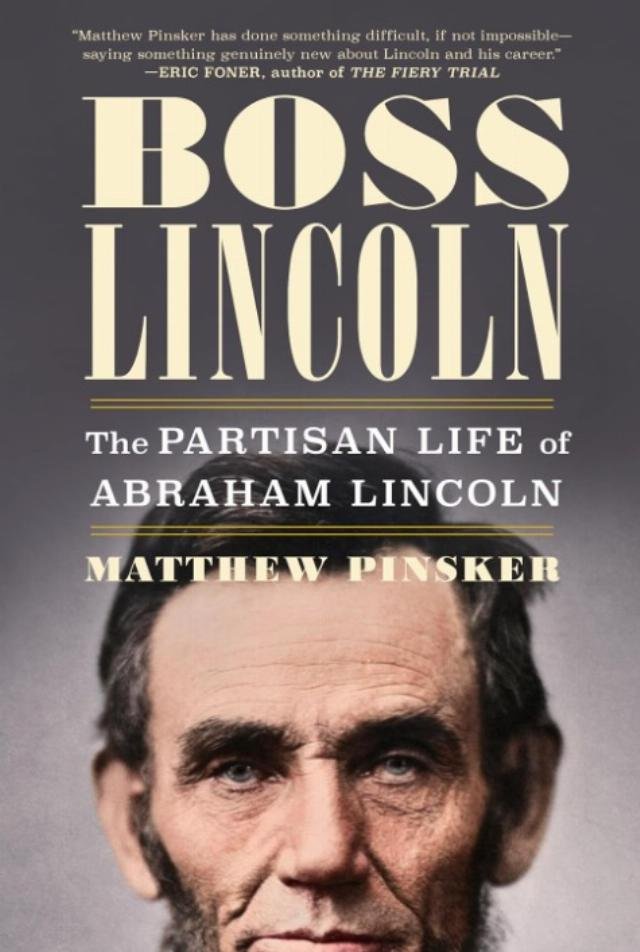
Abraham Lincoln has been called many things — the Great Emancipator, the rail-splitter, the frontier lawyer, the wartime commander. But according to a new book from historian Matthew Pinsker, one of the most important — and least appreciated — titles belongs to a more mundane figure: the political boss.
In Boss Lincoln, Pinsker argues that Lincoln’s path to the White House, and his ability to lead the nation through the Civil War and toward emancipation, was forged not in grand speeches alone, but in decades of meticulous, unglamorous party organizing — from county conventions in Illinois to the smoke-filled back rooms where Senate seats were won and lost. The book, reviewed this week by American Thinker, presents Lincoln as a consummate political operative: a man who understood that to change policy, you first had to win elections.
“Lincoln was a true boss, that is, a political operative who knew that you had to pick your fights to win, and that he was willing to win every fight,” the review notes.
From Whig to Republican: The Long Organizing Campaign
Pinsker’s biography traces Lincoln’s evolution through several political identities — the Illinois rail-splitter turned Whig, then the anti-Nebraska fusionist, then Republican, then president. Along the way, the book documents how Lincoln devoted himself to the unglamorous machinery of politics: organizing county and state conventions, networking with former and current lawmakers, and honing a clear platform for the Whigs before helping to build the Republican Party from the ground up.
This was not abstract ideology. Pinsker shows how Lincoln, from as early as the 1840s when he rode the legal circuit as a federal attorney, was committed to the principle that “all men are created equal” — and that he saw the party structure as the essential vehicle for turning that principle into law. The book pushes back against revisionist portrayals that cast Lincoln’s anti-slavery commitment as a cynical afterthought, arguing instead that he was a “measured, mature patriot” who wanted to end slavery but understood the difficult political terrain standing in the way.
Senate Races, Vote-Counting, and Irish Immigrant Fears
One of the most revealing sections of Pinsker’s book focuses on Lincoln’s work to elect allied U.S. senators from Illinois. In the 1850s, before the 17th Amendment, senators were chosen by state legislators, not by direct popular vote. This meant that state conventions would nominate preferred candidates as directives to lawmakers, and party bosses would pay close attention to legislative races in hopes of securing the necessary majority.
Lincoln was a prime Senate candidate himself in both 1854 and 1858, but Pinsker shows that he was enough of a team player to pull strings and twist arms to help elect Lyman Trumbull, a former anti-slavery Democrat who later became a Republican. The book offers a behind-the-scenes look at vote-counting, electioneering, and the perennial fear that non-citizens might vote in key elections.
The 1858 election — the famous Lincoln-Douglas debates — was especially tense. Pinsker reports that Stephen Douglas, the incumbent Democratic senator, was positioning Irish immigrants from Chicago, who mostly voted Democratic, to relocate to Central and Southern Illinois to help decide key state legislative races. Election integrity concerns, it turns out, are nothing new. Lincoln warned state party leaders and precinct captains to watch out for illegal voting, and he personally followed voter rolls, keeping tabs on who voted which way from election to election.
The Upset at the Wigwam
Pinsker’s account helps explain how the “Dark Horse” candidate pulled off his upset nomination at the 1860 Republican Convention at the Wigwam in Chicago, and then went on to take the White House. Lincoln’s long history as an effective team player — supporting other presidential aspirants from Henry Clay to John C. Frémont — had built the relationships and goodwill that made his own sudden rise possible.
Lincoln was not without ambition, the book acknowledges, but he was also a perennial loser: failed legislative candidate, failed House candidate, failed Senate candidate. Pinsker notes that Lincoln himself conceded that the path to higher office didn’t seem manifest until it suddenly did, at exactly the right moment.
From Sangamon County to the Union’s Fate
The book also draws a direct line from Lincoln’s early political machinations to his presidency. Pinsker reviews Lincoln’s subtle calculations in assembling his cabinet, assigning military duties, and appointing generals, arguing that the political acumen developed in the small-time party-boss world of Sangamon County — a county, the review notes, Lincoln would never win as president — forged him into the leader who kept the Union together by focusing on the moral and political necessity of abolishing slavery.
What makes Boss Lincoln particularly valuable, according to the review, is that it enlivens an otherwise dry, often ignored academic subject. Pinsker engages with marginal political notes, subtle posturing, and the day-to-day policymaking of Lincoln’s early career, weaving together a compelling account that enhances the myth of the man while also showing the humble means by which a rail-splitting railroad attorney who suffered repeated political losses built a lasting party and became America’s 16th president.
For readers who enjoyed Steven Spielberg’s film Lincoln, or anyone fascinated by how political machines actually work, Pinsker’s book offers a “boss” of a read — one that makes clear that America’s greatest president was also, at heart, one of its most effective party politicians.
Source: www.americanthinker.com — https://www.americanthinker.com/articles/2026/08/a-new-book-provides-vital-and-vivid-new-insights-into-abraham-lincoln/