
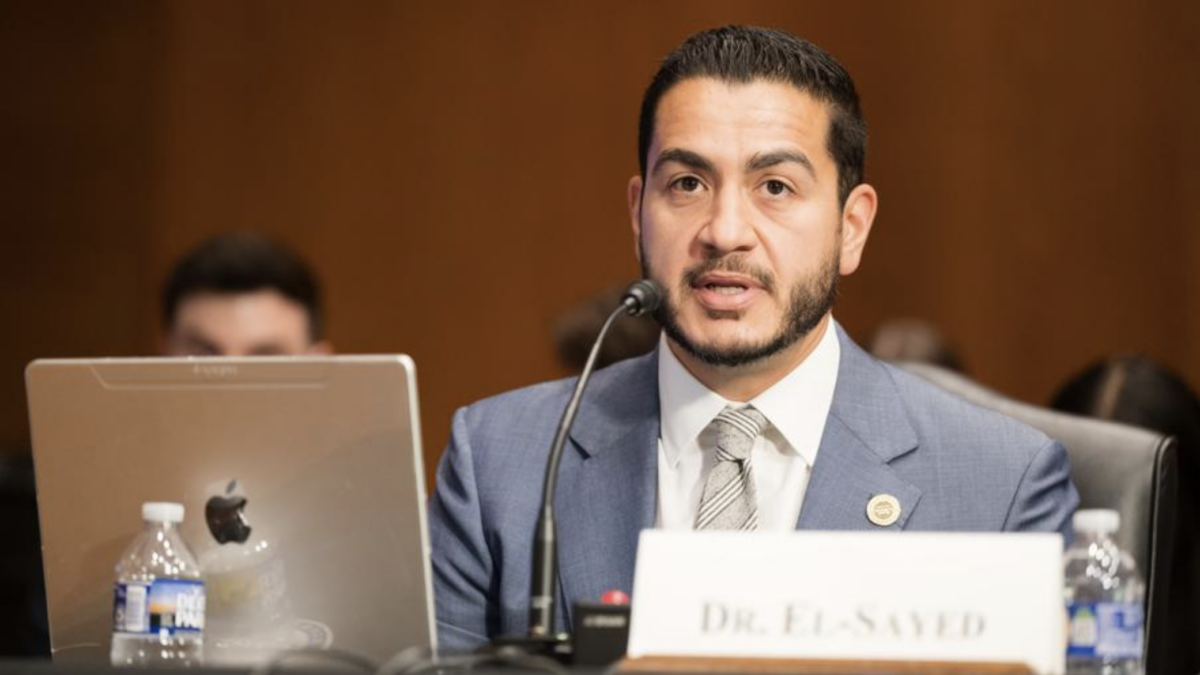
Abdul El-Sayed, the Democratic nominee for Michigan’s open U.S. Senate seat, has made single-payer health care a centerpiece of his campaign. But a recent report has spotlighted a potential disconnect between his political rhetoric and his family’s own choices.
According to the Washington Free Beacon, El-Sayed’s wife, Dr. Sarah Jukaku, runs a psychiatric practice that does not accept Medicare, Medicaid, or any private insurance. The practice’s website previously included an FAQ note saying, “Do you accept my insurance? No. Dr. Jukaku is out of network for all insurance companies,” but that language was reportedly scrubbed earlier this summer.
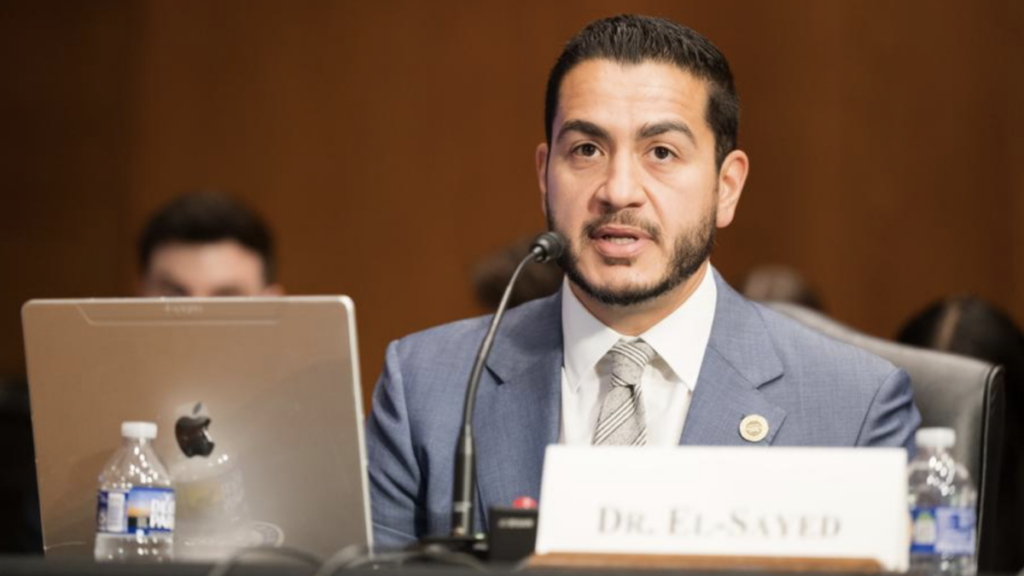
The revelation has fueled criticism from conservative outlets like The Federalist, which argues that El-Sayed’s support for a government-run health system is at odds with his wife’s refusal to participate in it. The article notes that El-Sayed and Jukaku reported nearly $700,000 in combined income on their 2025 tax returns, placing them in the top one percent of household income nationwide. Yet, the publication suggests, “for the family to practice what El-Sayed preaches about ‘guaranteeing Americans the health care they need independent of the circumstances’ would apparently put too much financial strain on these one-percenters.”
El-Sayed’s Single-Payer Pitch
On NBC’s Meet the Press, El-Sayed defended single-payer as a way to “guarantee Americans the health care they need independent of the circumstances, wherever they needed to go.” He also decried “huge corporations that have used their power, in effect, to try and buy politicians,” framing his health care proposal as a check on corporate influence.
But The Federalist argues that such rhetoric ignores the practical realities of single-payer. The article points to historical precedent, drawing a parallel to Dr. Judith Steinberg, the wife of former Vermont Governor Howard Dean. Nearly three decades ago, Steinberg’s practice dropped out of Vermont’s largest Medicaid plan, Community Health Plan/Kaiser Permanente, citing low reimbursement rates and onerous bureaucratic regulations. The move forced hundreds of patients to switch doctors or insurers.
The Federalist’s takeaway: “Physicians will never stand for the increased workload and reduced compensation necessary to make single-payer’s math work.” The article suggests that the choices of doctors like Jukaku and Steinberg reveal a fundamental flaw in the single-payer model—that medical providers, when given the choice, often reject government insurance programs.
A Pattern of Progressive Hypocrisy?
The Federalist, a conservative publication, uses the El-Sayed example to argue that progressive politicians often fail to live by the policies they promote. It notes that Elizabeth Warren faced similar scrutiny during her 2020 presidential campaign, though El-Sayed at least admitted on Meet the Press that federal taxes would have to rise—including for middle-class families—to fund single-payer.
Still, the piece contends that “he isn’t being anywhere near honest with his would-be constituents about all the consequences of socialized medicine.” It concludes that voters should “follow what Abdul El-Sayed does” rather than what he says.
Reactions and Context
El-Sayed’s campaign has not publicly responded to the Free Beacon report, according to the article. The story highlights a recurring tension in American health policy: politicians advocate for sweeping changes, but individual actions—like a doctor choosing not to accept public insurance—can complicate the narrative.
Supporters of single-payer often argue that such choices are rational under the current system, where reimbursement rates are low and administrative burdens high. Critics counter that if the policy is good enough for the public, it should be good enough for the politicians’ own families.
As the Michigan Senate race heats up, this controversy is likely to remain a talking point for El-Sayed’s opponents. The Federalist’s article, while unabashedly partisan, raises questions about the consistency of political stances and personal choices—questions that voters may weigh as they consider their options.
Source: thefederalist.com — https://thefederalist.com/2026/08/14/el-sayed-wants-to-make-you-use-government-health-care-that-his-wifes-practice-wont-accept/