
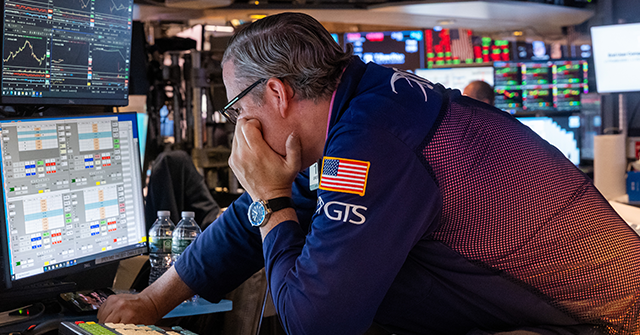
The U.S. economy is sending mixed signals this week, as consumer sentiment plummets to its lowest levels since the 2024 election even as the stock market reaches record highs. According to the University of Michigan’s latest survey, consumer sentiment plunged 8% in the opening weeks of August, with Republicans leading the decline.
Joanne Hsu, director of the survey, noted that while views of personal finances saw only minor declines, expected business conditions sank 11% for the short run and 17% for the long run. The pessimism spans the political spectrum, but Republicans showed the sharpest month-to-month drop, with sentiment now 19% below readings just prior to the Iran conflict.
Breaking down the numbers, sentiment among Democrats inched down 3.7 points, independents ticked down just 0.8 points, but Republicans saw a 9.5-point plunge. The current situation index for Republicans fell 6.1%, while the expectations index plummeted 11.8 points.
This aligns with recent Economist/YouGov polling that suggested the “vibecession” has come for MAGA voters. The persistence of the war with Iran, along with rising oil and gas prices, likely plays a role. Even supporters of the conflict probably didn’t anticipate it stretching on this long, with multiple false leads about the reopening of the Strait of Hormuz.
Looming midterms may also weigh on sentiment. The GOP lacks a clear message heading into the election, and high gasoline prices have sent inflation concerns soaring. Republicans looking ahead may fear that a Democratic House majority could derail the Trump economic program.
Retail Sales Tell a Different Story
Despite the gloomy consumer outlook, retail sales data for July tells a surprisingly upbeat story. The headline decline of 0.6% would seem to match the miserable sentiment numbers, but a closer look reveals underlying strength.
Spending at “food services and drinking places”—the ultimate discretionary category—jumped 0.5%. Furniture stores, home improvement outlets, department stores, and general merchandise categories saw increases. Clothing shops led with a 1.9% monthly gain. Spending fell at gas stations, but that reflects lower gas prices in July compared to June. Online spending dropped because Amazon shifted its Prime Day to June. Even appliance store sales fell less than the price declines of major appliances. The only genuine area of weakness was auto dealerships.
Some economists suggest “shopping therapy”—buying things to cope with stress—might explain the disconnect. Others argue the Michigan survey no longer accurately reflects consumer behavior. The survey has acknowledged problems, including over-sampling Democrats. More importantly, the negativity it captures doesn’t translate into reduced economic activity, undermining its predictive value.
Record Highs and Rising Yields
On Thursday, the S&P 500 closed at a record high, the same day the 30-year Treasury auction cleared at its highest yield in 25 years. While pundits treated this as ominous, the data suggests otherwise.
The 30-year yield, now around 5.26%, is not unusually high by historical standards. It traded above this level in 2007, reaching 5.35% that June. Yields were regularly above current levels during the 2001-2006 period when issuance was suspended. Going further back, the 30-year hit 8.16% in 1994 and nearly 14% in 1984.
The auction itself wasn’t a buyer strike. It cleared at 5.216% versus a when-issued yield of 5.212%, a tiny 0.4-basis-point tail. The bid-to-cover ratio was 2.39, close to the recent average of 2.43, and indirect bidder participation was 66.8% versus a 67% average. This was mildly soft, not frightening.
The composition of the yield rise also argues against doom. Since end-2024, the nominal 30-year yield rose roughly half a percentage point, while the inflation-adjusted TIPS yield rose slightly more. Meanwhile, the 10-year breakeven inflation rate fell from 2.34% to around 2.24%. If markets were panicking about inflation, breakevens would rise. Instead, investors are demanding higher real returns in an economy with enormous demand for capital, much of it from the artificial intelligence buildout. Rising yields alongside record stock prices is typically a positive signal, indicating investors are taking on more risk.
Warsh Critics Humiliated
Critics of Fed Chairman Kevin Warsh faced a credibility problem this week. They had urged a rate hike at the last meeting and derided his communications strategy. But the soft CPI reading for July—a mere 1% annual rise—vindicated his approach of not issuing guidance, not contributing to projections, and holding rates steady along with the FOMC majority. Underlying inflation is moderating, and calls for higher rates seem more about opposing Trump than economic reality.
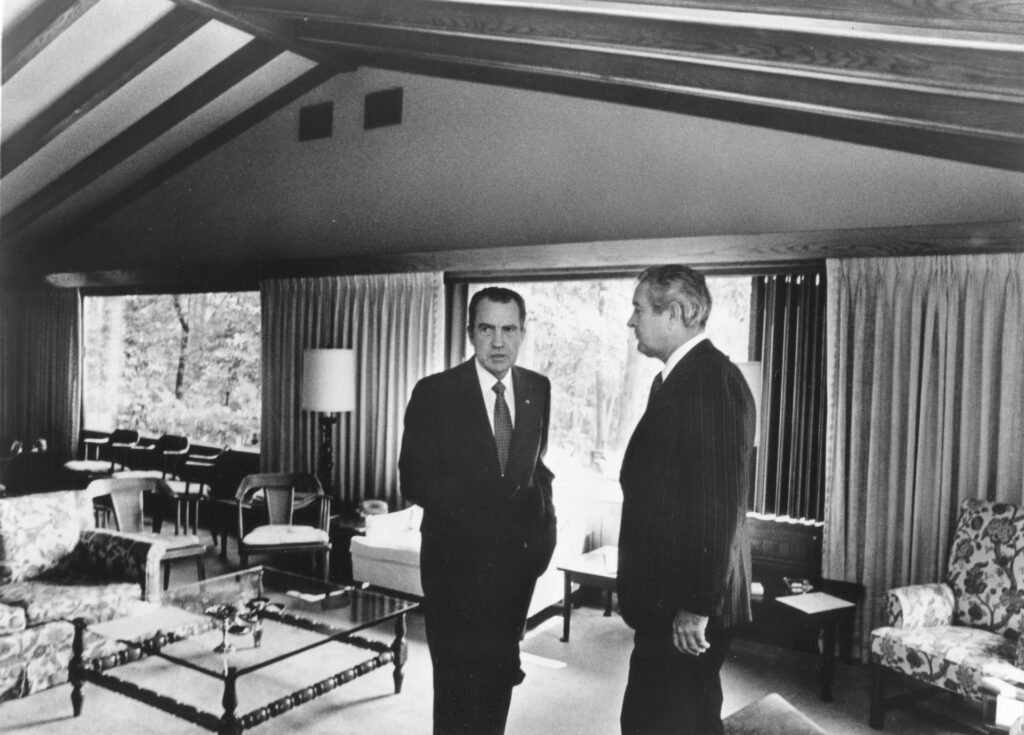
As we mark the anniversary of Nixon’s 1971 decision to close the gold window—a move that reshaped the global monetary system—this week’s data reminds us that economic signals are often contradictory. The gloom in consumer sentiment may not translate into actual economic contraction, and the boom in markets may not signal impending doom. For now, the economy appears to be running on its own logic, confounding both pessimists and optimists alike.
Source: www.breitbart.com — https://www.breitbart.com/economy/2026/08/14/breitbart-business-digest-the-gloom-and-boom-economy/