
For anyone who has spent time in an American classroom over the past two decades, the steady erosion of academic standards has been hard to miss. But according to Mike McDaniel, a retired English teacher and regular contributor to American Thinker, the problem isn’t just anecdotal — it’s structural, and it’s getting worse despite recent efforts to push back.
In a new essay titled “The decline of higher education continues,” McDaniel argues that three forces — the federalization of student loans under Barack Obama, an obsession with diversity, equity and inclusion (DEI) mandates, and the abandonment of merit-based admissions — have combined to turn many colleges into expensive credential mills that no longer prepare students for the demands of professional life.
McDaniel, who writes from the perspective of a second-career high school English teacher, says the current crisis was set in motion when the Obama administration pushed the idea that everyone should go to college and made that possible by having the government guarantee student loans. The result, he says, was predictable: because colleges no longer had any financial stake in whether students actually graduated or landed jobs, they went on a hiring spree of administrators, which required enormous sums of money, which in turn required ever-larger student enrollments.
To feed that pipeline, McDaniel contends, colleges admitted students who in previous generations would have been considered poorly suited for college-level work. And to cover that up, they did away with predictive testing like the SAT. The only real requirement for admission, he says, became a signed loan document — except, he adds, for white men applying at Ivy League schools, who regardless of academic qualification were often denied admission.
The DEI machine and the rise of campus remedial programs
McDaniel is blunt about the second driver: what he calls a “faux-religious devotion to DEI.” Universities created enormous DEI departments staffed with administrators and functionaries, and spent hundreds of millions of dollars on outside consultants and “gurus” brought in to train faculty and staff. The result, he says, was a campus culture more focused on identity politics than on teaching students how to think.
Because so many incoming students were unprepared, colleges were forced to establish remedial programs that were, in McDaniel’s words, “a great scam.” Students paid full tuition for courses that earned no credit, while colleges blamed high school teachers like him for not preparing them. He points out that if anyone had bothered to ask, he could have told them exactly which students were not academically capable.
Grade inflation, he argues, was a direct result of these failures. Professors were required to dumb down their courses, reduce the workload, and award unearned grades to maintain the illusion of success. A whole generation of students was trained to expect maximum grades for minimal work, and any professor who dared give a minority student the grade their work actually deserved faced serious consequences.
The result, McDaniel writes, is a system that fails everyone: students taking six or seven years to finish a four-year degree at enormous cost, or dropping out entirely with crushing debt and no credential to show for it.
What’s changed — and what hasn’t
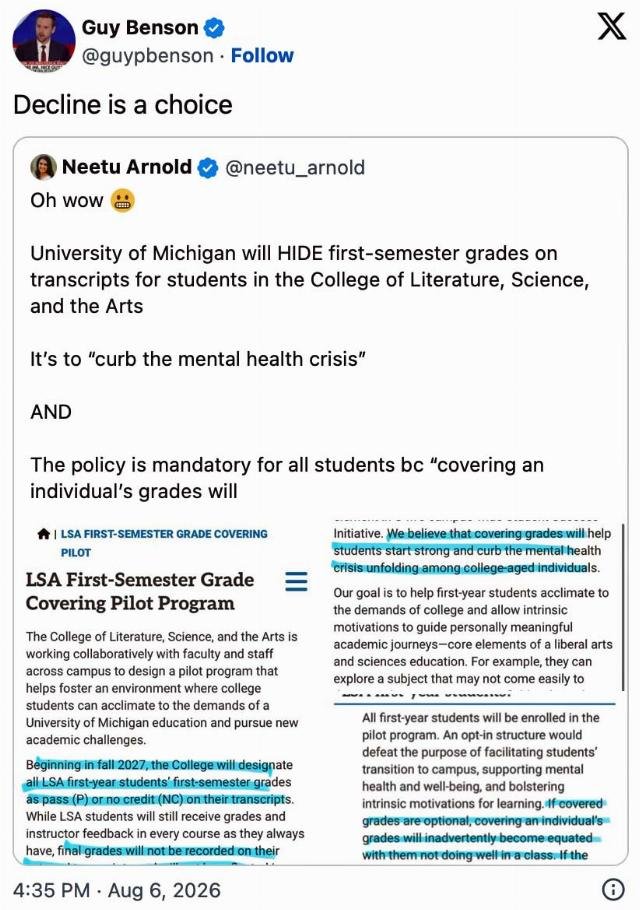
McDaniel acknowledges that the second Trump administration has had some success in pushing universities to abandon DEI mandates and restore credibility to degrees. But he points to two recent examples that suggest the fight is far from over.
The first is the University of Michigan, which has reportedly announced a new policy giving incoming students a semester off to “acclimate to the demands of a University of Michigan education.” McDaniel notes that not long ago, students were expected to be ready for college-level work the moment they arrived, and if they weren’t, academic probation was the motivator.
He also notes that the university has cited a “mental health crisis” among students who are now expected to do college-level work. But if graduates lack the basic responsibility to complete assignments, McDaniel warns, employers in science and other fields will lose confidence in the value of a Michigan degree.
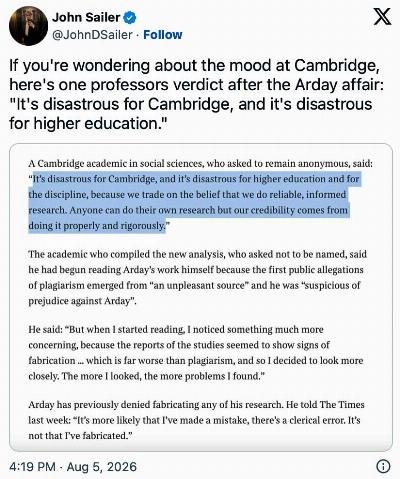
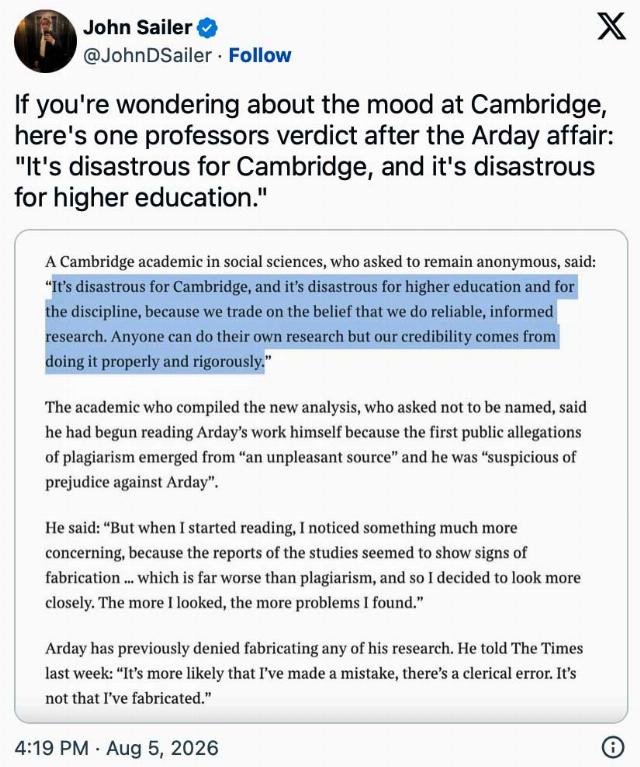
The second example comes from Cambridge University, one of the most storied academic institutions in the Western world. McDaniel describes the case of Jason Arday as an “outrageously DEI hire.” According to the essay, Arday failed to show up for teaching duties, had no teaching ability, was a blatant plagiarist, and, when challenged, responded by crying “racism” — a defense that Cambridge itself echoed.
After Arday’s forced resignation, a Cambridge faculty member who chose to remain anonymous stated what McDaniel calls obvious truths about the nature of higher education — that hiring decisions should be based on merit and integrity, not on identity or politics. McDaniel notes that Arday’s supposed qualifications should have set off alarms long before he was hired and praised.
What college is supposed to be
McDaniel is careful to say he is not arguing that college should be denied to anyone. He says he has known many students who struggled greatly but earned a degree and became better, more productive people because of it. What he is arguing for, he writes, is “rational decision-making and fiscally sound, ethical colleges.”
At its core, his essay is a plea to restore the original purpose of higher education. “College has been, and ever must be, a proving ground,” he writes, “a place where one not only learns a body of useful knowledge but demonstrates the character necessary to apply it.”
Hard work, determination, reliability, sincerity, and honesty are values that must be forged in that crucible, he says — just as they still are in the professional trades, where a worker either produces or walks away.
The essay is a stark warning from a veteran educator who has watched decades of policy decisions — from federal loan guarantees to DEI-driven hiring — reshape the landscape of American higher education. And his message is simple: unless universities return to merit and accountability, their degrees will continue to lose meaning, and the students who pay the most will be the ones who lose the most.
Source: www.americanthinker.com — https://www.americanthinker.com/blog/2026/08/the-decline-of-higher-education-continues/